
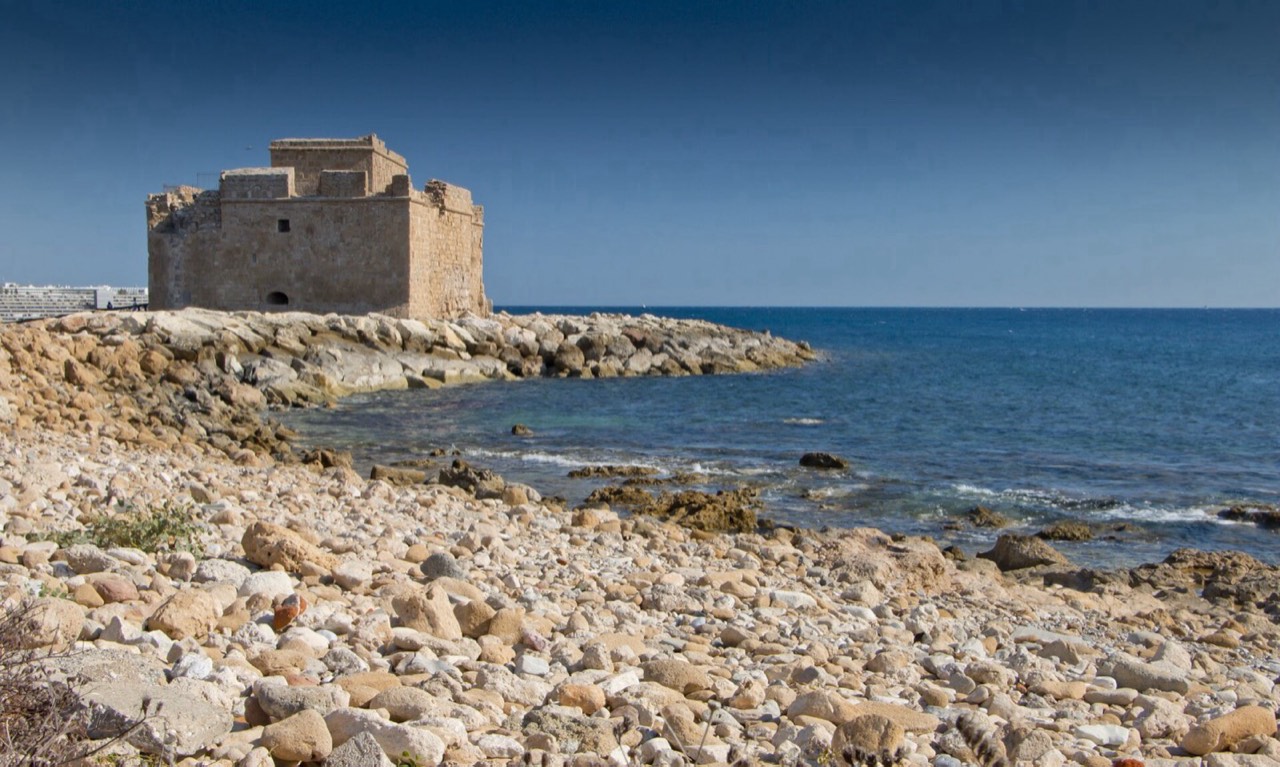
History and culture
Paphos archaeological areas form UNESCO heritage; this does not mean every modern neighbourhood is an ancient protected site. The castle preserves the Ottoman rebuilding of 1592. The district archaeological museum opened in 1964 and was subsequently reorganised.
Ancient mythology and Christian pilgrimage coexist with Ktima’s urban life. Stories about St Paul are identified as tradition; Cypriot dishes are not presented as uniquely Paphian inventions.
Cover shoulders and knees in active churches; respect services and check photography rules. Observe museum flash restrictions; do not touch mosaics or exhibits. Respect old-town residents and do not enter private courtyards.
Places
Kato Paphos Archaeological Park
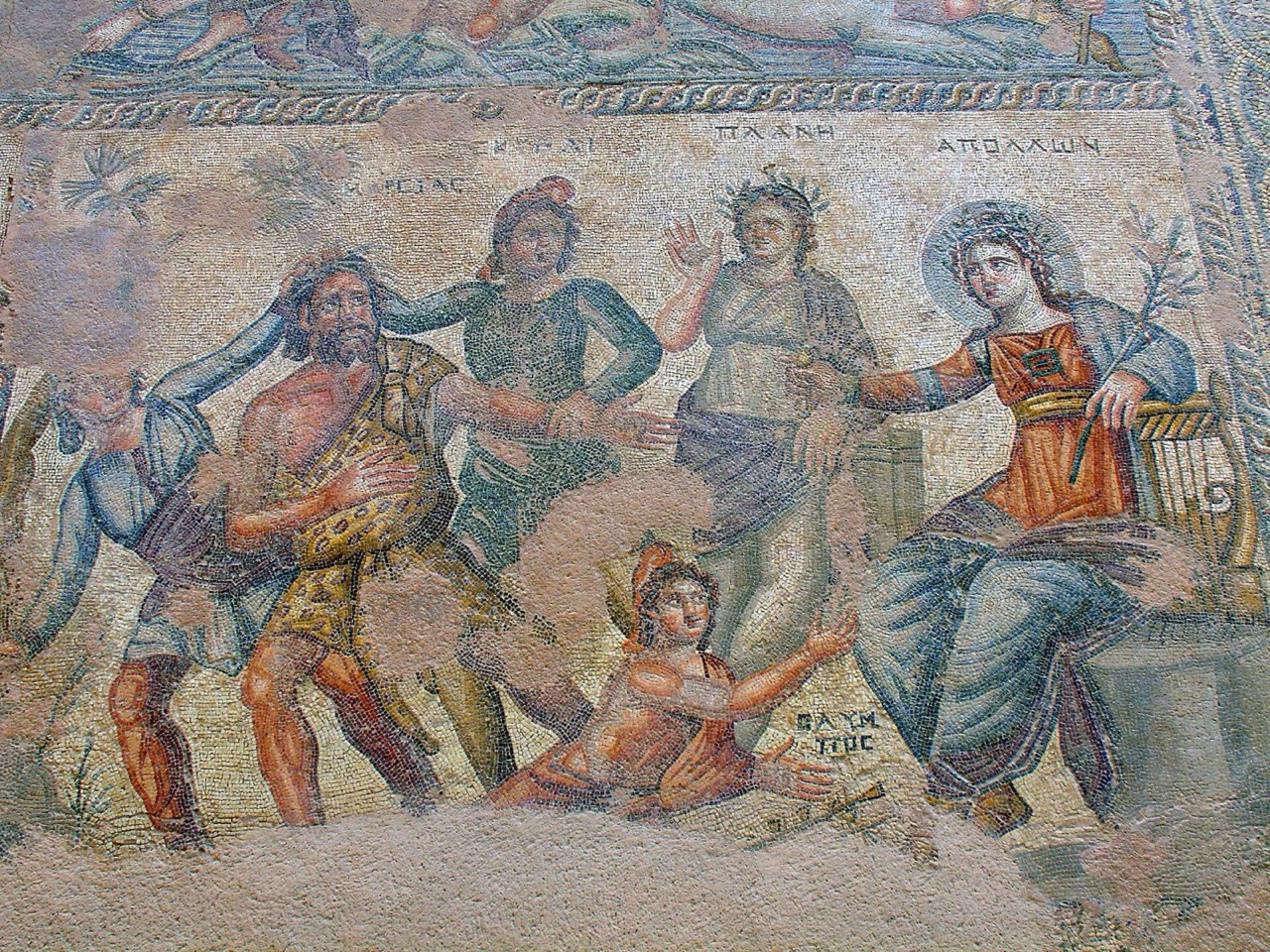
Extensive ancient site with Roman houses, mosaics and other remains.
Excavations reveal successive periods of Nea Paphos. Roman floor mosaics with mythological scenes are particularly renowned; the park forms part of Paphos’s UNESCO archaeological heritage.
Connects ancient urban life with mythological imagery.
The pin marks the entrance area, not distant mosaic houses. The walk stays outside; allow separate time, water and sun protection for the ticketed park. The Tombs of the Kings are another site with a separate entrance.
Paphos Castle
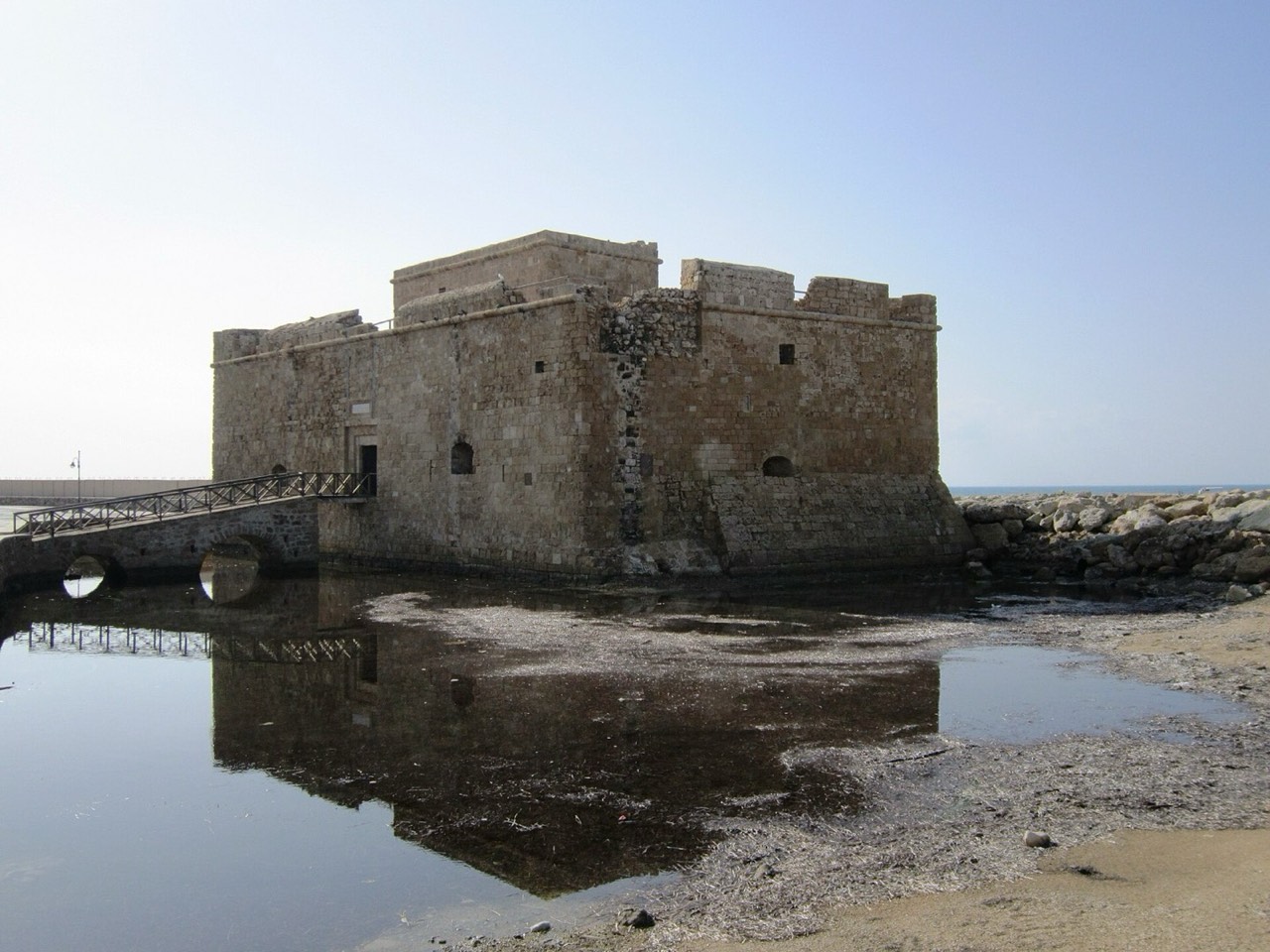
Stone tower at the western end of the harbour waterfront.
The harbour-defence castle was rebuilt under the Lusignans and Ottomans. Its surviving form reflects restoration in 1592; under British administration it was a salt store until designation as an ancient monument in 1935.
A visible record of changing rulers and uses of the historic harbour.
The route includes the exterior; interior and roof visits are separate and involve steps. The 2–6 September 2026 opera-festival closure has passed; check new notices instead of carrying it into October.
Chrysopolitissa and St Paul’s Pillar
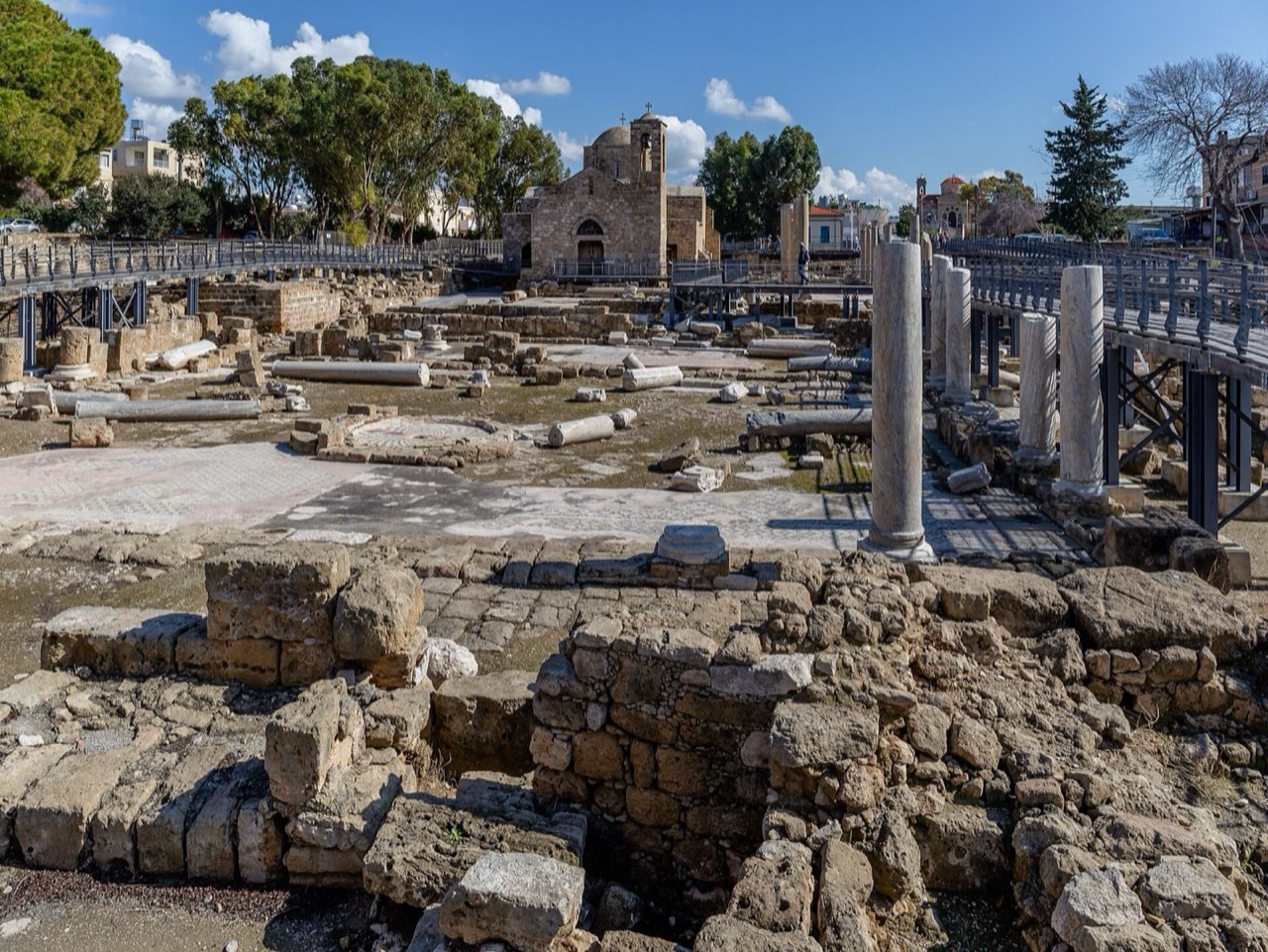
Early Christian basilica remains beside the active Agia Kyriaki church.
Columns and mosaic fragments survive from a large early Christian basilica. Agia Kyriaki church was built later; the pillar is associated with St Paul’s flogging in Christian tradition.
Reveals successive layers of religious history on one site.
Use marked paths and stay off mosaics. Services and weddings take priority over sightseeing; an open archaeological area does not mean unrestricted church access at all times.
Agia Solomoni Catacombs
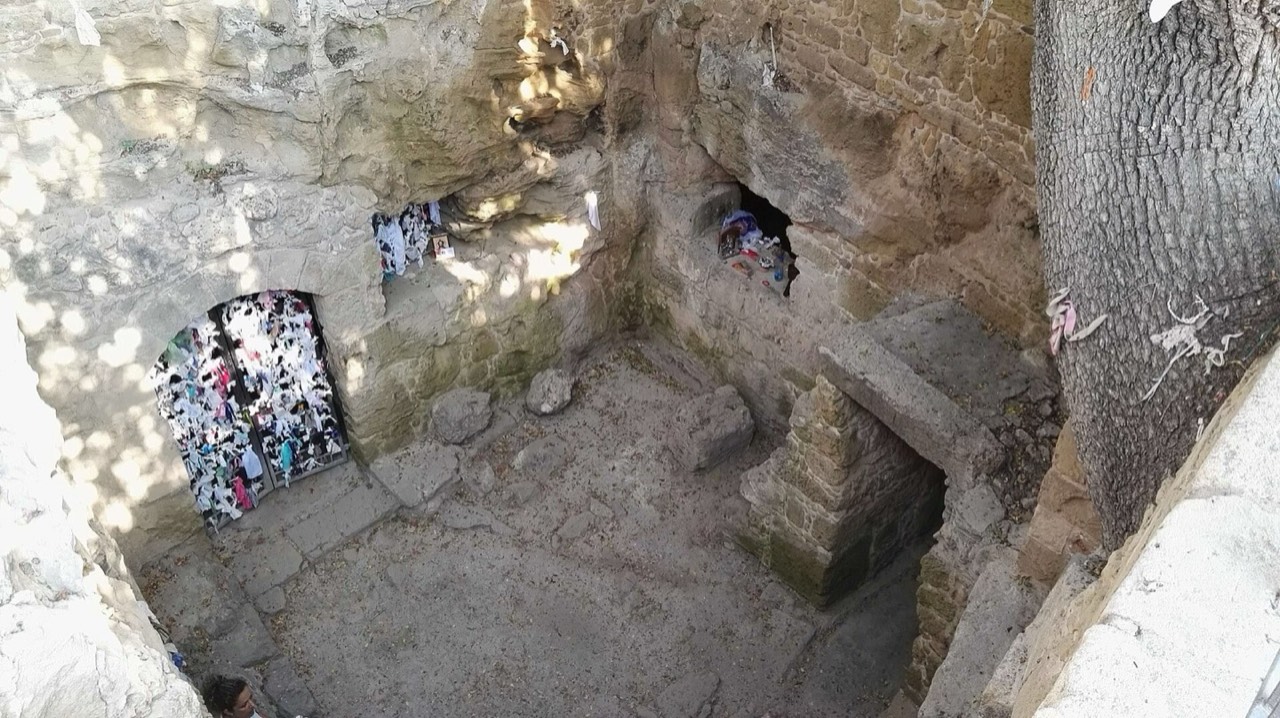
Small underground complex with a chapel and a venerated tree near the entrance.
Hellenistic chamber tombs later became a Christian pilgrimage site. One chamber preserves twelfth-century painting fragments; accounts of the saint’s miraculous survival are tradition.
Shows the later reuse of ancient burial spaces.
The descent can be dark, wet and stepped. Stay at the outside entrance if access is unsafe; do not touch cloth offerings or drink spring water.
Tombs of the Kings
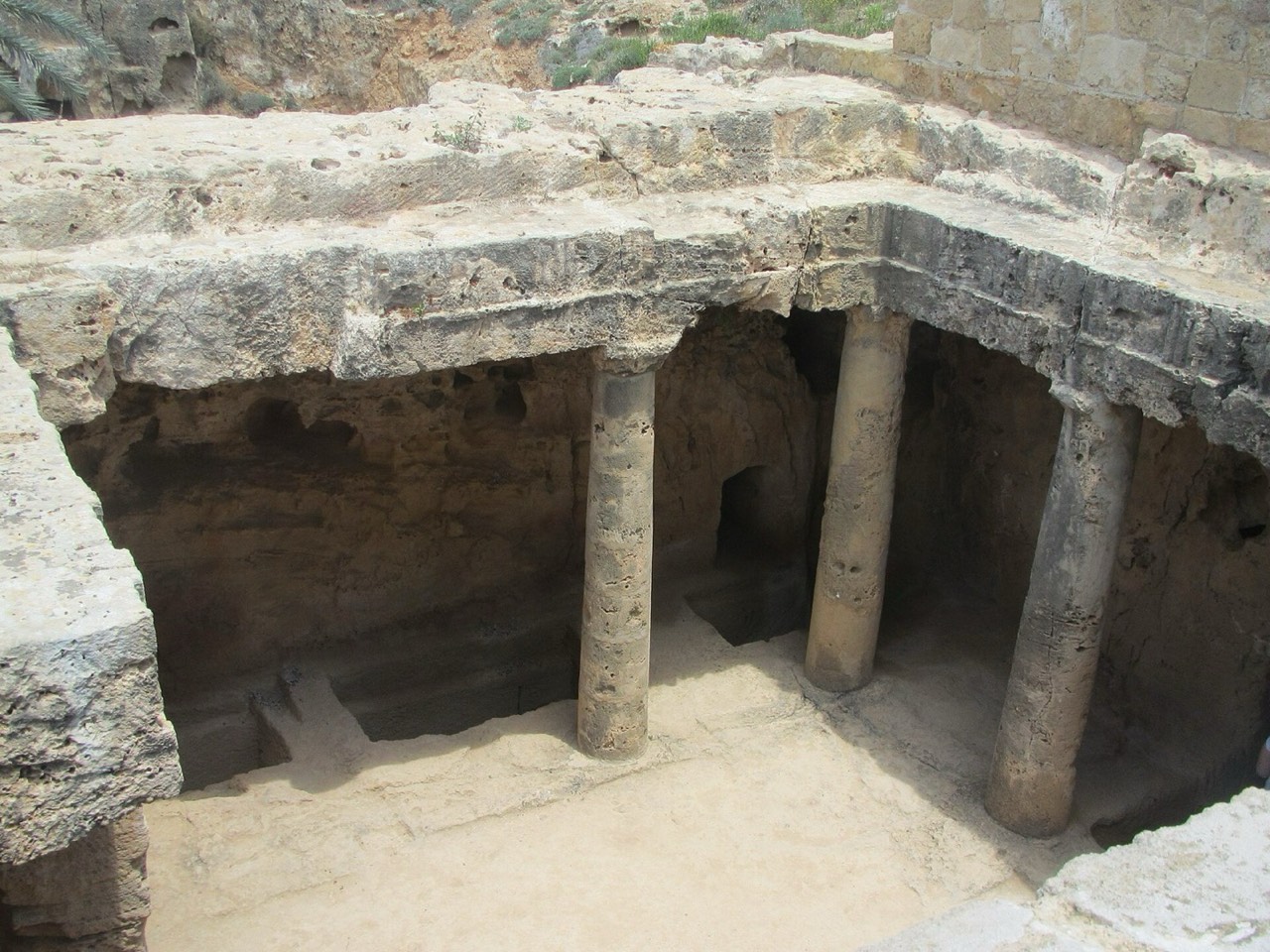
Necropolis with rock-cut burial courtyards and columns.
The necropolis developed in Hellenistic and Roman times. Monumental courtyards reflect links with Alexandria; its name does not prove that every tomb belonged to a king.
An important example of the island’s ancient funerary architecture.
This is a separate ticketed site north of the harbour, not the mosaic park entrance. Bring water and non-slip footwear; stairs and exposed edges complicate access. It is not included in central walks.
Ktima — upper old town
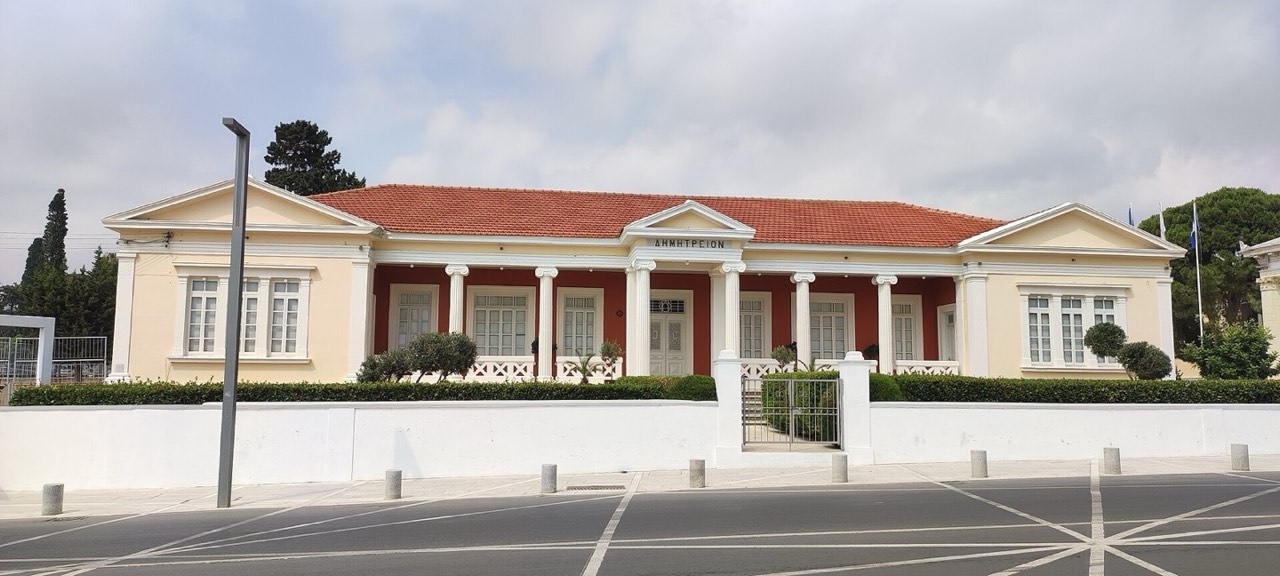
Upper urban centre with civic architecture and shopping streets.
Ktima represents Paphos’s civic and residential layer, distinct from ancient and tourist Kato Paphos at the coast. Older public buildings and the market preserve neighbourhood street scale.
Shows the living city beyond its harbour attractions.
The pin is by central public squares, not every shop entrance. Travel and the ascent from the harbour need separate time. Check market hours and free walking tours for the actual date.
Paphos District Archaeological Museum
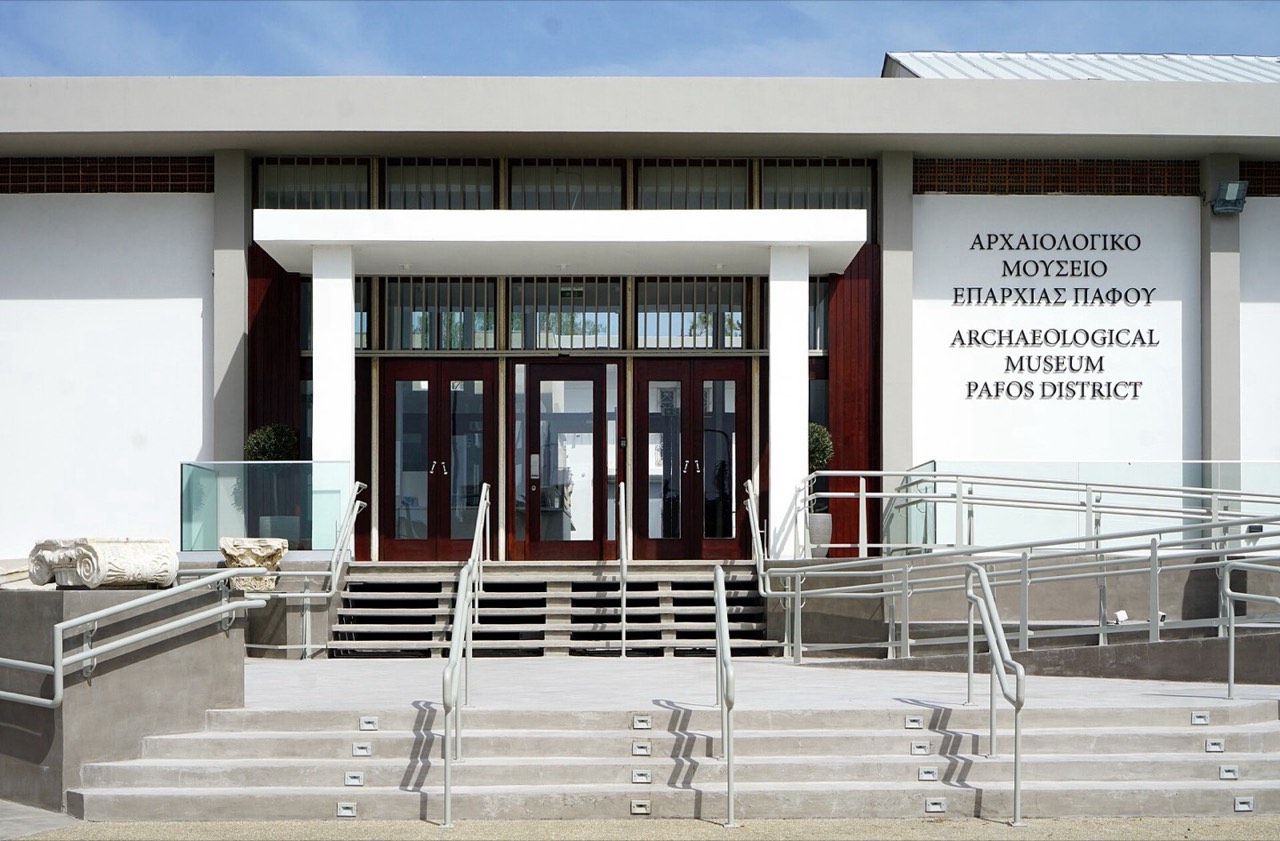
Museum of finds from Paphos and surrounding archaeological sites.
Opened to the public in 1964 with two rooms initially. It later expanded and was completely reorganised with a new museum approach and European co-funding.
Complements the ruins with objects found throughout the district.
Do not confuse it with the Palaipafos museum at Kouklia. Check current hours and admission; the walk approaches the building, with a full visit added separately. Confirm accessibility for your needs.
Walking routes
Harbour castle and early basilica
From the castle exterior take the public waterfront to the archaeological park entrance, then open city streets to Chrysopolitissa. Do not shortcut through ticketed grounds. Timing excludes the castle museum and mosaic park; services can limit church access.
1.4 km · 90 min
- Paphos Castle · 20 min at stop
- Kato Paphos Archaeological Park · 15 min at stop
- Chrysopolitissa and St Paul’s Pillar · 25 min at stop
Kato Paphos Christian sites
From marked paths at Chrysopolitissa take city streets to Agia Solomoni’s outer entrance. Use crossings over road lanes. Descend underground only with open, safe access; otherwise remain outside. This is one-way without guaranteed service attendance.
1.1 km · 75 min
- Chrysopolitissa and St Paul’s Pillar · 25 min at stop
- Agia Solomoni Catacombs · 20 min at stop
Upper town and district museum
Start at Ktima’s public squares, then take city pavements east to the district archaeological museum. The climb from the harbour is not included in this distance: arrange a separate transfer or calculate it separately. Galleries and the return are excluded; use crossings at junctions.
1.3 km · 75 min
- Ktima — upper old town · 25 min at stop
- Paphos District Archaeological Museum · 20 min at stop
Food
Halloumi
Salty Cypriot cheese served cold or grilled.
Contains milk; ask about the cheese and accompaniments.
Koupepia
Vine leaves filled with rice, minced meat and herbs.
The filling can contain meat: do not assume it is vegetarian.
Sheftalia
Grilled meat parcels wrapped in caul fat.
Ask about meat and wrapping: pork and lamb are possible.
Kleftiko
Lamb slowly baked with herbs in a sealed oven.
Check accompaniments and availability before ordering.
Loukoumades
Small fried dough balls served with syrup.
Eat warm; ask about flour, nuts and toppings.
Practical information
OSYPA operates Paphos buses. A paper single does not allow transfers; a smart card allows up to two transfers within 60 minutes of first validation. A product covers its district of purchase, not every Cyprus bus. Check the current operator table: its page shows conflicting night fares, so no fixed price is given here. Airport routes 612 and 613 have different termini; verify your stop and current timetable. Kato Paphos, Ktima and the necropolis are different parts of town.
Traffic drives on the left: look both ways and use crossings. Carry water and sun protection; do not bypass barriers at ancient sites. Before travelling check your own government’s current advice, flights and insurance: regional conditions can disrupt connections. Observe fire restrictions.
Money and payments
The Republic of Cyprus uses euro, EUR. Carry a card and a small cash reserve; do not expect bank-card payment on every bus. Check withdrawal fees and offered conversion before confirming. A phone number’s country or displayed currency does not replace checking the bill.
Bill and tipping
Check service and extras in the menu and bill. If you wish to tip, choose the amount yourself; do not automatically add a percentage on top of a service charge. Ask about dishes priced by weight and portion sizes before ordering.
Transport
OSYPA operates Paphos buses. A paper single does not allow transfers; a smart card allows up to two transfers within 60 minutes of first validation. A product covers its district of purchase, not every Cyprus bus. Check the current operator table: its page shows conflicting night fares, so no fixed price is given here. Airport routes 612 and 613 have different termini; verify your stop and current timetable. Kato Paphos, Ktima and the necropolis are different parts of town.
Emergency help
112 or 199 connects emergency police, fire and medical help in the Republic of Cyprus. State your location, address or coordinates and the incident. These are not tourist information lines. Source: Cyprus Police; an offline pack does not provide phone connectivity.
Electricity
230 V, 50 Hz, with British three-pin Type G sockets. Other plugs need a suitable adapter preserving earthing. Check appliance voltage: a plug adapter is not a converter.
Connectivity and offline use
The country calling code is +357. Ask your operator about charges, especially near the Green Line: check the network your phone joins and do not assume every SIM has free roaming. Save maps, tickets and accommodation details and charge your phone in advance. Timetable updates need connectivity.
Verified sources and photo licences
- Cyprus Police: 112 and 199 for serious police/fire/medical emergencies · www.gov.cy
- ECB: Cyprus adopted the euro on 1 January 2008 · www.ecb.europa.eu
- Cyprus Ministry of Health practical information: 230 V AC, 50 Hz and British-style sockets · www.moh.gov.cy
- Deputy Ministry tourist planner: square-pin 13 A sockets and left-side traffic only; no old fares/hours reused · www.visitcyprus.com
- FCDO: regional disruption, wildfire/road risks; recheck current advice before departure · www.gov.uk
- Deputy Ministry: communications and country calling code +357 · www.visitcyprus.com
- Copyright Law consolidated through 2022, Greek section 7(2)(c): reproductions of permanent publicly viewable art; not the older English numbering · www.wipo.int
- Deputy Ministry: halloumi served cold or grilled · www.visitcyprus.com
- Deputy Ministry: rice, minced pork and herbs in vine leaves · www.visitcyprus.com
- Deputy Ministry: minced meat wrapped in pork or lamb caul fat · www.visitcyprus.com
- Deputy Ministry 2025 guide: slow-cooked lamb kleftiko and national culinary culture · www.visitcyprus.com
- Deputy Ministry: fried dough with syrup, served warm; no mandatory honey claim · www.visitcyprus.com
- OSYPA: paper singles versus smart-card up-to-two transfers within 60 minutes; district-specific products · www.pafosbuses.com
- OSYPA: airport lines 612 and 613; verify current route timetable · www.pafosbuses.com
- Deputy Ministry map: harbour, Kato Pafos and separate upper town walking geography · www.visitcyprus.com
- UNESCO: archaeological heritage of Paphos, not all modern streets · whc.unesco.org
- Department of Antiquities: September 2026 closure ended, not a current October closure · www.gov.cy
- Regional Tourism Board: upper-town market and public buildings · www.visitpafos.org.cy
- Deputy Ministry: museum access assessment, check individual needs · www.visitcyprus.com
- Kato Paphos Archaeological Park · whc.unesco.org
- Paphos Castle · www.visitcyprus.com
- Chrysopolitissa and St Paul’s Pillar · www.visitcyprus.com
- Agia Solomoni Catacombs · www.visitcyprus.com
- Tombs of the Kings · www.culture.gov.cy
- Ktima — upper old town · www.explorepafos.org
- Paphos District Archaeological Museum · www.culture.gov.cy