
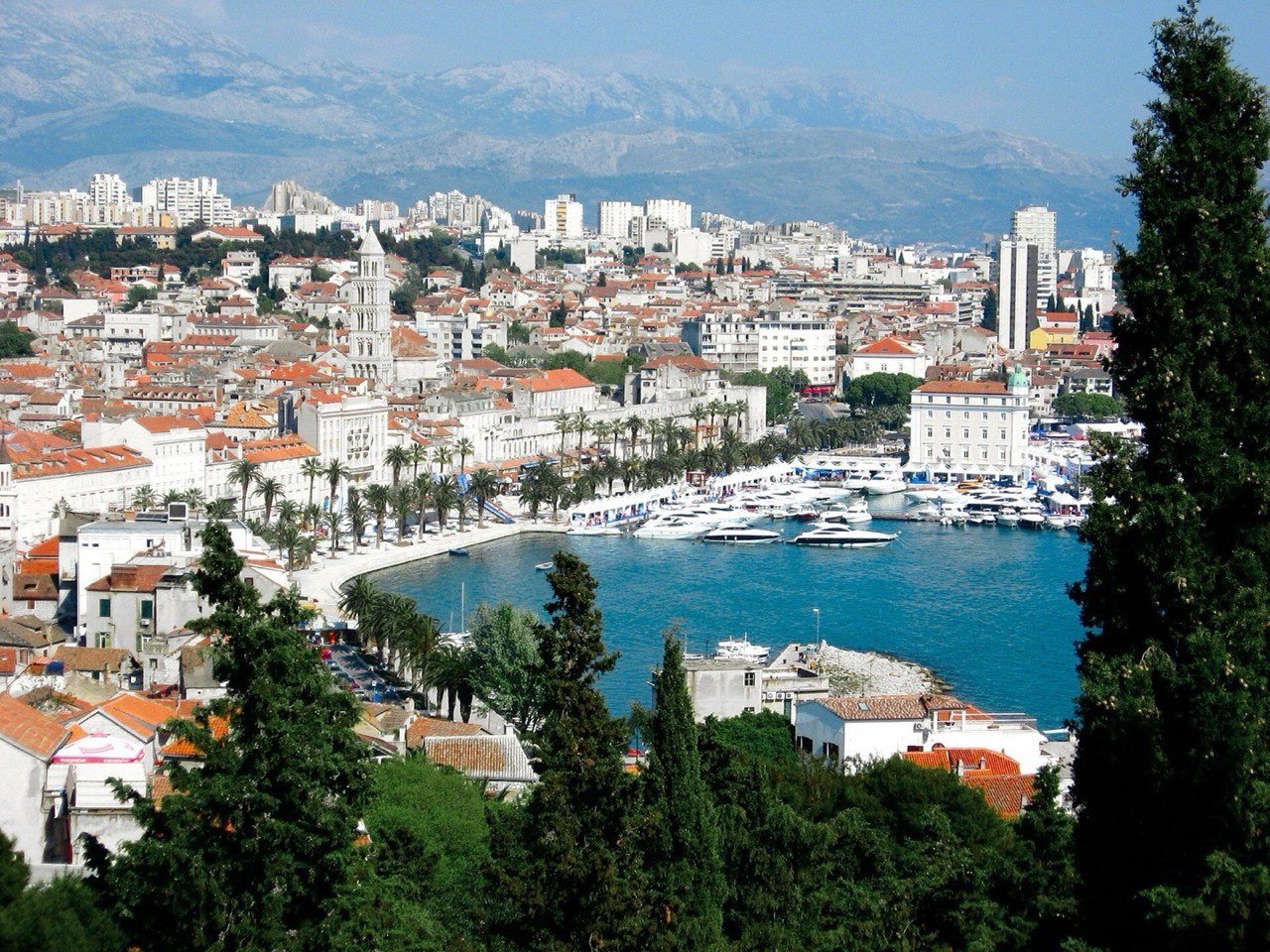
History and culture
Diocletian’s late-Roman palace became a lived-in historic centre. The imperial mausoleum became a Christian cathedral, while medieval houses grew within ancient walls. The complex is UNESCO-listed.
The palace is not one enclosed museum: it contains streets, homes and businesses. Distinguish public passages from ticketed monuments and respect residents in narrow lanes.
Respect silence and dress rules in churches. Keep residential doors and stairs clear when photographing. Remember that people live in old quarters, especially at night.
Places
Peristyle
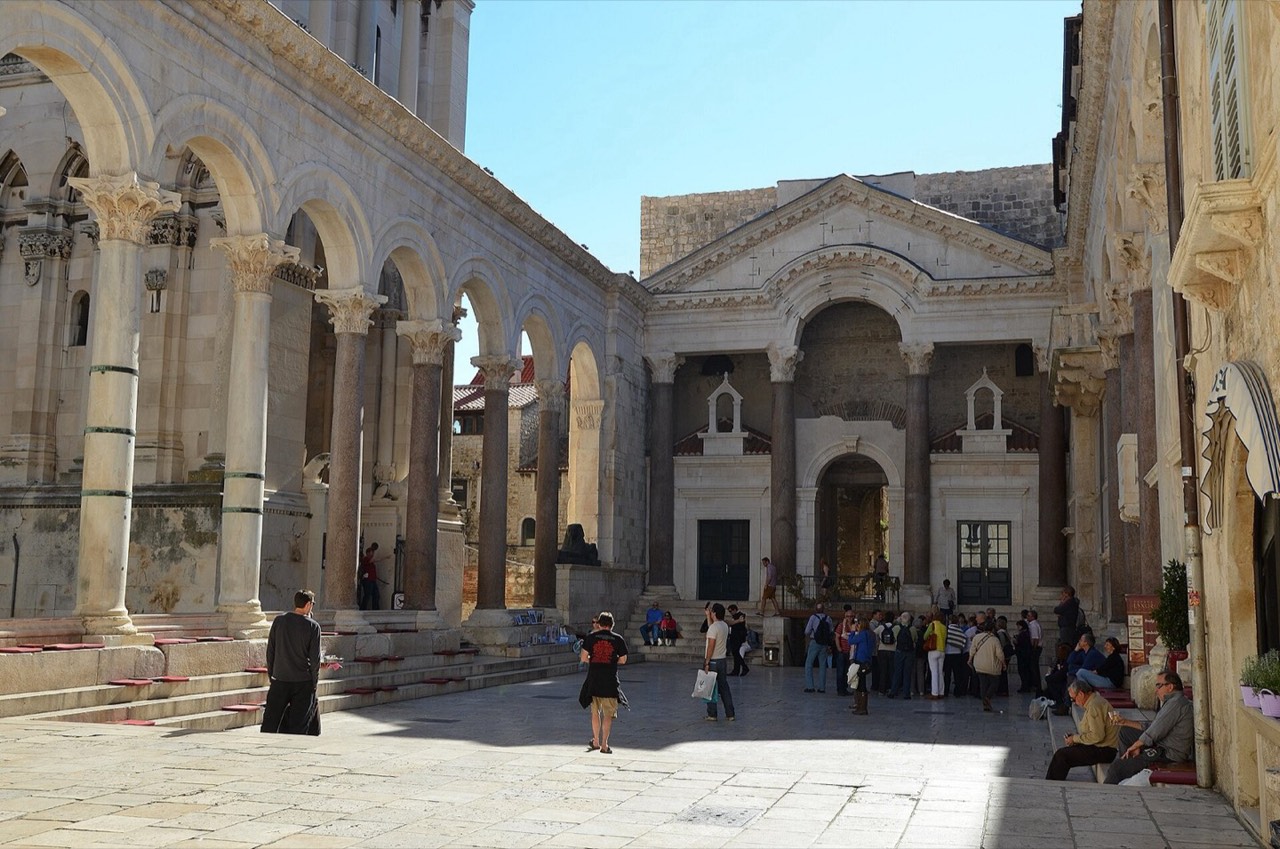
A colonnaded court at the heart of the former imperial palace.
The Roman ceremonial space retains its relationship with the mausoleum, temples and palace passages.
This is a useful place to understand the palace that became a city.
Do not sit on protected features or block passages. Performances and events may affect access.
Cathedral of Saint Domnius
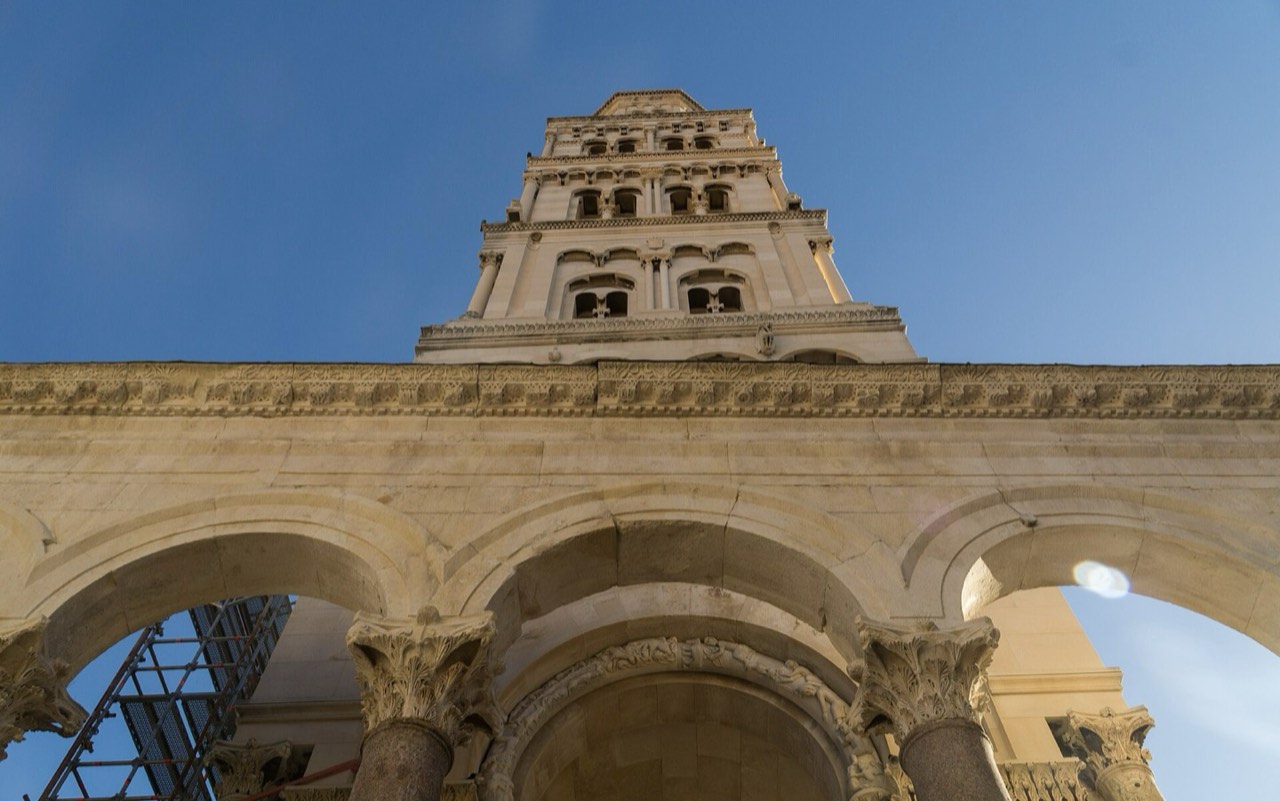
A working cathedral in Diocletian’s former mausoleum.
The Roman emperor’s mausoleum became a Christian church in the seventh century. A later bell tower marked the ancient building’s new role.
It shows the transition from imperial funerary architecture to the city’s religious life.
Cathedral, treasury and bell tower may have different ticket combinations. Climbing involves steep steps; services take precedence over sightseeing.
Palace Substructures
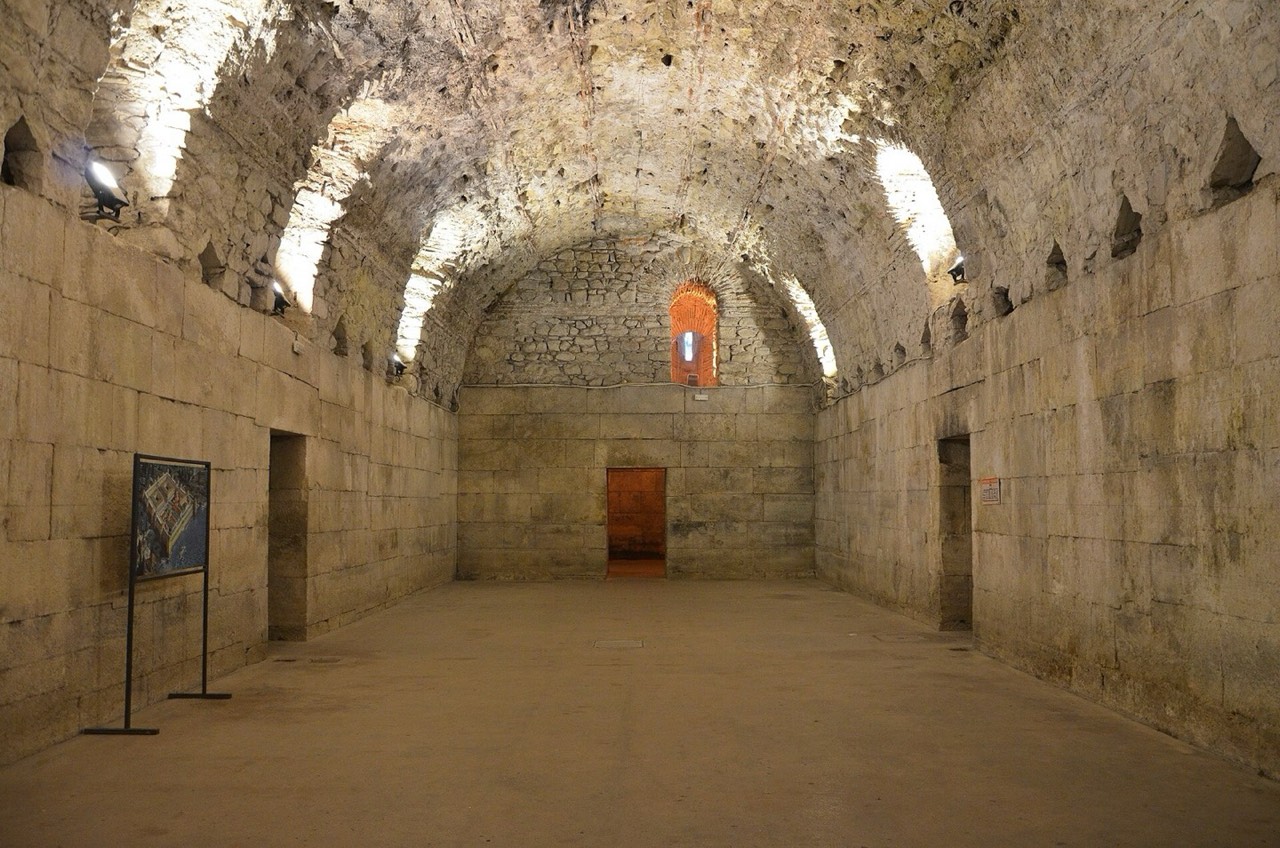
Vaulted foundations beneath the palace’s southern imperial apartments.
Roman halls supported the apartments above. Later deposits were cleared, revealing the structure of the ancient complex.
The foundations help reconstruct the lost rooms on the upper floor.
The public central passage is not admission to every hall: check ticketed exhibition access separately.
Golden Gate
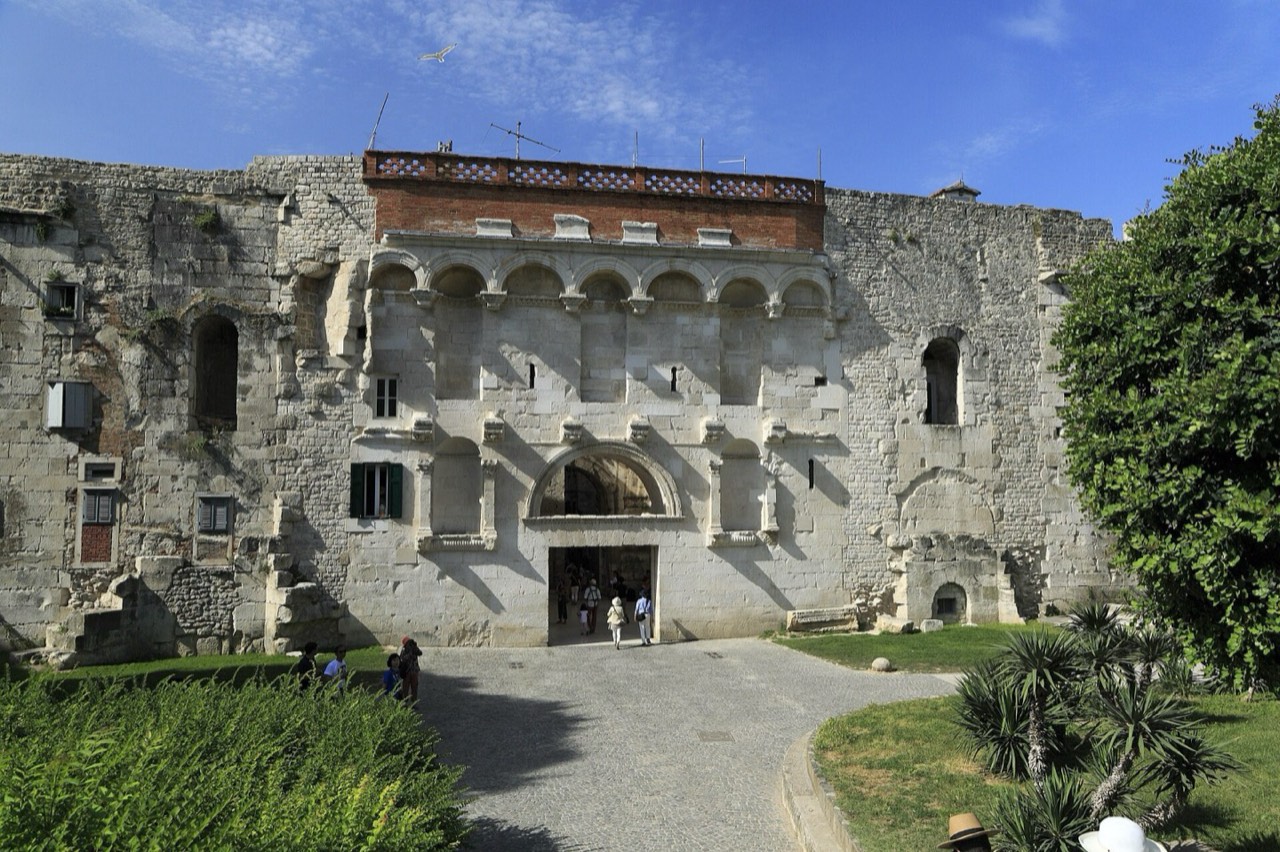
The ceremonial northern entrance to Diocletian’s Palace.
The Roman northern gate faced Salona. Its Venetian-era name, Golden Gate, was adopted later.
Niches and massive walls combine ceremonial entrance and defence.
View both sides without blocking pedestrians. Do not climb the ancient masonry.
Riva Promenade
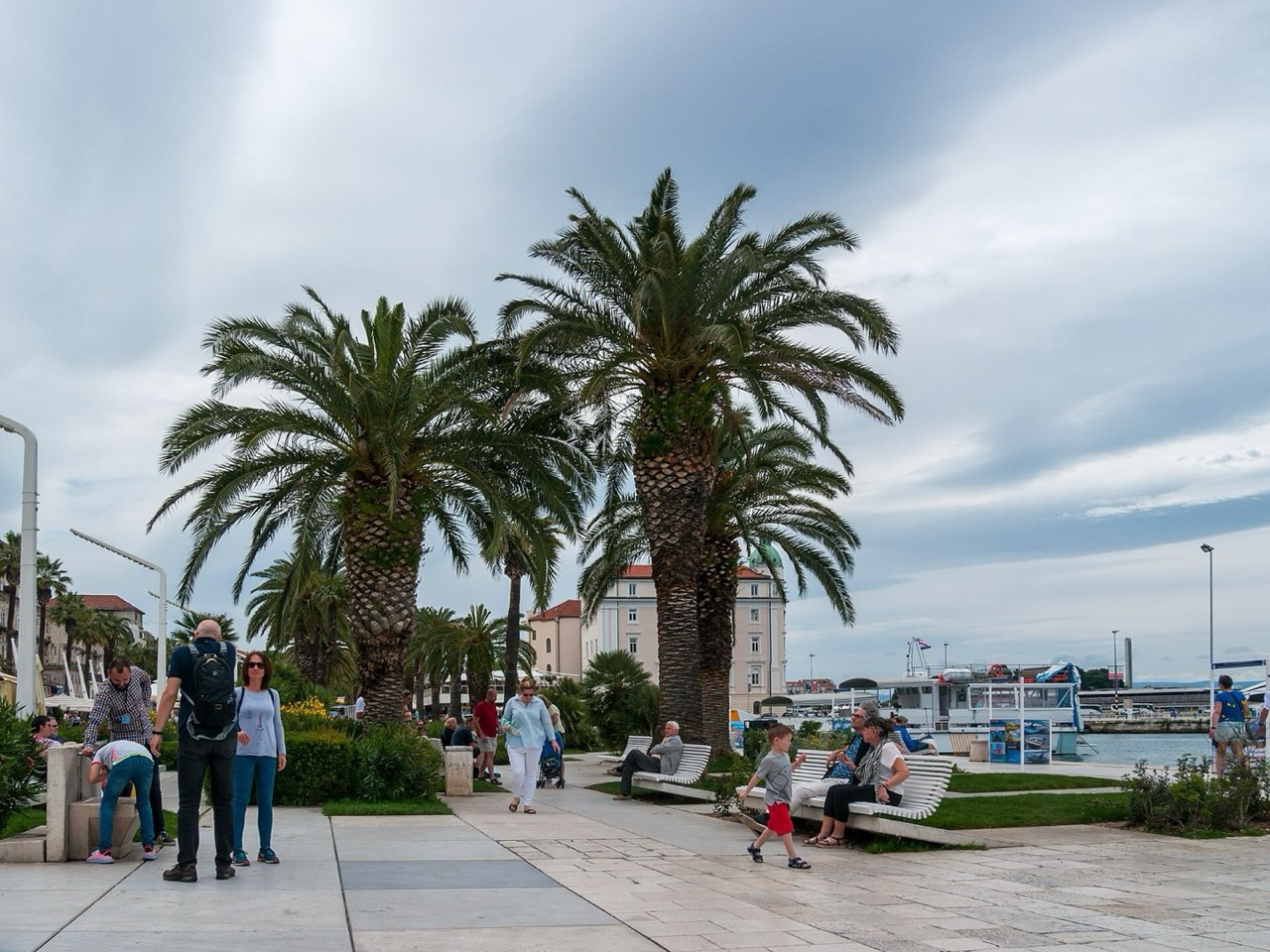
The urban waterfront before the palace’s southern façade.
The waterfront developed with the harbour and became a shared social space.
From the sea side, the palace core meets everyday Split.
The exposed promenade offers limited protection from heat. At night use lit paths and protect belongings in crowds.
Marjan First Viewpoint
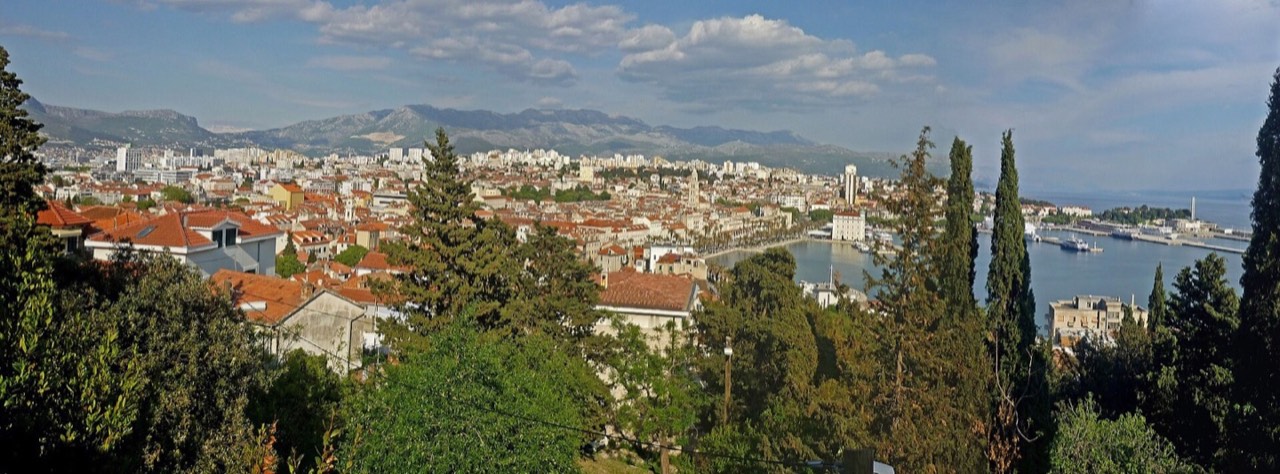
A viewpoint above Varoš overlooking the centre and harbour.
Marjan became a green space beside the dense city; its first viewpoint links the hill to the historic centre.
The panorama reveals the palace, harbour and density of the old city.
This is the first viewpoint, not Telegrin summit. Climb steps through Varoš; a full forest-park visit needs separate time.
Walking routes
Roman palace axis
From Golden Gate through the Peristyle to the cathedral and substructures entrance. Time includes exterior stops only; ticketed interiors are additional.
0.7 km · 95 min
- Golden Gate · 20 min at stop
- Peristyle · 25 min at stop
- Cathedral of Saint Domnius · 15 min at stop
- Palace Substructures · 15 min at stop
Palace and waterfront city
Compare the Peristyle, substructures entrance and Riva. Passage through the halls depends on access; an exterior route to the waterfront is also possible.
0.65 km · 85 min
- Peristyle · 25 min at stop
- Palace Substructures · 15 min at stop
- Riva Promenade · 25 min at stop
Riva to Marjan panorama
From the waterfront climb through Varoš to the first viewpoint. Steps, climbing and heat make this harder than a centre walk; the summit is not included.
1.3 km · 90 min
- Riva Promenade · 20 min at stop
- Marjan First Viewpoint · 30 min at stop
Food
Pašticada
Dalmatian beef slowly braised in a rich sauce, often with gnocchi.
Ask about wine in the sauce and the side dish; usually a main-course portion.
Crni rižot
Coastal risotto with cuttlefish and its ink.
Not vegetarian: ask about molluscs and other seafood ingredients.
Poljički soparnik
A thin chard-filled pie from neighbouring Poljica, also found in Split.
A regional product, not a city invention; ask about fresh baking and ingredients.
Peka
Meat or octopus with a side cooked under a lid covered with hot embers.
Often requires advance ordering and a wait; check the portion and main ingredient.
Fritule
Small sweet fried dough balls popular at coastal celebrations.
Try warm; ask about raisins, citrus and alcoholic flavourings.
Practical information
Walk the centre and use Promet Split buses for longer trips. Check city and suburban zones. Ferries and airport transfers have separate tickets and timetables.
Call 112 in an emergency. Wet stone can be slippery; carry water and sun protection in summer. Do not light fires in natural areas and follow local warnings.
Money and payments
Currency: euro, EUR. Croatia replaced the kuna with the euro in 2023. Ask whether cards are accepted; carry some euros for small purchases.
Tipping
Tips are discretionary. Check whether service is included and whether a tip can be added to a card payment.
Transport
Walk the centre and use Promet Split buses for longer trips. Check city and suburban zones. Ferries and airport transfers have separate tickets and timetables.
Emergency help
112 is the free emergency-services number. Give your location and the incident; English is supported. Source: gov.hr/en/112-uniform-european-emergency-phone-number/1184.
Electricity
Supply: 230 V / 50 Hz, plugs C/F. Earthed appliances need a compatible earthed adapter. A plug adapter does not change voltage.
Connectivity
Check roaming terms and limits with your operator. Save maps and tickets before walking; avoid automatically joining expensive satellite networks on vessels.
Verified sources and photo licences
- Croatian emergency system 112 · www.gov.hr
- Croatia currency and EU membership · european-union.europa.eu
- University of Zagreb conference practical guide: voltage and plugs · media.timtul.com
- European Commission roaming rules and limits · digital-strategy.ec.europa.eu
- Croatian Firefighting Association visitor precautions · hvz.gov.hr
- Local transport information · visitsplit.com
- Historical Complex of Split · whc.unesco.org
- Dalmatian fish, risotto and peka traditions · www.dalmatia.hr
- Pašticada and fritule in Split-Dalmatia · www.dalmatia.hr
- Poljica soparnik tradition · www.dalmatia.hr
- Peristyle · visitsplit.com
- Cathedral of Saint Domnius · visitsplit.com
- Palace Substructures · visitsplit.com
- Golden Gate · visitsplit.com
- Riva Promenade · visitsplit.com
- Marjan First Viewpoint · visitsplit.com