
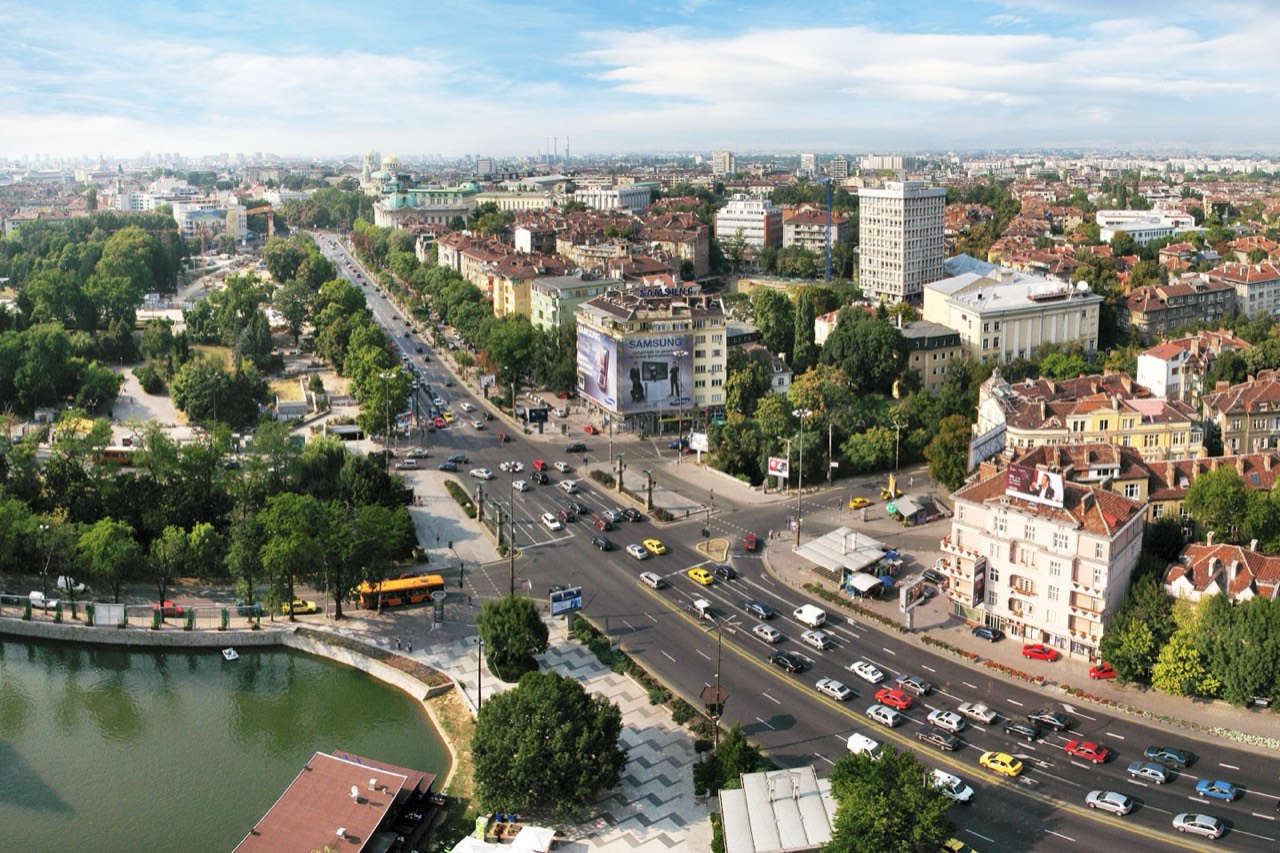
History and culture
Roman Serdica’s streets lie beneath the modern centre, while St George’s Rotunda preserves the late-antique city. St Sophia’s Basilica is associated with its present name. Early twentieth-century metropolitan buildings reveal another era: the synagogue, Alexander Nevsky Cathedral and former mineral baths.
Historic religious communities and archaeology coexist with a working capital. Boyana and Vitosha need separate journeys: they are not included in the short central walks below.
Follow clothing, quiet and photography rules in active places of worship; do not disrupt services. Check museum photography conditions separately. Historic homes and courtyards are not public merely because they appear on a walking route.
Places
Alexander Nevsky Cathedral
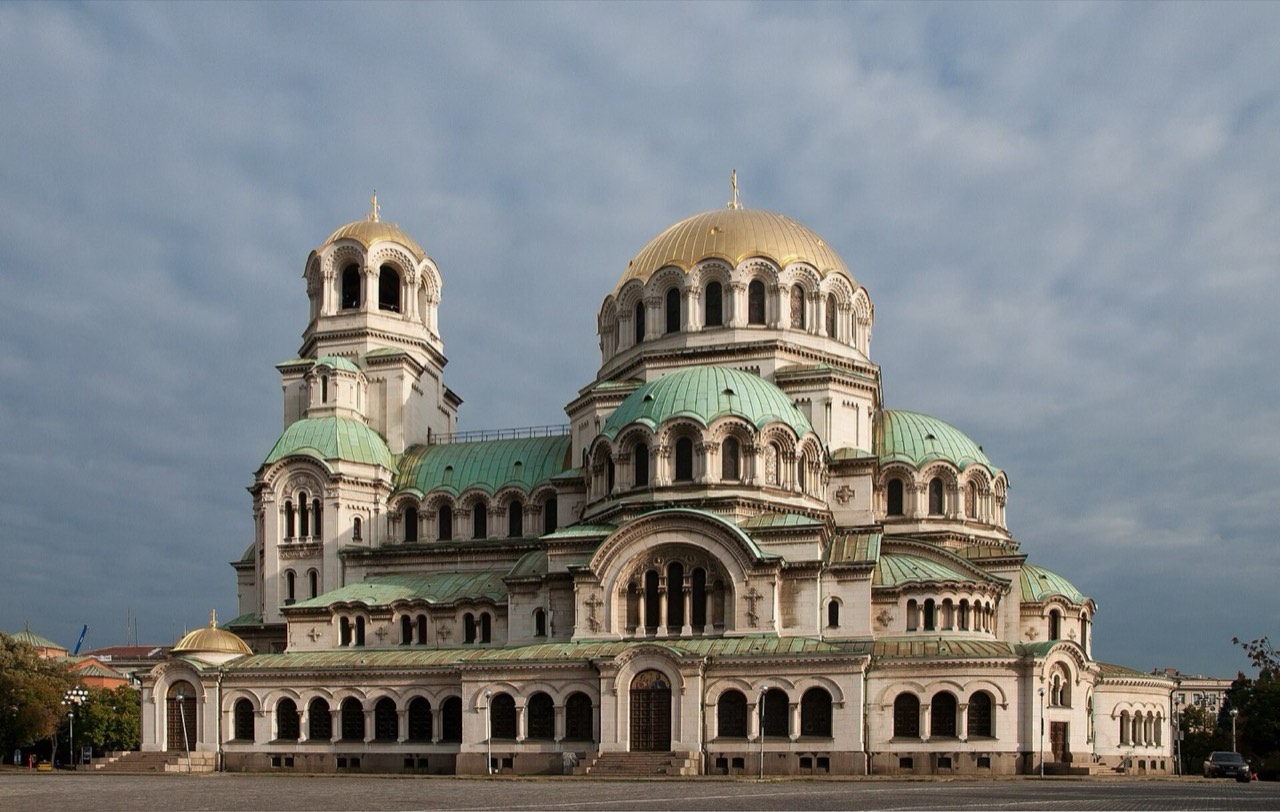
Multi-domed Orthodox cathedral by Alexander Nevsky Square.
The main construction, designed by Alexander Pomerantsev’s team, took place in 1904–1912. Consecration followed in 1924; laying the foundation stone was not the building’s completion.
It reveals the new capital’s monumental ecclesiastical architecture.
The square-side stop excludes the crypt and museum. Respect services and separate photography rules; stay off the roadway when viewing the domes.
St Sophia’s Basilica
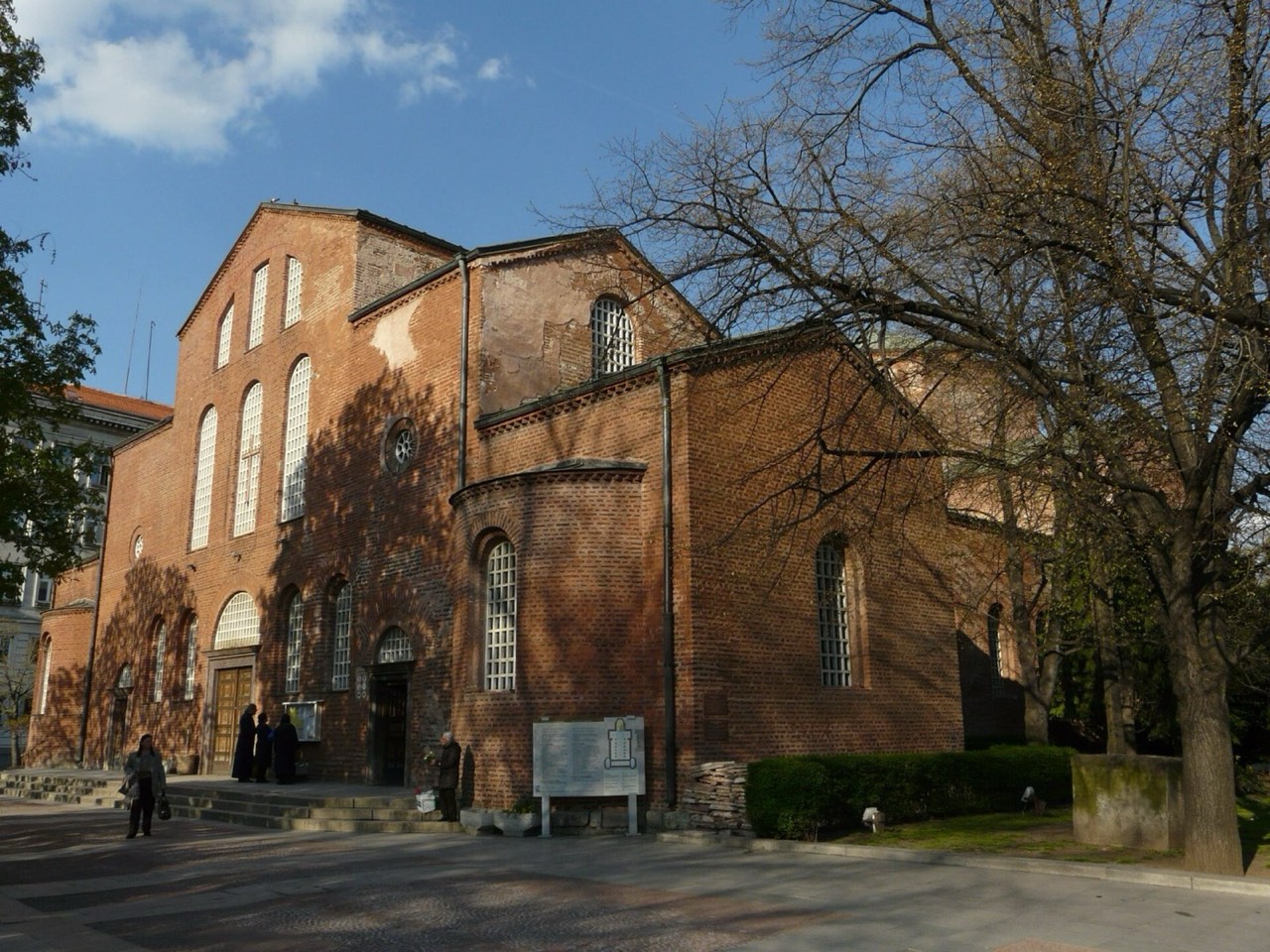
Early Christian brick basilica beside the larger cathedral.
The present basilica dates to around the fifth–sixth centuries above earlier buildings and a necropolis. Its name became associated with the city’s in medieval times; it is not Alexander Nevsky Cathedral.
It allows comparison of an early brick church with much later metropolitan architecture.
The underground archaeological museum is a separate visit. An exterior stop is sufficient for the walk; respect worshippers and check church access.
St George’s Rotunda
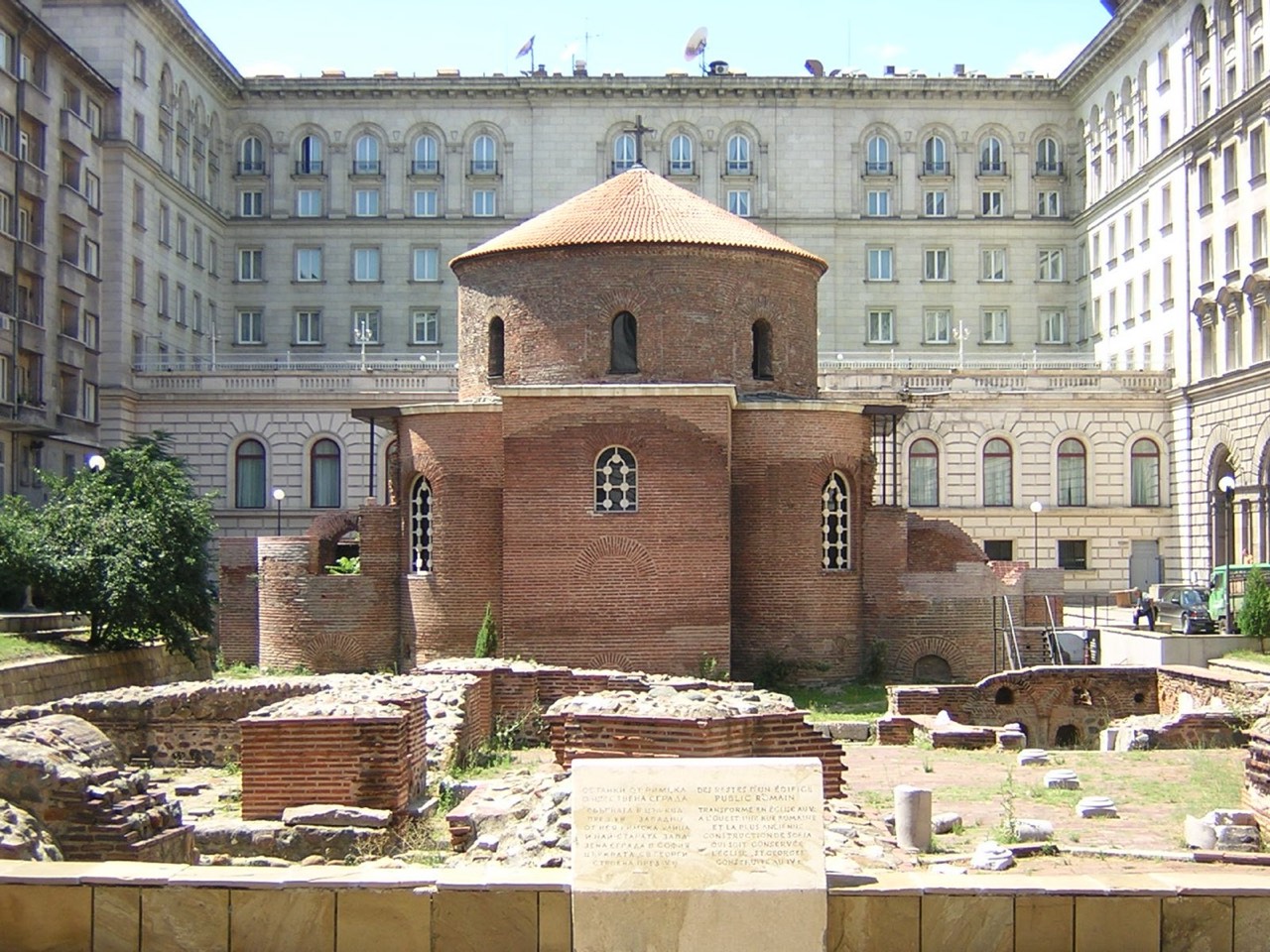
Circular brick church in the central courtyard beside the Presidency.
The rotunda originated within a Roman complex in the early fourth century. It became a church in the sixth century; its interior paintings belong to several later layers.
It preserves a late-antique scale amid large modern administrative buildings.
Use an open authorised courtyard passage and respect security restrictions. Frescoes are not part of an exterior stop; check church entry separately.
Serdica Archaeological Complex
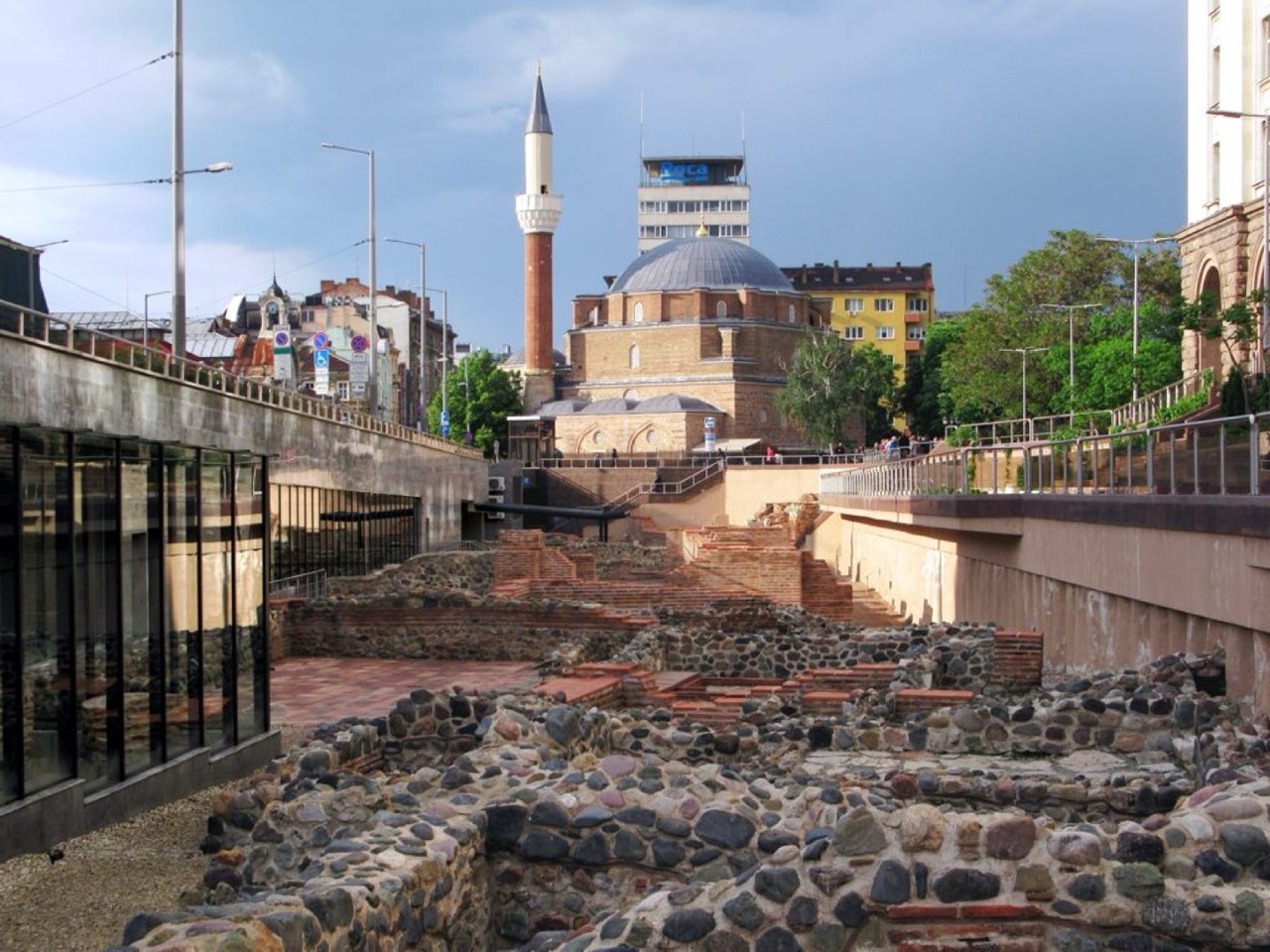
Remains of Roman streets and buildings by the Largo and Maria Luisa Boulevard.
Modern excavations revealed parts of ancient Serdica: its streets, water infrastructure and residential areas. Public archaeological zones and the museum display show different parts of the complex.
It makes the capital’s Roman layer visible beneath ordinary street level.
Do not step onto ancient walls or cross barriers. Use an open pedestrian entrance; check exhibition rooms and temporary closures separately.
Former Central Mineral Baths
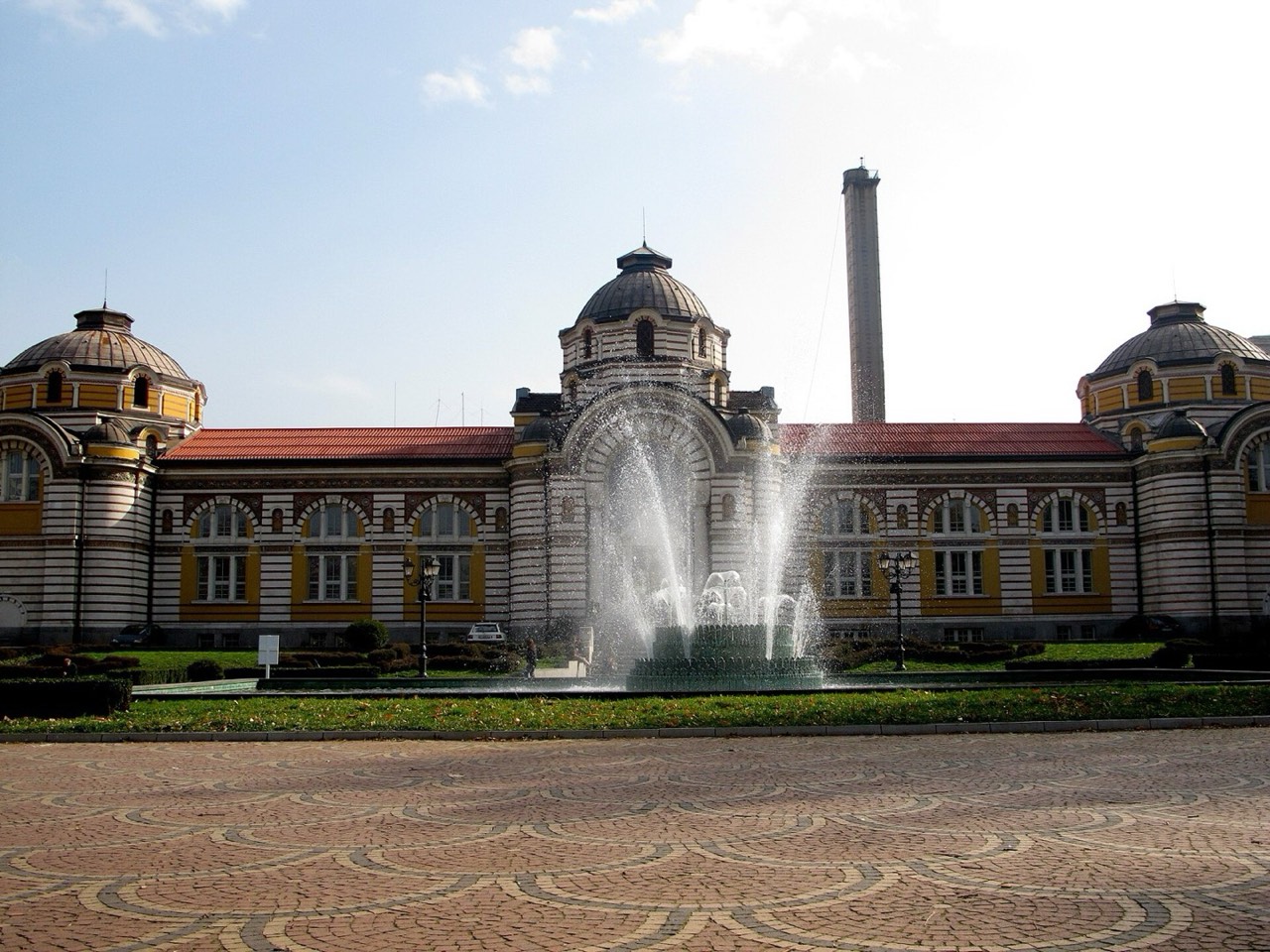
Decorative historic façade on Banski Square, now housing the history museum.
The baths officially opened in 1913, combining Secession design and local decorative motifs. Since 2015 the former bath building has housed the permanent history exhibition.
It links mineral springs, civic hygiene and the development of public buildings.
This is not admission to a working public bath. The walk includes the square-side façade; add museum admission and exhibition time separately.
Sofia Synagogue
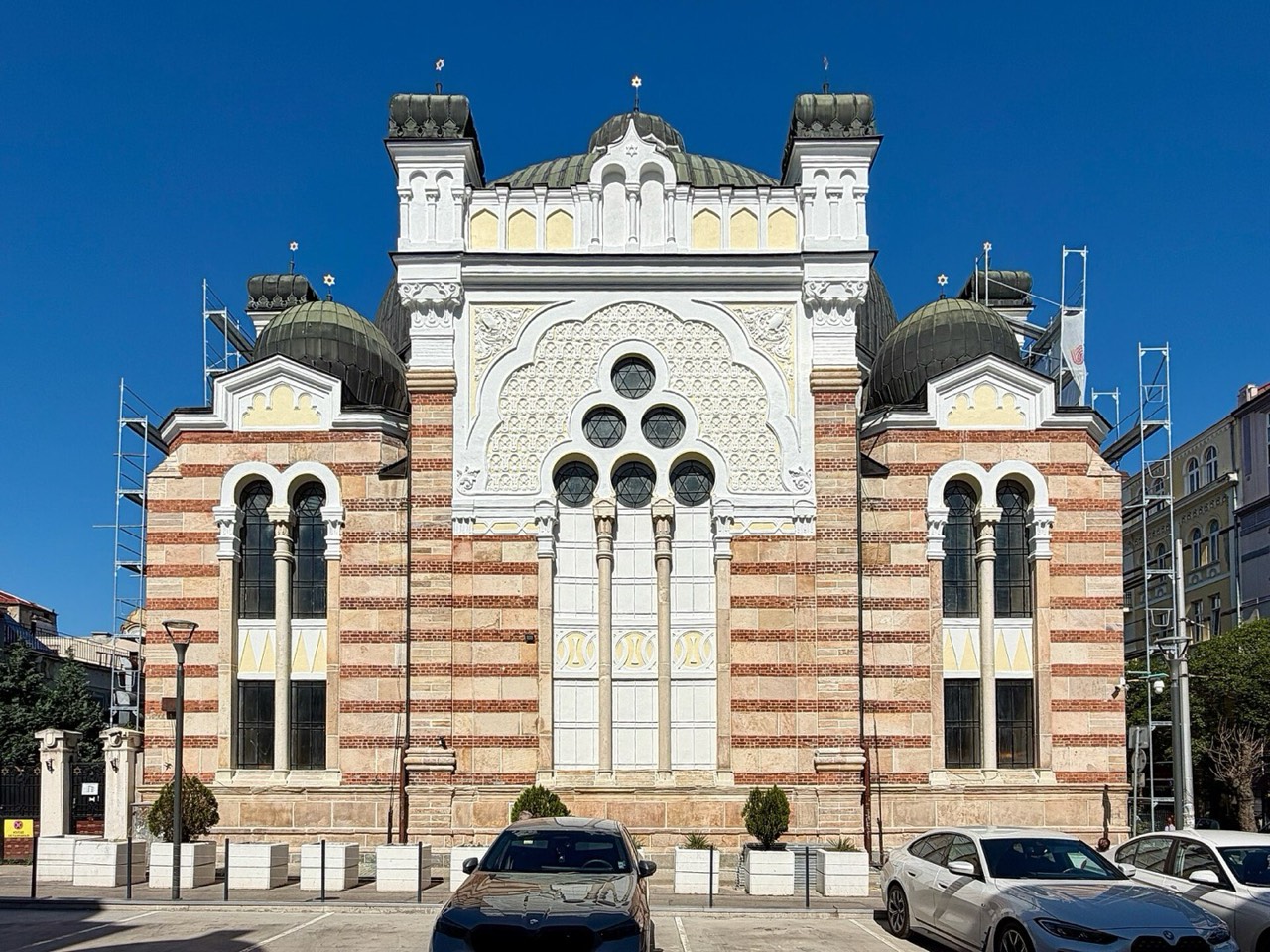
Active synagogue on Ekzarh Yosif Street.
Friedrich Grünanger’s building opened in 1909. Associated with Sofia’s Sephardic community, it retains its religious function.
It complements Orthodox and Roman landmarks with the Jewish community’s history.
An exterior stop does not guarantee entry. Check visiting arrangements and security requirements with the community; do not photograph security or closed rooms.
Walking routes
Two eras of church architecture
From Alexander Nevsky Square use authorised crossings to St Sophia’s Basilica. Compare the domed skyline with the brick basilica; the crypt and underground museum are excluded.
0.4 km · 70 min
- Alexander Nevsky Cathedral · 25 min at stop
- St Sophia’s Basilica · 25 min at stop
The capital’s Roman layer
Leave St George’s accessible courtyard via open streets for Serdica’s pedestrian entrances. Follow designated paths, not shortcuts over ruins. If a passage is closed, check the diversion on site.
0.5 km · 75 min
- St George’s Rotunda · 25 min at stop
- Serdica Archaeological Complex · 25 min at stop
Banski Square and the synagogue
View the former baths from the square, then follow open pavements to the synagogue on Ekzarh Yosif. This is an exterior route; the museum and synagogue interior have separate access conditions.
0.45 km · 70 min
- Former Central Mineral Baths · 25 min at stop
- Sofia Synagogue · 25 min at stop
Food
Banitsa
Bulgarian layered pastry with cheese and egg.
Ask the bakery about fillings and availability; usually contains wheat, milk and egg.
Shopska salad
Vegetable salad topped with white brined cheese, found on Sofia menus.
It is not dairy-free; you can ask for cheese separately. Check dressing ingredients.
Kebapche
Bulgarian grilled seasoned mince shaped into small sausages.
Ask which meat is used: pork and beef may be mixed. Check the menu for sides.
Drob sarma
Lamb-offal dish found in traditional Sofia restaurants.
Check the particular recipe and dairy or egg additions; the name does not mean vegetarian cabbage rolls.
Bob yahniya
Bean stew, including oven-baked versions on local menus.
For a vegetarian version, ask about meat stock and additions, not just visible pieces of meat.
Practical information
Metro, trams, trolleybuses and buses form the urban network. Ticket 30+ permits transfers when the final validation is before 30 minutes from the first; you can then finish that journey. Validate again at every transfer. Use the same bank card and payment device consistently; check other ticket products separately.
Call 112 for an urgent emergency. Use authorised crossings at tram tracks and broad boulevards. Secure belongings in transport and crowds; stone and archaeological steps are slippery after rain. Courtyard and lower-level access may be temporarily restricted.
Euro and payments
Bulgaria’s currency is the euro, EUR, from 1 January 2026. Do not plan lev payments from an old guidebook. Check card acceptance and keep a little euro cash for small purchases; review the amount, currency and charges before confirming payment.
Tipping and the bill
Restaurant tips are customary for good service. First check the total and any service charge; choose your own additional tip. When paying by card, ask whether a tip can be added through the terminal.
Local transport
Metro, trams, trolleybuses and buses form the urban network. Ticket 30+ permits transfers when the final validation is before 30 minutes from the first; you can then finish that journey. Validate again at every transfer. Use the same bank card and payment device consistently; check other ticket products separately.
Emergency help
112 is the free round-the-clock number for urgent police, fire and medical assistance. Give your precise location, explain the emergency and follow instructions. It is not an information line. An offline pack cannot provide a telephone connection. Source: mvr.bg/112.
Electricity
Supply: 230 V / 50 Hz; plug types C and F. Check your device’s voltage rating and suitable adapter. An adapter changes the plug shape, not the voltage; earthed appliances need a suitable earthed adapter.
Connectivity and offline use
Check Bulgaria in your SIM/eSIM plan before travelling. EU roaming applies to eligible plans and has fair-use limits: not every foreign SIM is free to use. Save the city pack, accommodation address and tickets beforehand; coverage and mobile apps require checking on arrival.
Verified sources and photo licences
- Bulgarian Ministry of Interior: free 24-hour emergency 112 · www.mvr.bg
- ECB: Bulgaria adopts the euro on 1 January 2026 · www.ecb.europa.eu
- Bulgarian Academy of Sciences conference organiser: C/F, 230 V, 50 Hz; currency section predates euro · conference.ott-iict.bas.bg
- 2026 conference organiser: restaurant tipping custom, not a mandatory tariff · www.burgas2026.sdewes.org
- European Commission: eligible roaming plans and fair-use limits · europa.eu
- Local transport authority current conditions · www.sofiatraffic.bg
- Municipal tourism: central archaeology versus separate Vitosha/Boyana trips · visitsofia.bg
- Municipal tourism: former bath houses history museum since 2015 · www.visitsofia.bg
- Ministry of Tourism: Bulgarian pastry and barbecue recipes, not current prices · www.tourism.government.bg
- Sofia restaurant: Shopska salad · kashtite.com
- Sofia restaurant: lamb drob sarma · kashtite.com
- Sofia restaurant: oven-baked bean stew · kashtite.com
- Alexander Nevsky Cathedral · visitsofia.bg
- St Sophia’s Basilica · visitsofia.bg
- St George’s Rotunda · visitsofia.bg
- Serdica Archaeological Complex · visitsofia.bg
- Former Central Mineral Baths · www.tourism.government.bg
- Sofia Synagogue · visitsofia.bg