
History and culture
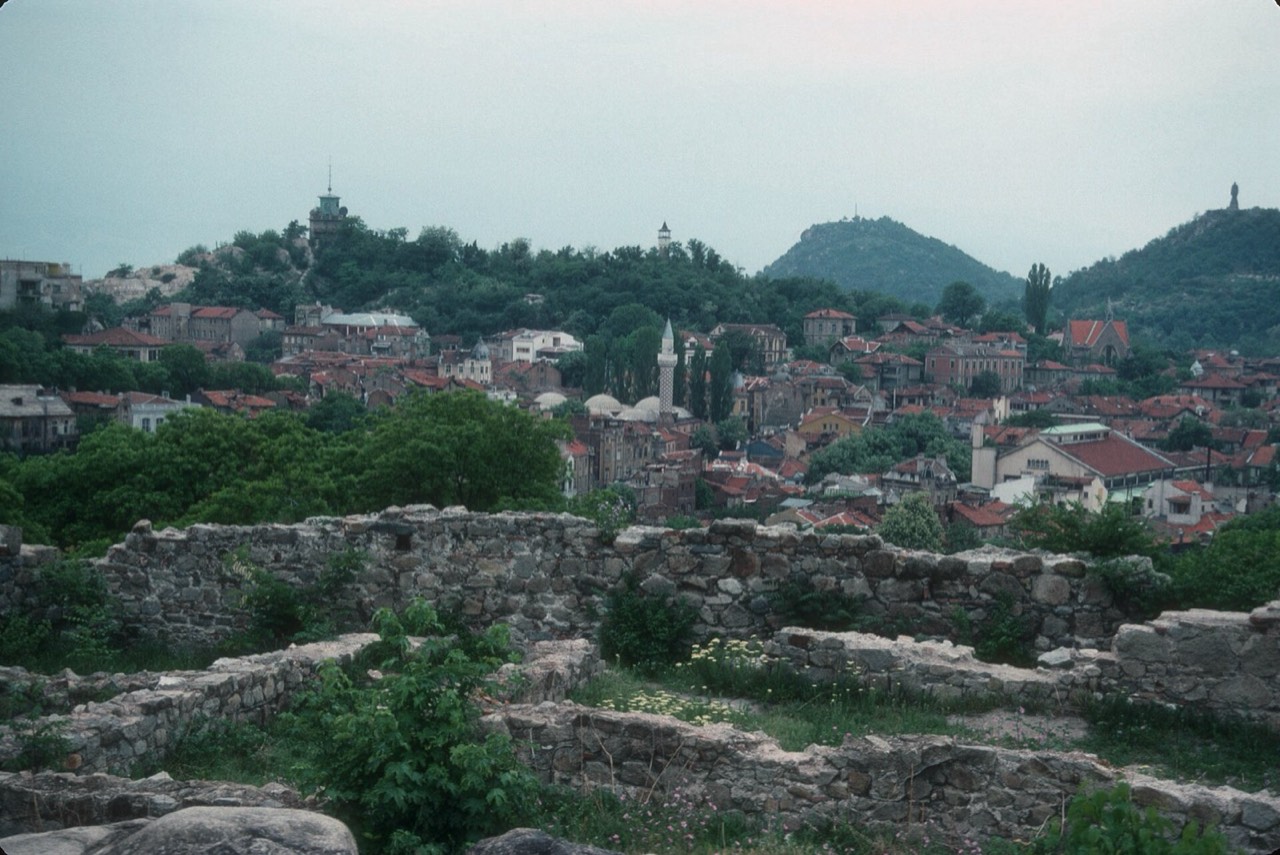
The Three Hills preserve remains from early settlement to medieval defences. The theatre and stadium belonged to Roman Philippopolis but hosted different spectacles. Nineteenth-century merchants’ houses and Kapana’s craft streets complement the ancient city layer.
Urban crafts, old merchant interiors and contemporary creative venues coexist in a small centre. Kapana’s festival history does not mean a particular festival is running today; check the current programme.
Follow clothing, quiet and photography rules in active places of worship; do not disrupt services. Check museum photography conditions separately. Historic homes and courtyards are not public merely because they appear on a walking route.
Places
Ancient Theatre of Philippopolis
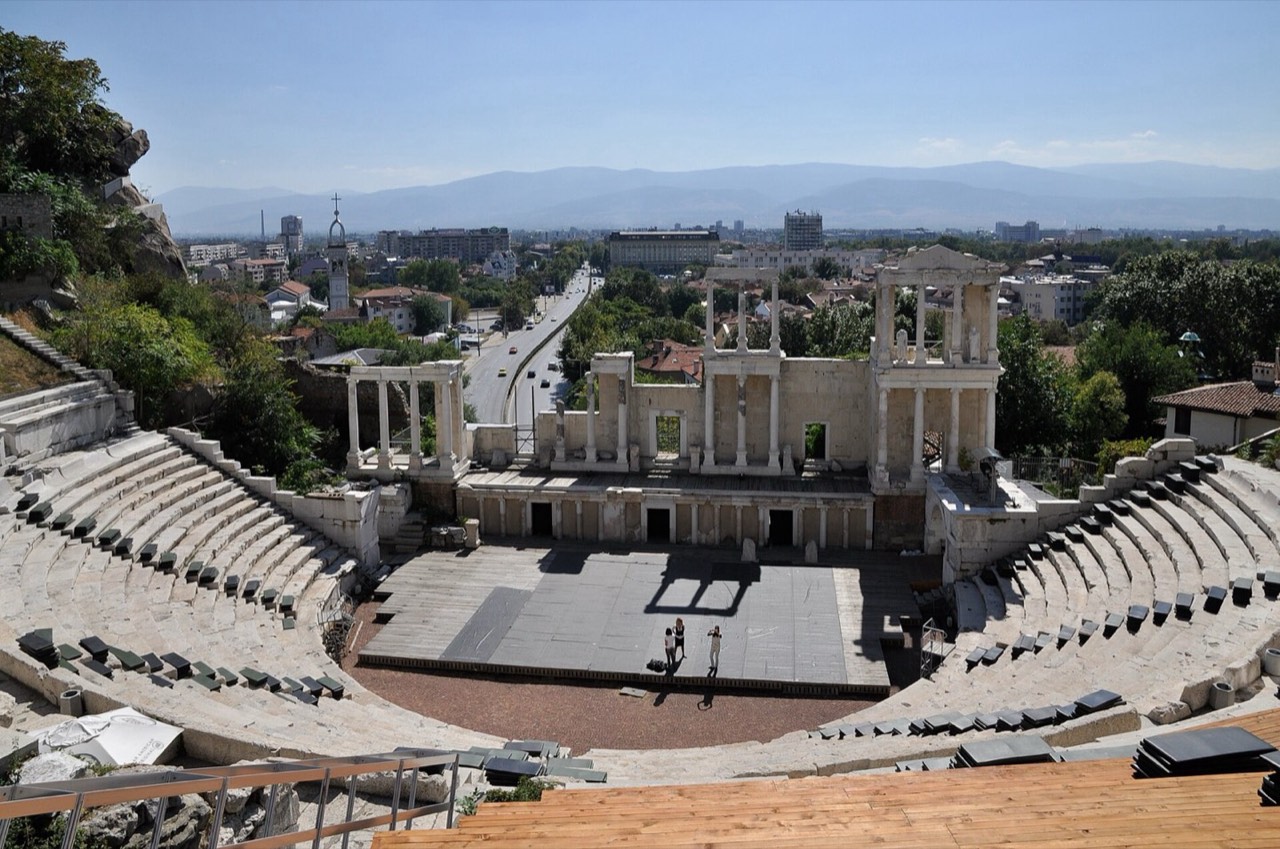
Roman theatre on the slope between Dzhambaz and Taksim hills.
A newly discovered memorial inscription associates construction with AD 90, under Domitian. This revises the previously common dating to Trajan’s reign. The restored theatre also hosts contemporary performances.
It reveals ancient theatre design and how the audience space relates to the hillside.
Check sightseeing admission separately from concert arrangements: performances can restrict access. Seating rows have steps; a full ticketed visit is excluded from the walking budget.
Roman Stadium
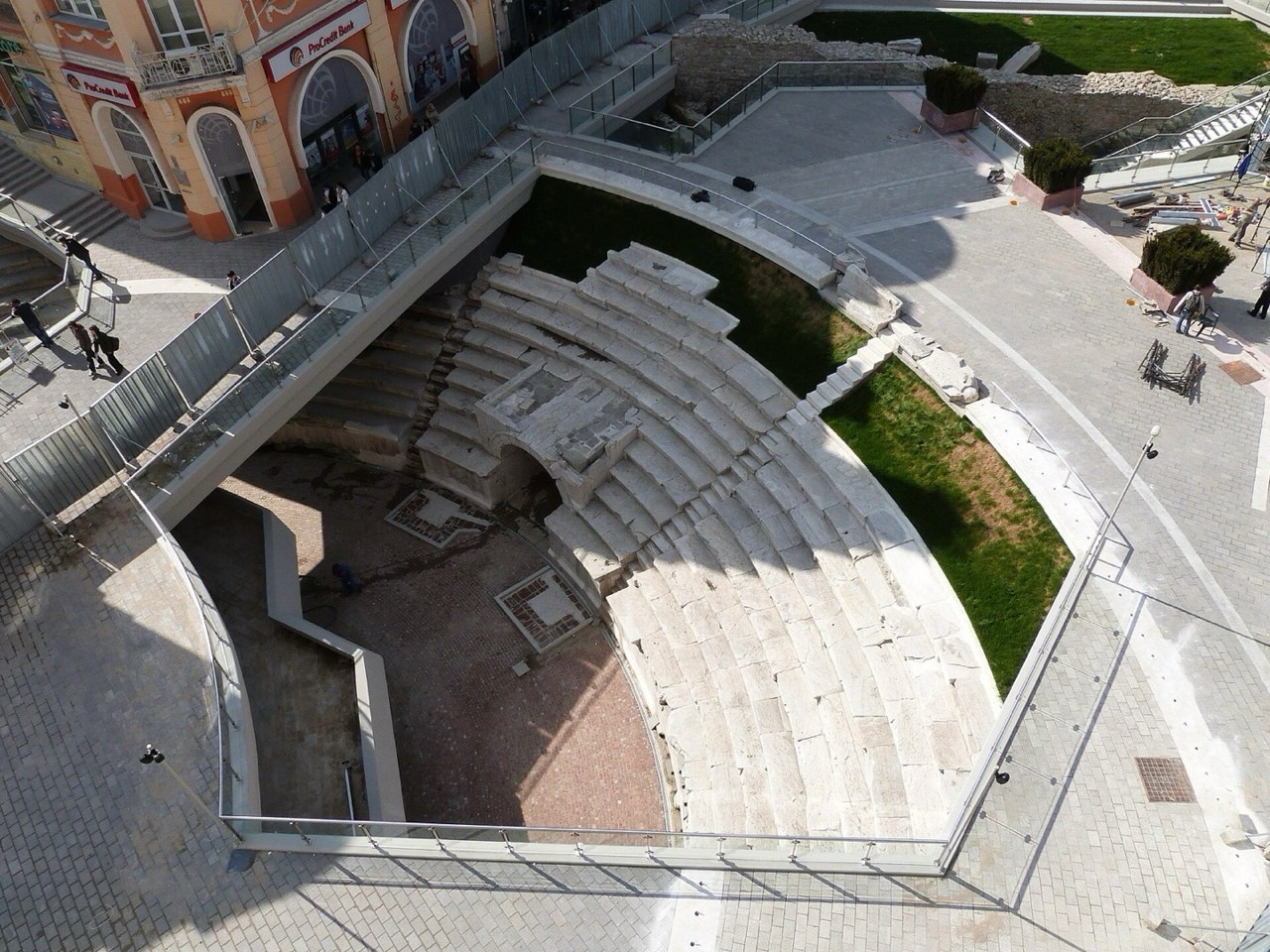
Exposed northern end of the ancient stadium beneath the main pedestrian street.
Built in the early second century, the stadium hosted athletic competitions. Much of its long structure remains beneath the present city; the visible seating curve is not the whole stadium or the ancient theatre.
It shows how a modern shopping street runs above an ancient sports venue.
View it from an open public level. Do not cross barriers or treat the small exposed portion as a route through the entire ancient arena.
Nebet Tepe
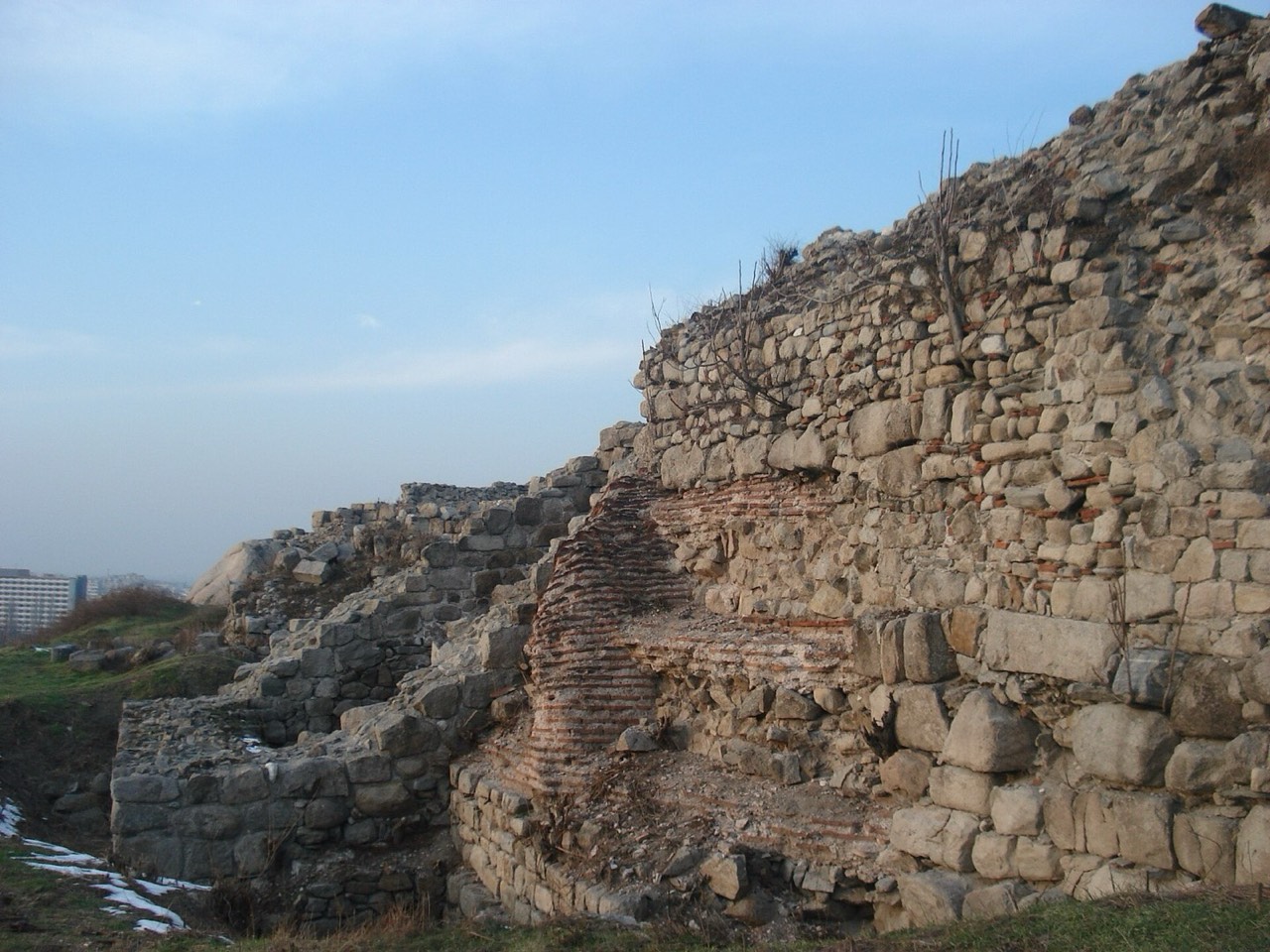
Archaeological hill with fortifications and city views.
Settlement traces on the hill reach back to the sixth millennium BC. Later defences belong to several eras; not all visible walls share one date.
It combines archaeological layers with a clear understanding of the city’s terrain.
Check the archaeological complex’s current access arrangements. Do not walk on masonry or cliff edges; the climb, stone surfaces and possible steps require care.
Hisar Kapia
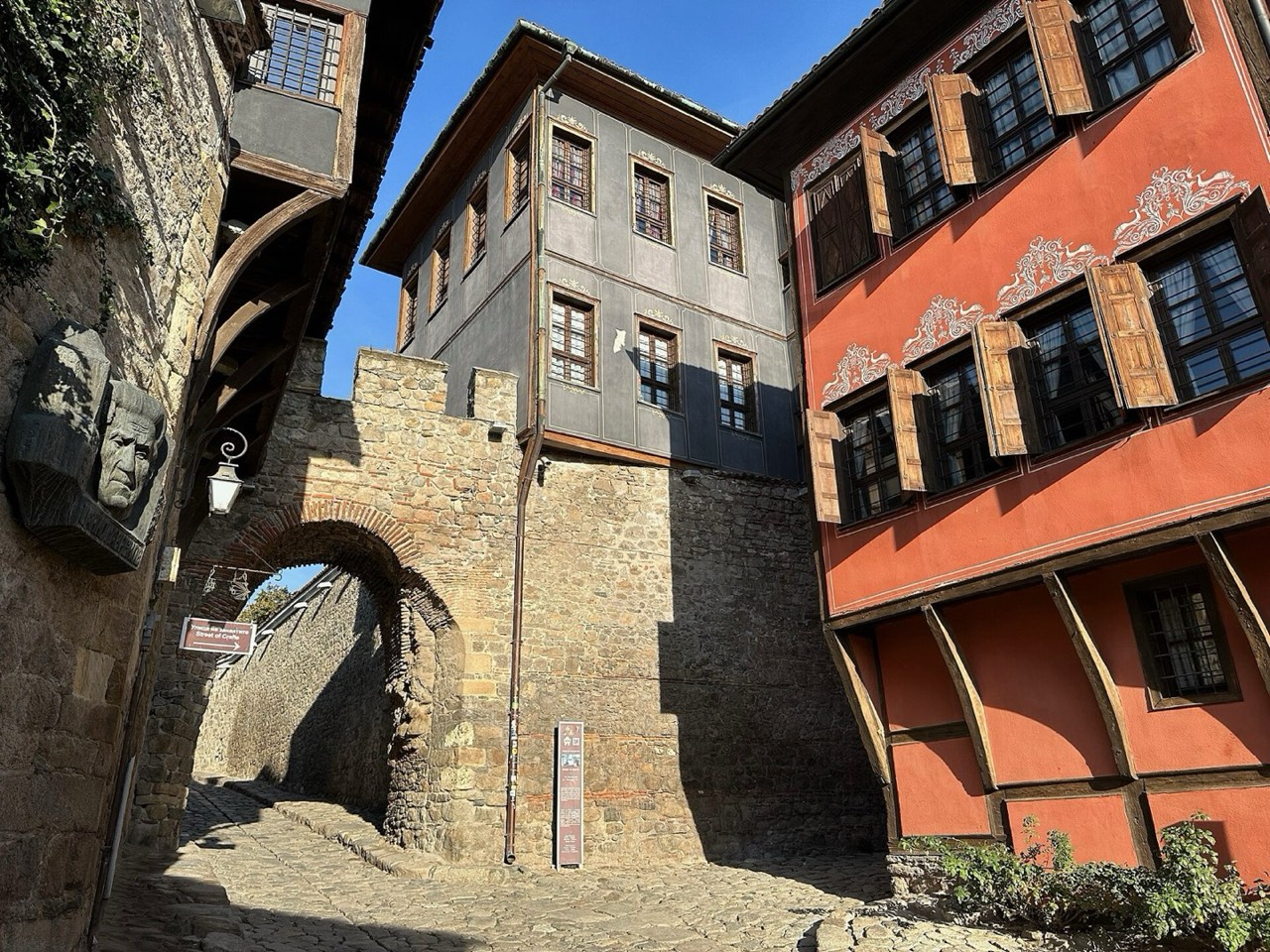
Historic gate amid the Old Town’s merchant houses.
A gate existed here in antiquity. Its present form chiefly reflects eleventh–thirteenth-century medieval alterations; surrounding houses came much later.
It juxtaposes defences and domestic architecture within one small passage.
Keep the archway clear and stay out of closed adjoining courtyards. The surface is uneven; photograph from a safe spot without blocking passage.
Kuyumdzhioglu House and Ethnographic Museum
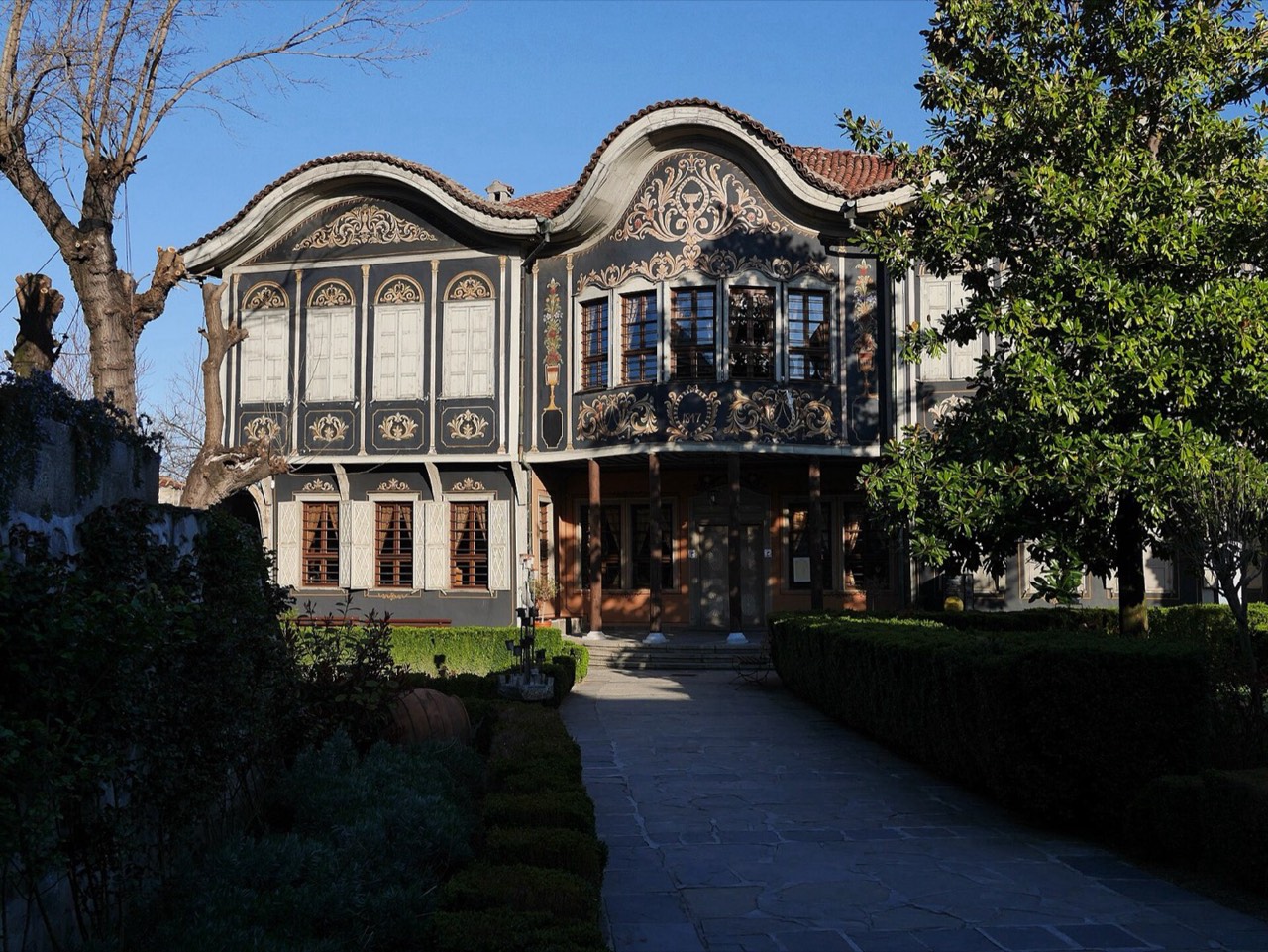
Imposing merchant’s house with an undulating façade beside Hisar Kapia.
Argir Kuyumdzhioglu’s house was built in 1847. Its symmetrical design and decorated rooms belong to Bulgarian Revival architecture; it now houses the regional ethnographic museum.
It represents merchant life and the artistic culture of old Plovdiv.
The walk allows only an accessible exterior stop. Check displays, courtyard access and photography rules with the museum; do not assume every room is freely accessible.
Kapana
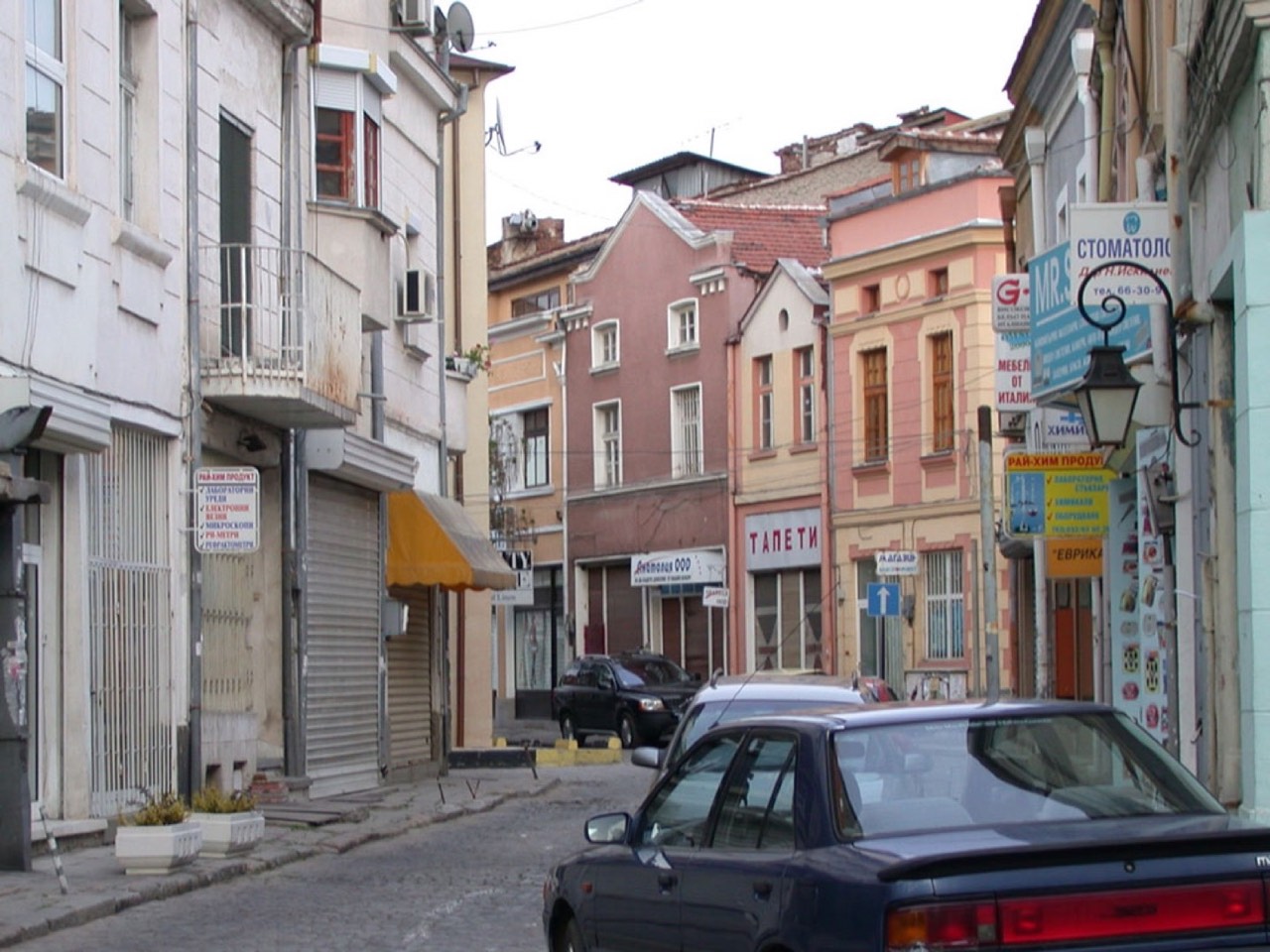
Small quarter of craft streets, studios and cafés.
The quarter developed as a craft centre centuries ago; street names recall smiths, furriers and goldsmiths. Its modern creative revival is associated with the 2019 European Capital of Culture initiative.
It connects historic crafts with contemporary urban life rather than museums alone.
Respect working studios and residential entrances. Festival programmes change; a modern mural’s visibility does not imply unrestricted commercial reproduction rights.
Walking routes
Sports arena and craft streets
From the public view of the stadium’s northern end follow Rayko Daskalov into Kapana’s open streets. Look at craft street names and old façades; enter studios only with their owners’ permission.
0.7 km · 85 min
- Roman Stadium · 25 min at stop
- Kapana · 30 min at stop
Gate, merchant house and hill
From Hisar Kapia reach the accessible Kuyumdzhioglu façade, then take the designated uphill approach to Nebet Tepe. Expect a climb and uneven cobbles; museum displays are excluded. Do not bypass barriers if the complex is closed.
0.8 km · 95 min
- Hisar Kapia · 15 min at stop
- Kuyumdzhioglu House and Ethnographic Museum · 20 min at stop
- Nebet Tepe · 25 min at stop
Old Town to the ancient theatre
From Kuyumdzhioglu House follow open Old Town streets to an authorised theatre approach. View houses from outside. Timing excludes a full museum visit or concert; watch for slippery stones on the descent.
1 km · 85 min
- Kuyumdzhioglu House and Ethnographic Museum · 25 min at stop
- Ancient Theatre of Philippopolis · 25 min at stop
Food
Tarator
Cold yogurt soup with cucumber and garlic.
Versions contain nuts; check ingredients and seasonal availability beforehand.
Gyuvech
Meat and vegetables slow-cooked in pottery.
Serving style and ingredients vary; a vegetable-rich version need not be meat-free.
Sarmi
Cabbage leaves with rice stuffing, sometimes with meat.
Ask whether the version contains meat and which sauce is served; this is a nationwide dish.
Stuffed peppers
Peppers baked with rice and minced meat.
Check alternative fillings and sauce ingredients; milk, egg and wheat may be present.
Kyufte
Seasoned minced-meat patties, including grilled versions.
Check the meat and additions: bread and egg may be used. Look for them on traditional Plovdiv menus, not as an exclusive city invention.
Practical information
Use buses and the municipal route map for longer urban journeys. The ordinary paper single-journey ticket excludes transfers; a municipal decision sets it at EUR 0.50 from 1 February 2026. Check other products and payment methods separately. The Old Town is best explored on foot, with hills and cobbles.
Call 112 for an emergency. Wear stable shoes on hills and wet cobbles; uphill walks are not step-free. At Nebet Tepe stay on authorised paths and away from edges. Plan water and breaks in summer; check event-related closures separately.
Euro and payments
Bulgaria’s currency is the euro, EUR, from 1 January 2026. Do not plan lev payments from an old guidebook. Check card acceptance and keep a little euro cash for small purchases; review the amount, currency and charges before confirming payment.
Tipping and the bill
Restaurant tips are customary for good service. First check the total and any service charge; choose your own additional tip. When paying by card, ask whether a tip can be added through the terminal.
Local transport
Use buses and the municipal route map for longer urban journeys. The ordinary paper single-journey ticket excludes transfers; a municipal decision sets it at EUR 0.50 from 1 February 2026. Check other products and payment methods separately. The Old Town is best explored on foot, with hills and cobbles.
Emergency help
112 is the free round-the-clock number for urgent police, fire and medical assistance. Give your precise location, explain the emergency and follow instructions. It is not an information line. An offline pack cannot provide a telephone connection. Source: mvr.bg/112.
Electricity
Supply: 230 V / 50 Hz; plug types C and F. Check your device’s voltage rating and suitable adapter. An adapter changes the plug shape, not the voltage; earthed appliances need a suitable earthed adapter.
Connectivity and offline use
Check Bulgaria in your SIM/eSIM plan before travelling. EU roaming applies to eligible plans and has fair-use limits: not every foreign SIM is free to use. Save the city pack, accommodation address and tickets beforehand; coverage and mobile apps require checking on arrival.
Verified sources and photo licences
- Bulgarian Ministry of Interior: free 24-hour emergency 112 · www.mvr.bg
- ECB: Bulgaria adopts the euro on 1 January 2026 · www.ecb.europa.eu
- Bulgarian Academy of Sciences conference organiser: C/F, 230 V, 50 Hz; currency section predates euro · conference.ott-iict.bas.bg
- 2026 conference organiser: restaurant tipping custom, not a mandatory tariff · www.burgas2026.sdewes.org
- European Commission: eligible roaming plans and fair-use limits · europa.eu
- Local transport authority current conditions · plovdiv.bg
- Municipal tourism: Three Hills and historic reserve · www.visitplovdiv.com
- Municipal public-transport route information; old lev tariffs superseded by 2026 decision · www.plovdiv.bg
- Ministry of Tourism: Bulgarian dishes, not exclusive Plovdiv inventions · www.tourism.government.bg
- Plovdiv restaurant identifies its traditional Bulgarian cuisine; individual availability must be checked · www.megdanabg.com
- Ancient Theatre of Philippopolis · www.visitplovdiv.com
- Roman Stadium · www.visitplovdiv.com
- Nebet Tepe · www.visitplovdiv.com
- Hisar Kapia · www.visitplovdiv.com
- Kuyumdzhioglu House and Ethnographic Museum · ethnograph.info
- Kapana · www.visitplovdiv.com