
History and culture
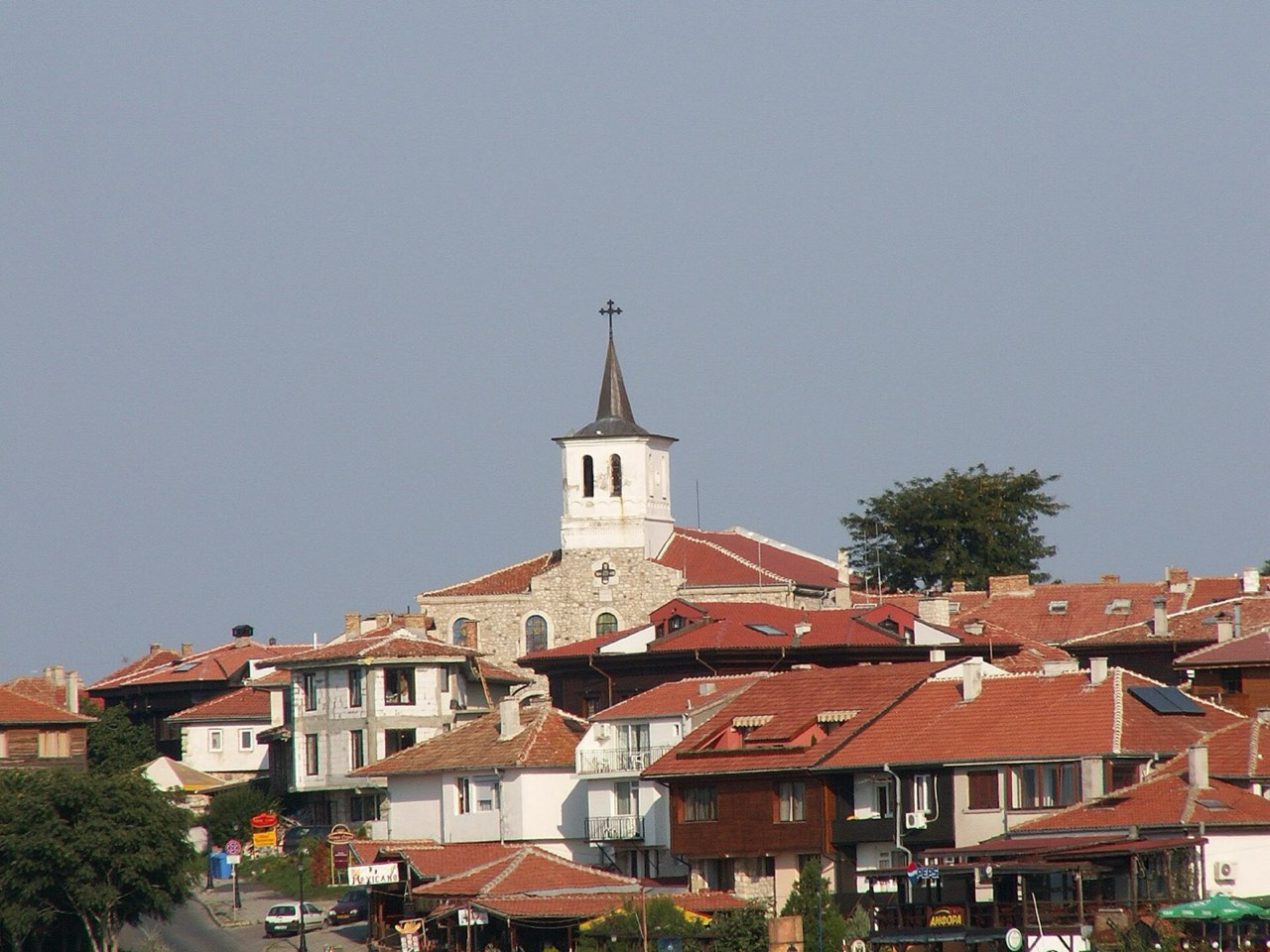
Greek Mesambria developed on the site of a Thracian settlement, followed by Byzantine and Bulgarian urban life. Early basilicas and medieval churches preserve distinct construction layers. Revival-period houses complete the Old Town, inscribed by UNESCO in 1983.
The historic peninsula remains residential and commercial, while some churches operate as museum monuments. Old Nessebar and Sunny Beach are different places: the resort requires a separate trip, not an extension of a short church walk.
Follow clothing, quiet and photography rules in active places of worship; do not disrupt services. Check museum photography conditions separately. Historic homes and courtyards are not public merely because they appear on a walking route.
Places
St Sophia’s Basilica
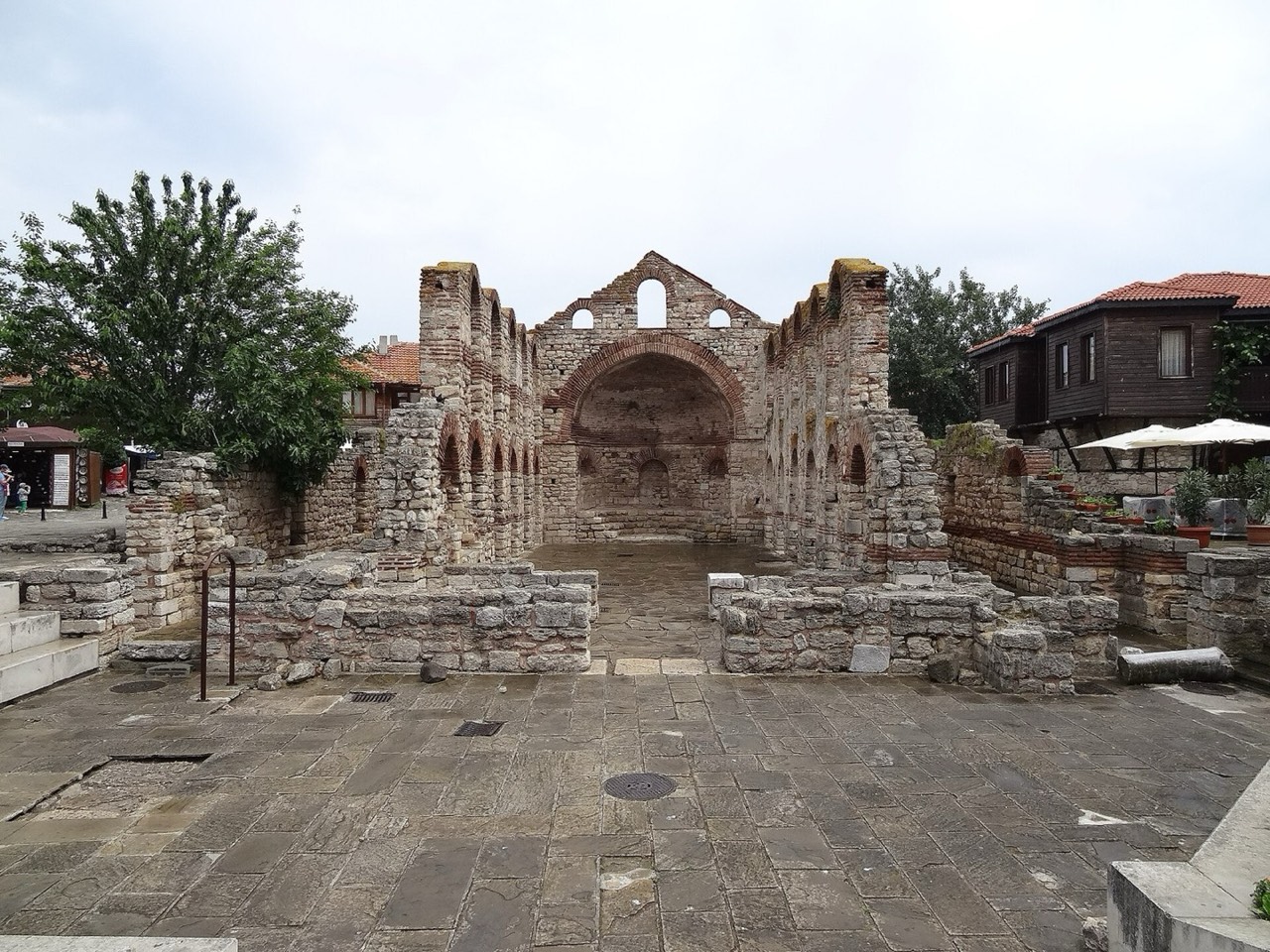
Ruins of a three-aisled basilica known as the Old Bishopric.
The basilica dates to the late fifth–early sixth century, with an early ninth-century rebuilding. Arcades and the apse survive, but the original roof is lost.
It reveals the spatial arrangement of an early Christian church.
This is an archaeological monument, not a promise of an active service. Do not climb masonry or cross barriers; events may affect access.
St Stephen’s Church
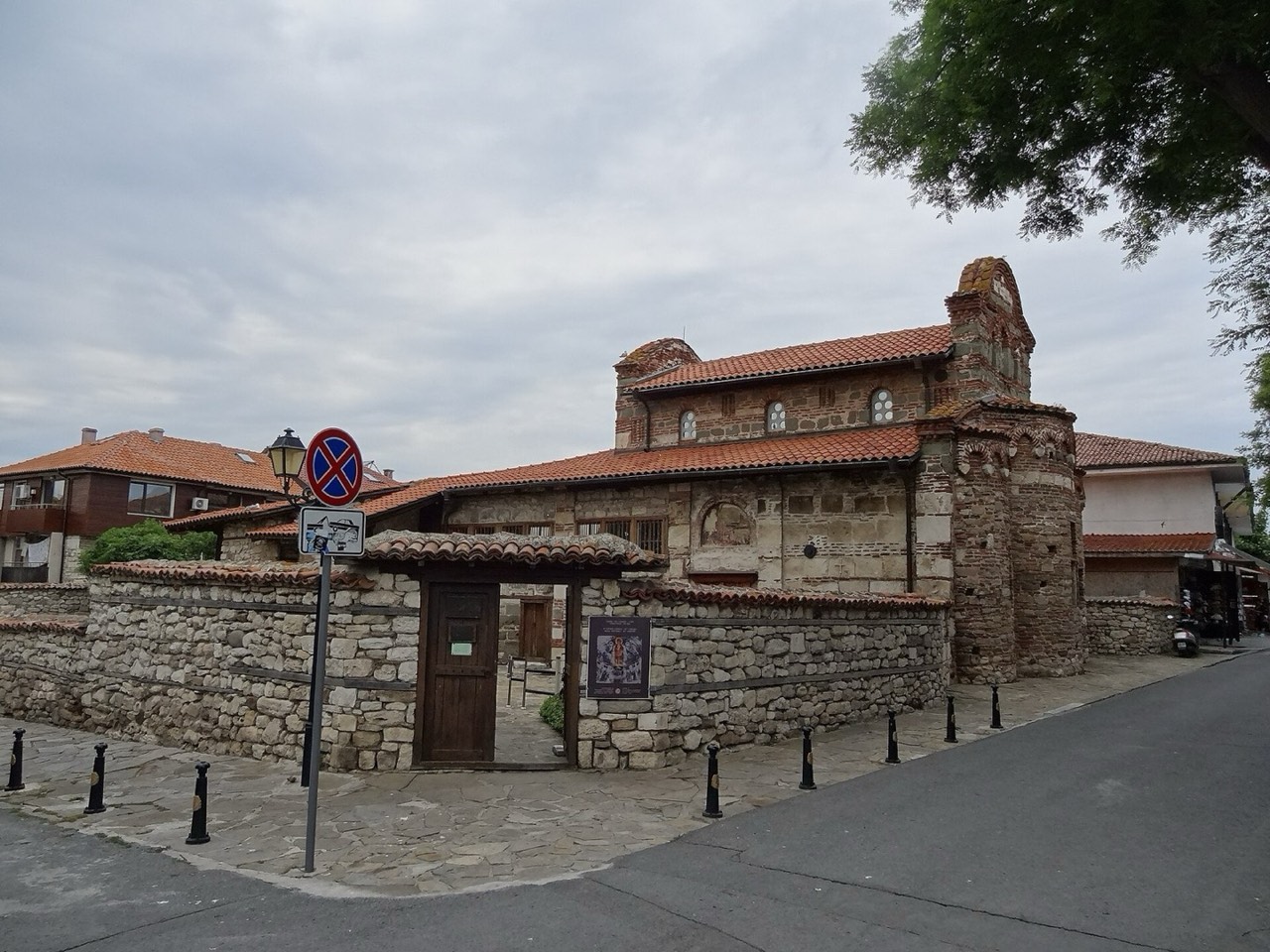
Former New Bishopric with remarkable historic wall paintings.
The original church dates to the eleventh–thirteenth centuries; it was extended in the sixteenth and received a narthex in the eighteenth. Historic painting is a separate layer, not the construction date of the whole building.
It shows a small medieval church developing over later centuries.
Wall paintings require a separate museum visit and compliance with photography conditions. The walk includes an exterior stop; do not touch paintings or masonry.
Christ Pantocrator Church
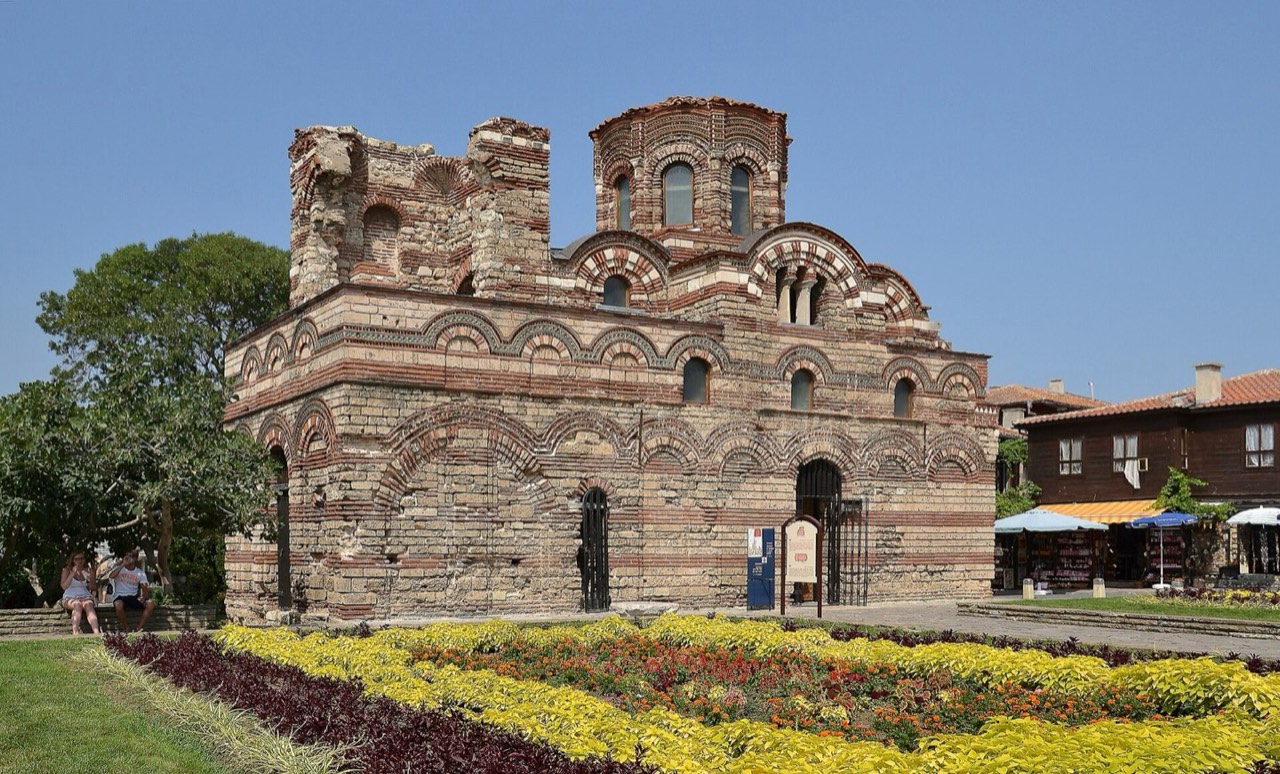
Medieval church with decorative stone, brick and ceramic patterns.
Dated to the thirteenth–fourteenth centuries, the church’s elongated body, apses and ornamental arcades represent Nessebar’s distinctive picturesque medieval style.
It clearly demonstrates patterned masonry’s role in local architecture.
View the façade from open paths without approaching closed sections. Check indoor exhibitions and tickets separately; do not remove anything from the decorative masonry.
St John the Baptist Church
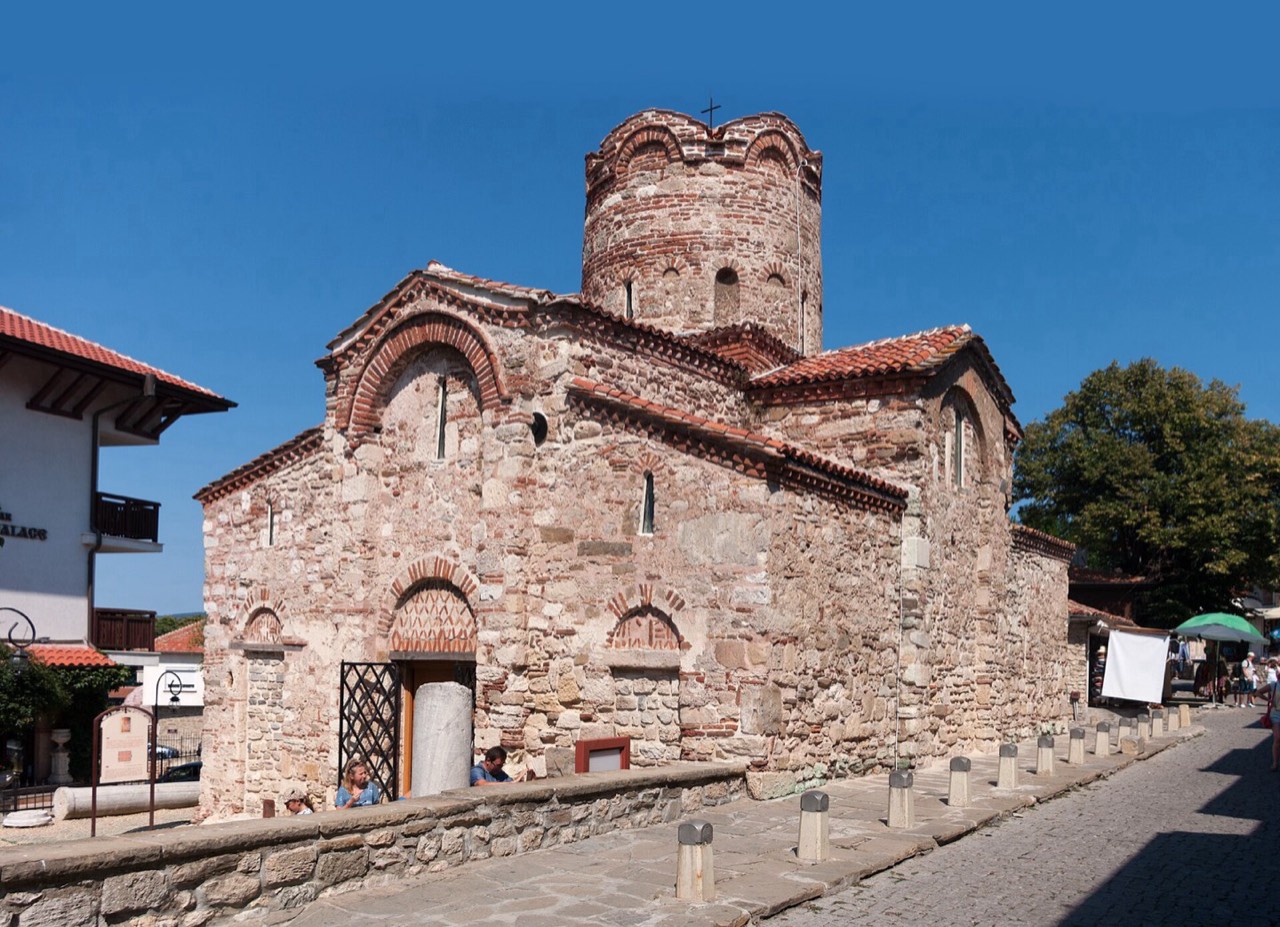
Compact stone church with a cylindrical dome drum.
The church belongs to the early medieval tenth–eleventh-century phase; official descriptions differ on assigning a single century. Its plan shows the transition from basilica to cross-domed church. Surviving fresco fragments were added later.
It allows comparison of restrained stone construction with the later decorative Pantocrator church.
Do not confuse it with St Stephen’s: these are different buildings. Check gallery or museum-interior access separately from the exterior route.
Town Walls and Gate
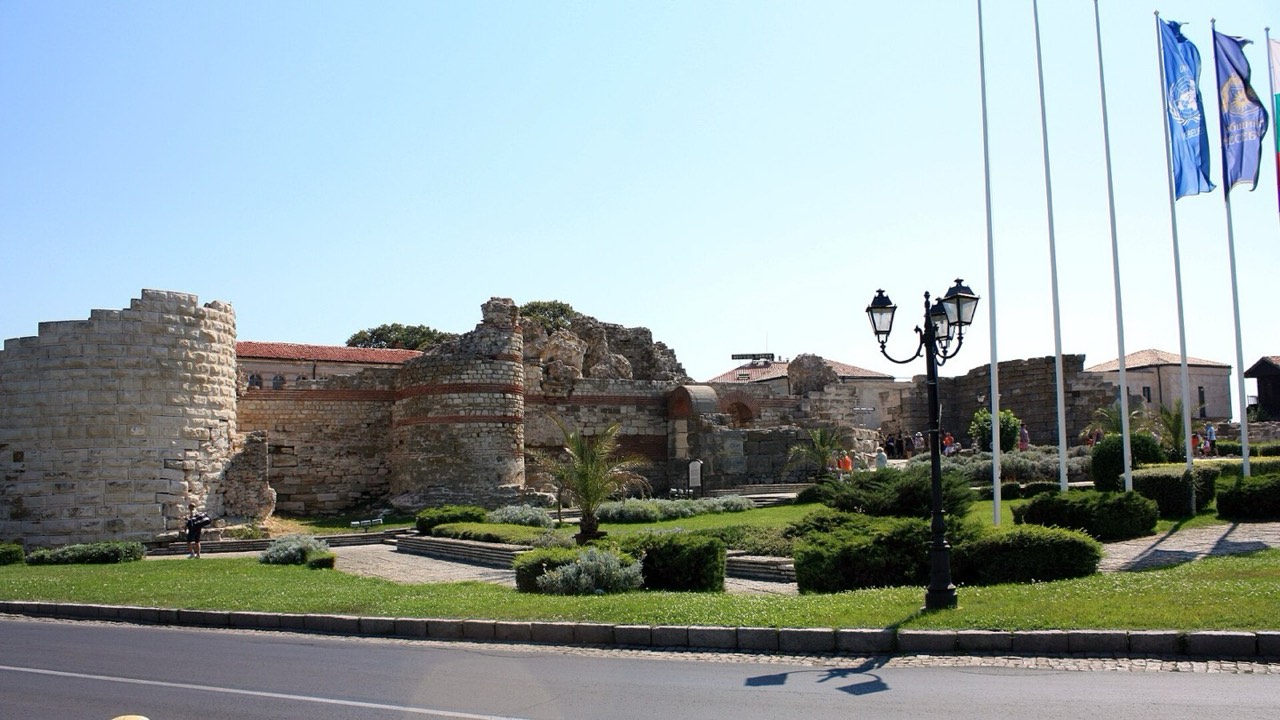
Defensive masonry at the entrance to the old peninsula.
The walls reflect several ancient and medieval building phases. Visible sections by the gate belong to early Byzantine defences, repeatedly repaired in later periods.
It explains the town’s defensive position beside its narrow mainland connection.
Use designated approaches and watch for traffic near the entrance. Do not climb the walls; old masonry and reconstructed sections are not steps.
Revival-period Houses
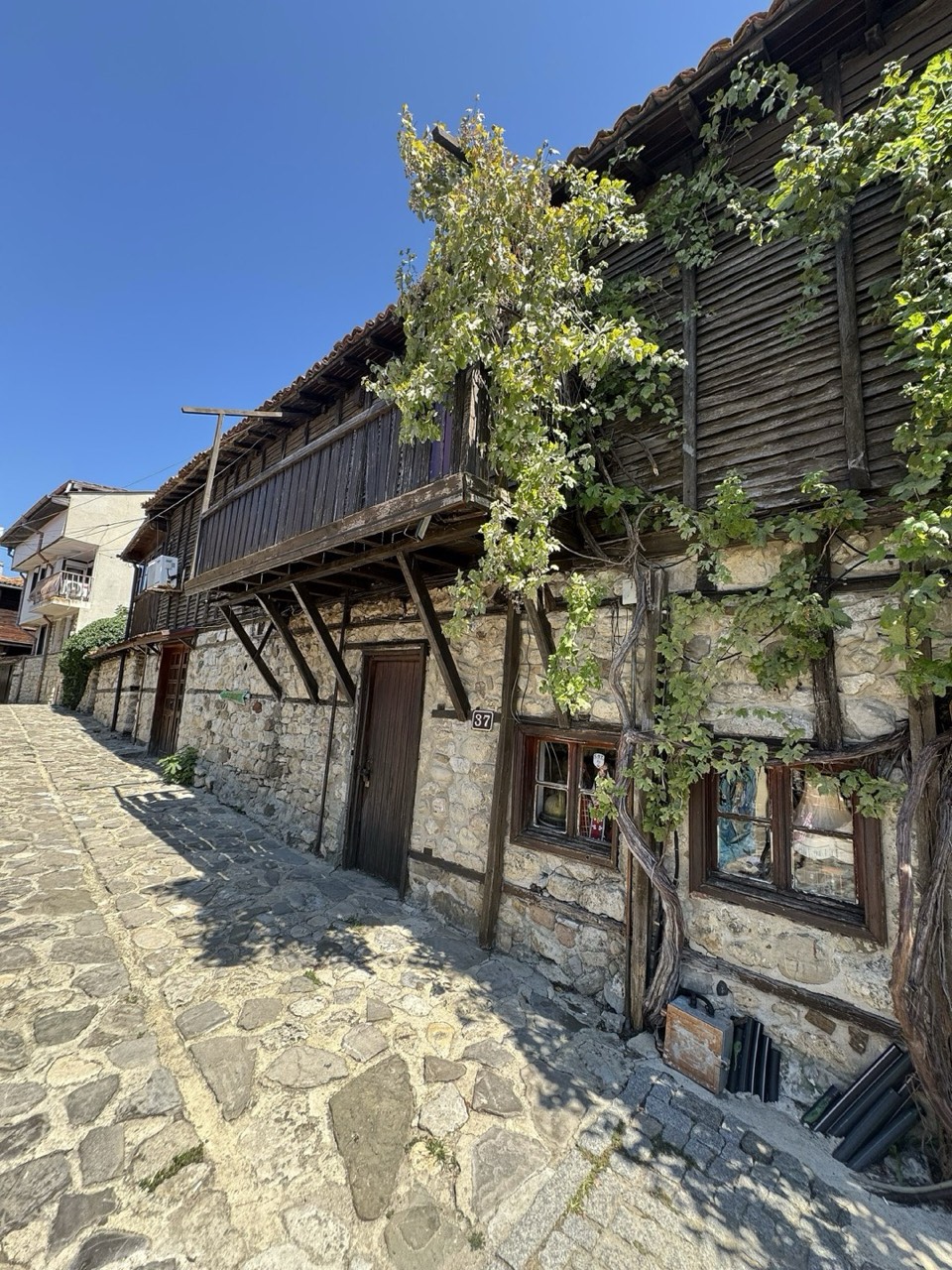
Historic houses with stone lower and timber upper floors beside the Old Bishopric.
Eighteenth–nineteenth-century residential groups complement the medieval churches. Lower floors accommodated storage and work, upper floors living spaces; projecting timber volumes adapted to narrow plots.
It reveals the everyday maritime town as well as its churches.
The point marks the street ensemble beside the basilica, not a freely accessible house museum. View from the street; stay out of private courtyards and do not photograph people through windows.
Walking routes
Gate to patterned church
From the ancient gate follow open Mesambria Street to Christ Pantocrator Church. Compare defensive masonry with decorative church architecture; indoor exhibitions are excluded.
0.5 km · 75 min
- Town Walls and Gate · 25 min at stop
- Christ Pantocrator Church · 25 min at stop
The Old Town’s two bishoprics
From St Stephen’s exterior follow open streets to St Sophia’s ruins. These are two separate churches of different eras. St Stephen’s frescoes require an additional museum visit.
0.65 km · 75 min
- St Stephen’s Church · 25 min at stop
- St Sophia’s Basilica · 25 min at stop
Stone church and timber houses
From St John the Baptist reach the residential groups beside the Old Bishopric and St Sophia’s Basilica itself. Go around café tables and keep passages clear; courtyards and interiors are excluded.
0.6 km · 90 min
- St John the Baptist Church · 20 min at stop
- Revival-period Houses · 25 min at stop
- St Sophia’s Basilica · 20 min at stop
Food
Safrid
Horse mackerel found on Nessebar’s coastal menus.
Check preparation, origin and pricing by portion or weight; expect small bones.
Barbun
Red mullet in the Old Town’s fish offerings.
Availability depends on supply; ask about bones and sides. The name does not guarantee a local catch.
Mussels in wine sauce
Mussels with wine, garlic and herbs on a coastal menu.
Check mollusc allergy and sauce ingredients; request an alcohol-free version if needed.
Tarama
Whipped fish roe served as a starter with bread.
Contains fish; check bread, oil and other additions for dietary requirements.
Ribena chorba
Fish soup complementing Nessebar’s maritime food selection.
Ask which fish and stock are used and whether bones remain; check spicy additions separately.
Practical information
Explore the old peninsula on foot, taking care on cobbles and narrow passages. Local buses link Nessebar, Ravda and Sunny Beach; check intercity departures and seasonal timetables with the operator. The nearest railway station is in Burgas, not on the peninsula. Events can change traffic restrictions on the causeway.
Call 112 for an emergency. Watch for wet cobbles, steps and shoreline edges. During strong winds keep away from waves and exposed quaysides. Secure belongings on crowded shopping streets; stay out of closed ruins and residential courtyards.
Euro and payments
Bulgaria’s currency is the euro, EUR, from 1 January 2026. Do not plan lev payments from an old guidebook. Check card acceptance and keep a little euro cash for small purchases; review the amount, currency and charges before confirming payment.
Tipping and the bill
Restaurant tips are customary for good service. First check the total and any service charge; choose your own additional tip. When paying by card, ask whether a tip can be added through the terminal.
Local transport
Explore the old peninsula on foot, taking care on cobbles and narrow passages. Local buses link Nessebar, Ravda and Sunny Beach; check intercity departures and seasonal timetables with the operator. The nearest railway station is in Burgas, not on the peninsula. Events can change traffic restrictions on the causeway.
Emergency help
112 is the free round-the-clock number for urgent police, fire and medical assistance. Give your precise location, explain the emergency and follow instructions. It is not an information line. An offline pack cannot provide a telephone connection. Source: mvr.bg/112.
Electricity
Supply: 230 V / 50 Hz; plug types C and F. Check your device’s voltage rating and suitable adapter. An adapter changes the plug shape, not the voltage; earthed appliances need a suitable earthed adapter.
Connectivity and offline use
Check Bulgaria in your SIM/eSIM plan before travelling. EU roaming applies to eligible plans and has fair-use limits: not every foreign SIM is free to use. Save the city pack, accommodation address and tickets beforehand; coverage and mobile apps require checking on arrival.
Verified sources and photo licences
- Bulgarian Ministry of Interior: free 24-hour emergency 112 · www.mvr.bg
- ECB: Bulgaria adopts the euro on 1 January 2026 · www.ecb.europa.eu
- Bulgarian Academy of Sciences conference organiser: C/F, 230 V, 50 Hz; currency section predates euro · conference.ott-iict.bas.bg
- 2026 conference organiser: restaurant tipping custom, not a mandatory tariff · www.burgas2026.sdewes.org
- European Commission: eligible roaming plans and fair-use limits · europa.eu
- Local transport authority current conditions · visitnessebar.bg
- UNESCO: Ancient City of Nessebar and inscription in 1983 · whc.unesco.org
- Local operator timetables; check current season and route · diesbus.com
- Nessebar restaurant own coastal fish, mussels, tarama and soup menu; no fixed prices copied · restaurantbreeze.eu
- St Sophia’s Basilica · www.visitnessebar.bg
- St Stephen’s Church · www.visitnessebar.bg
- Christ Pantocrator Church · www.visitnessebar.bg
- St John the Baptist Church · www.visitnessebar.bg
- Town Walls and Gate · www.visitnessebar.bg
- Revival-period Houses · www.visitnessebar.bg