
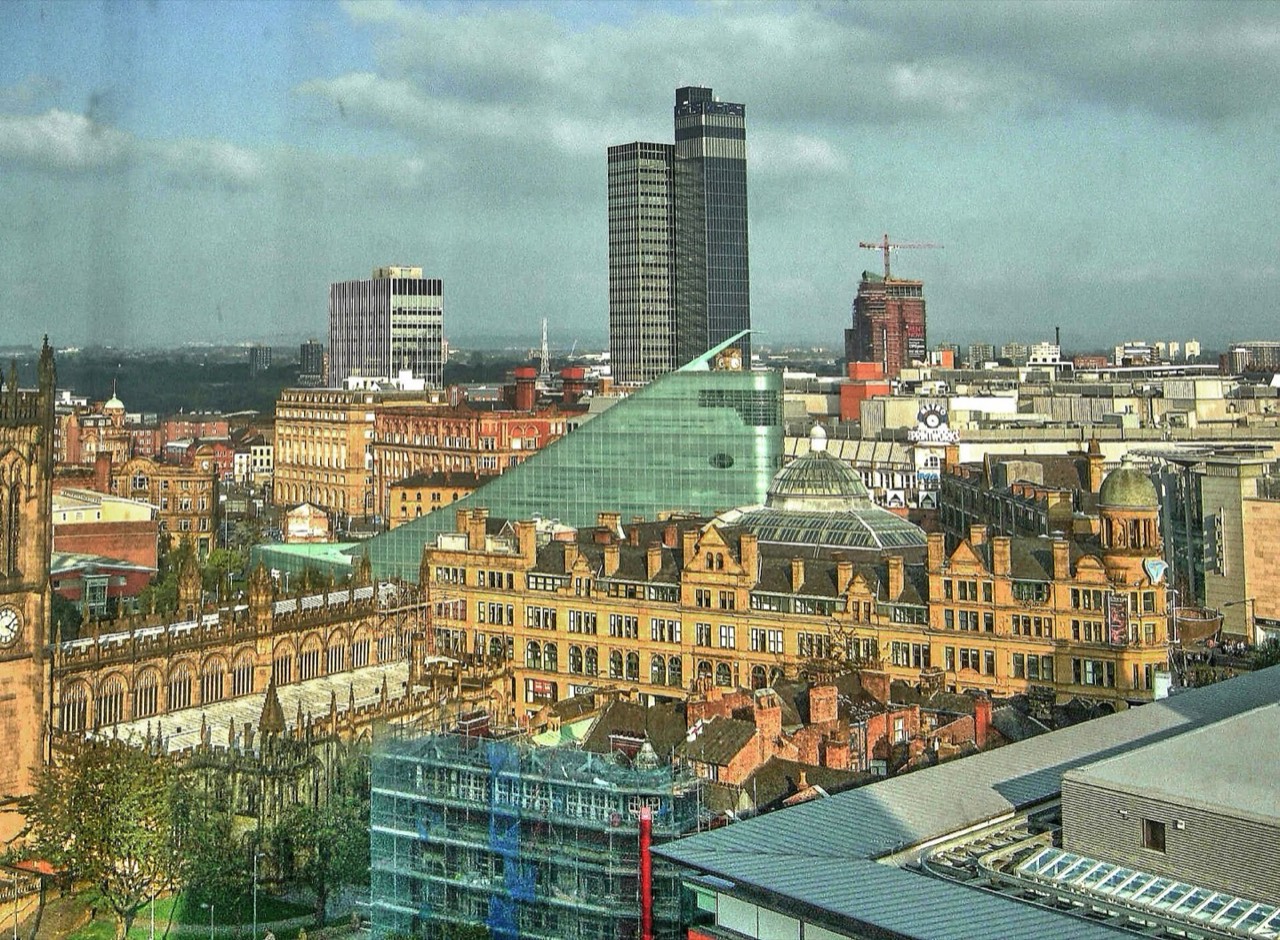
History and culture
Textiles, canals and railways transformed Manchester into an industrial centre. Cotton-trade wealth funded libraries and art collections; today museums also examine labour, inequality and trade’s links to slavery.
Music and football sit alongside industrial museums. Quays and former warehouses show production spaces becoming cultural places.
Respect queues and worshippers. Traffic drives on the left: look both ways before crossing.
Places
John Rylands Library
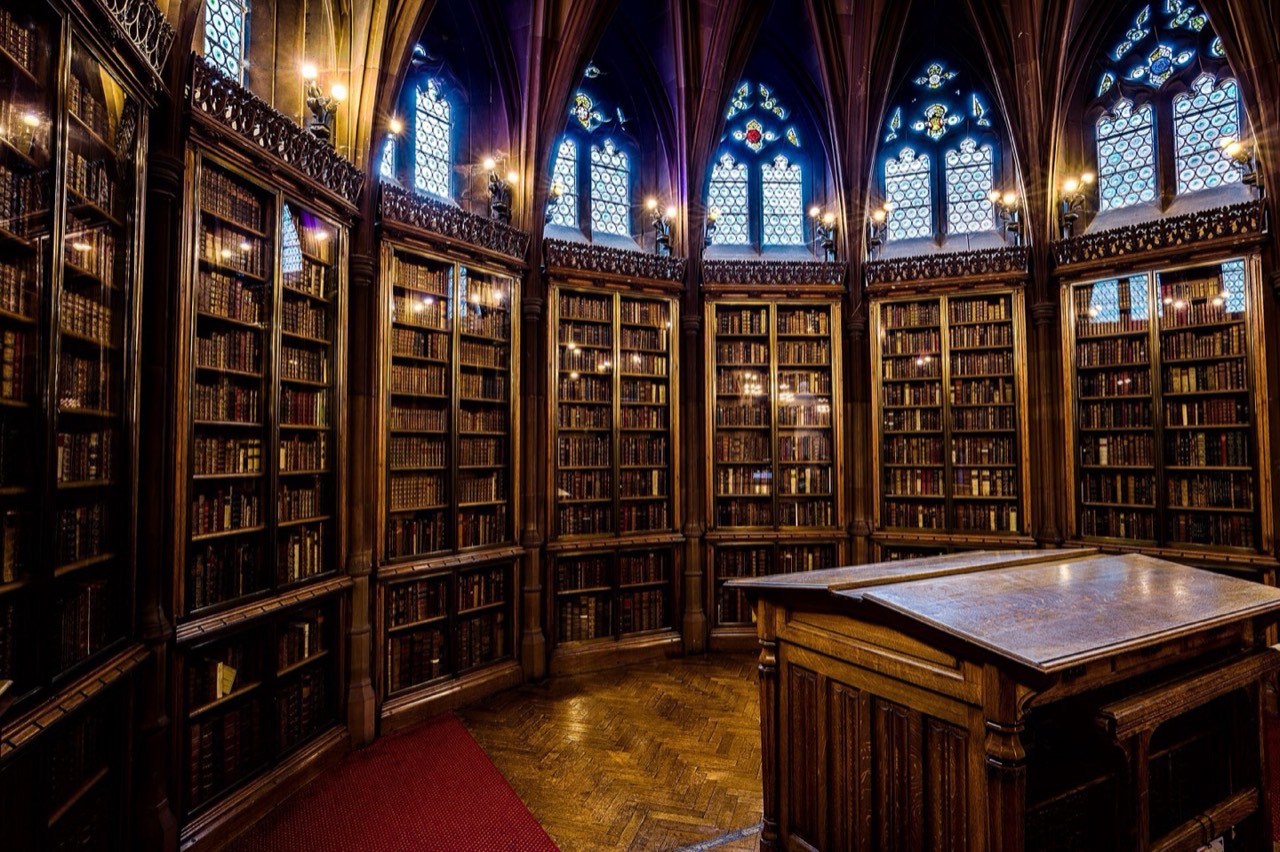
A Neo-Gothic library on Deansgate.
Enriqueta Rylands founded the library in memory of her husband; it opened to readers in 1900 and later joined the university library.
Its reading hall shows industrial philanthropy becoming public culture.
Check visitor opening times with the library; research rooms are not the same as public galleries.
Science and Industry Museum
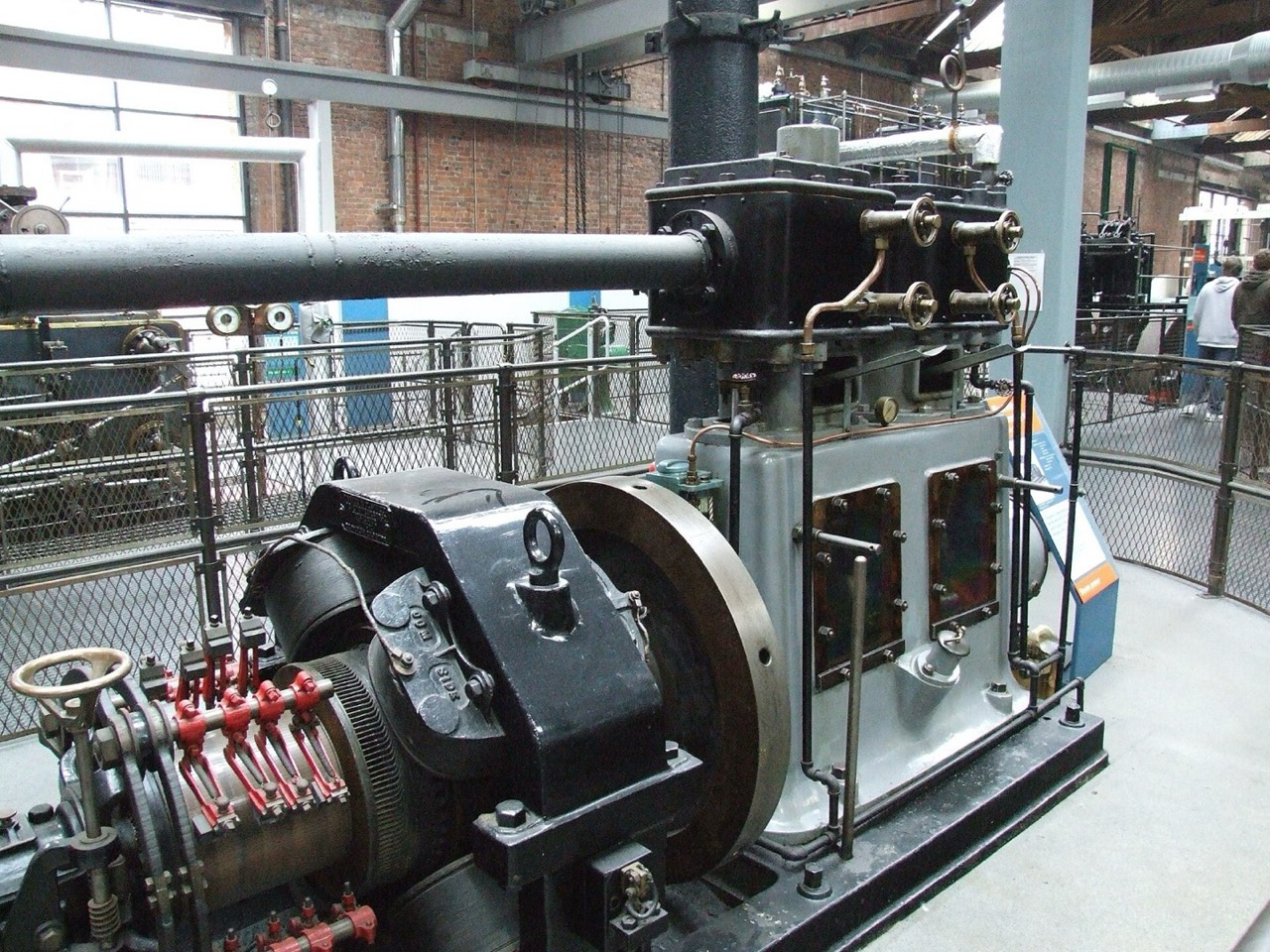
A technology and textiles museum in the historic railway district.
The complex occupies surviving early passenger-railway buildings, linking transport with mechanised production.
Machines and workers’ stories explain the city’s industrial transformation.
Reserve free admission. Restoration is ongoing and some buildings are closed; check the current museum map.
Castlefield
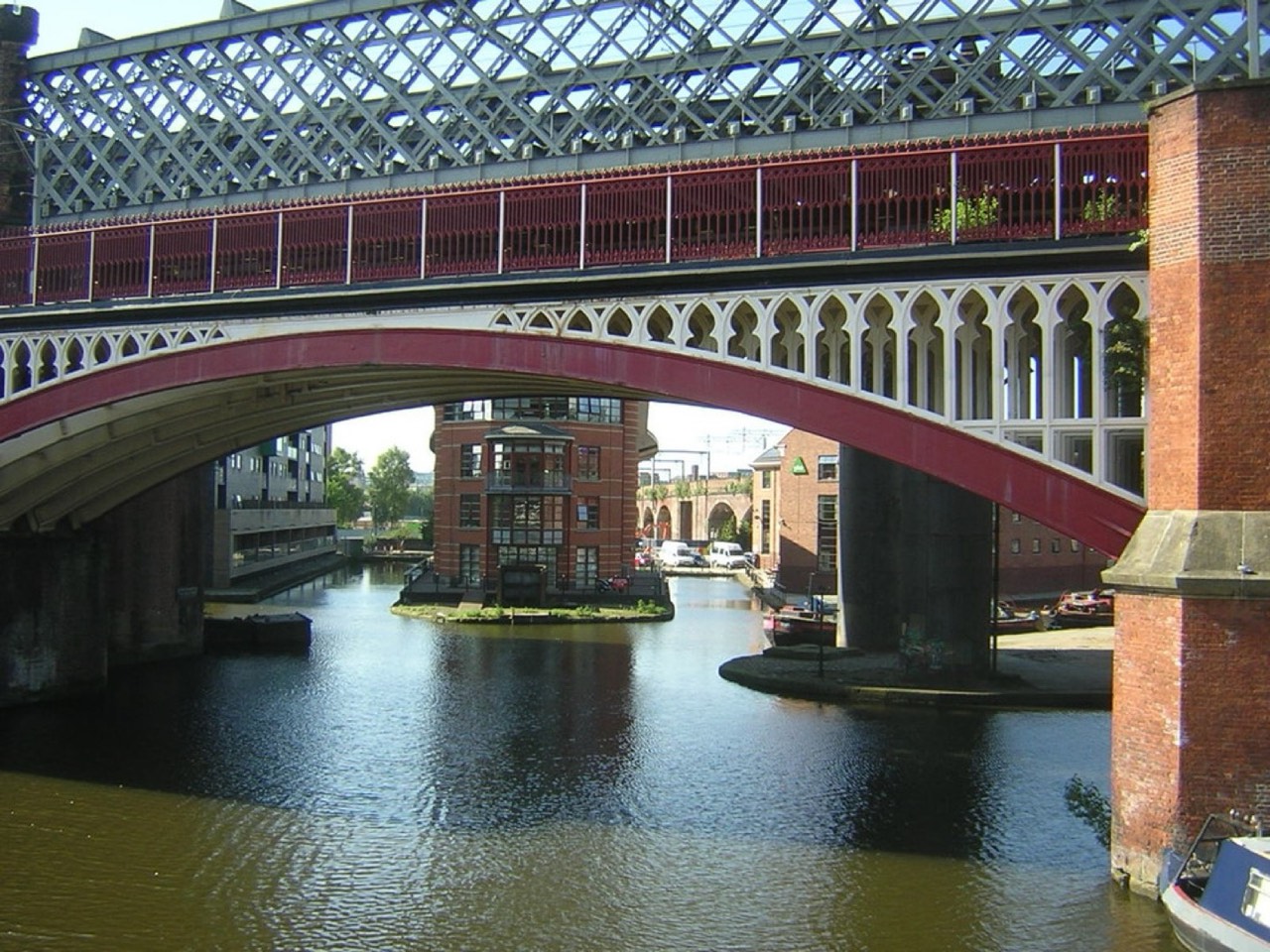
Canals, railway viaducts and traces of Roman settlement.
The district links Roman history with canals and industrial transport; warehouses and quays later gained new uses.
Here the industrial landscape is part of the city rather than only a museum display.
Use public paths and take care beside water and on wet steps. Check viaduct access separately.
Manchester Cathedral
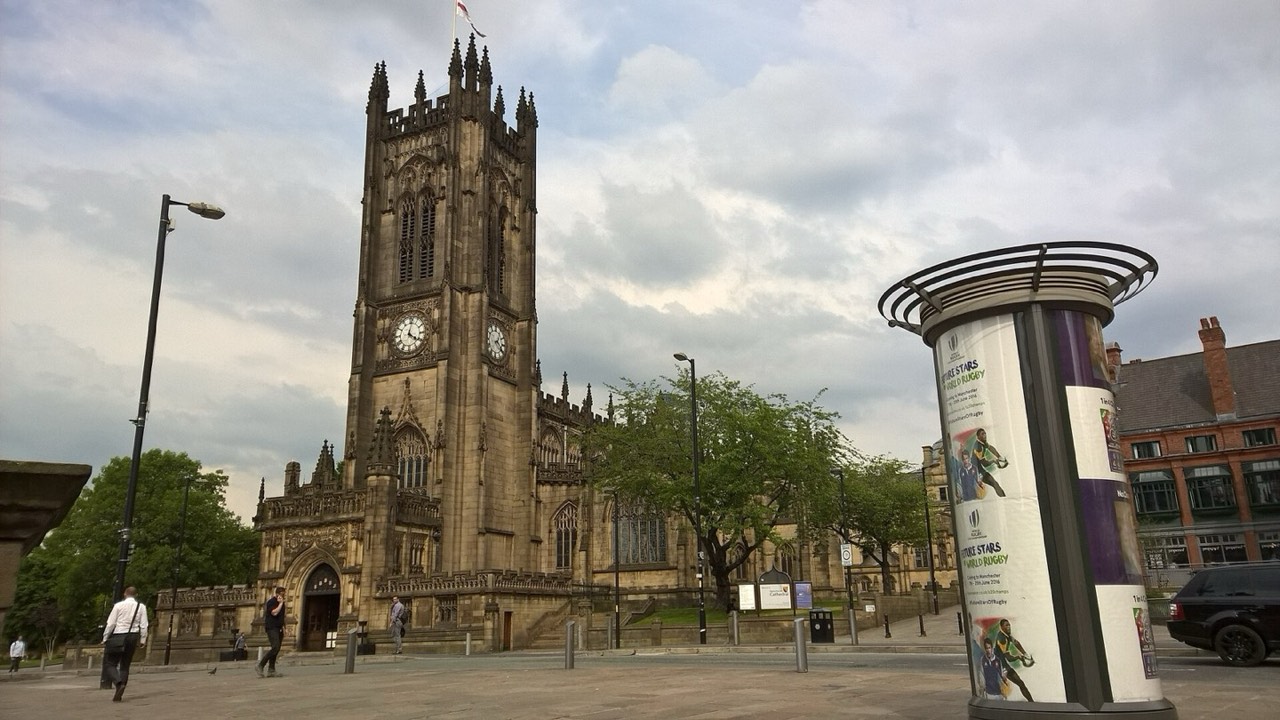
A historic church near the Irwell and medieval centre.
The medieval collegiate church became a cathedral in the nineteenth century; restoration after wartime damage continued its history.
A reminder of the city before factories, canals and modern shopping streets.
Check opening times and services and keep quiet inside. Group tours may require separate arrangements.
Manchester Art Gallery
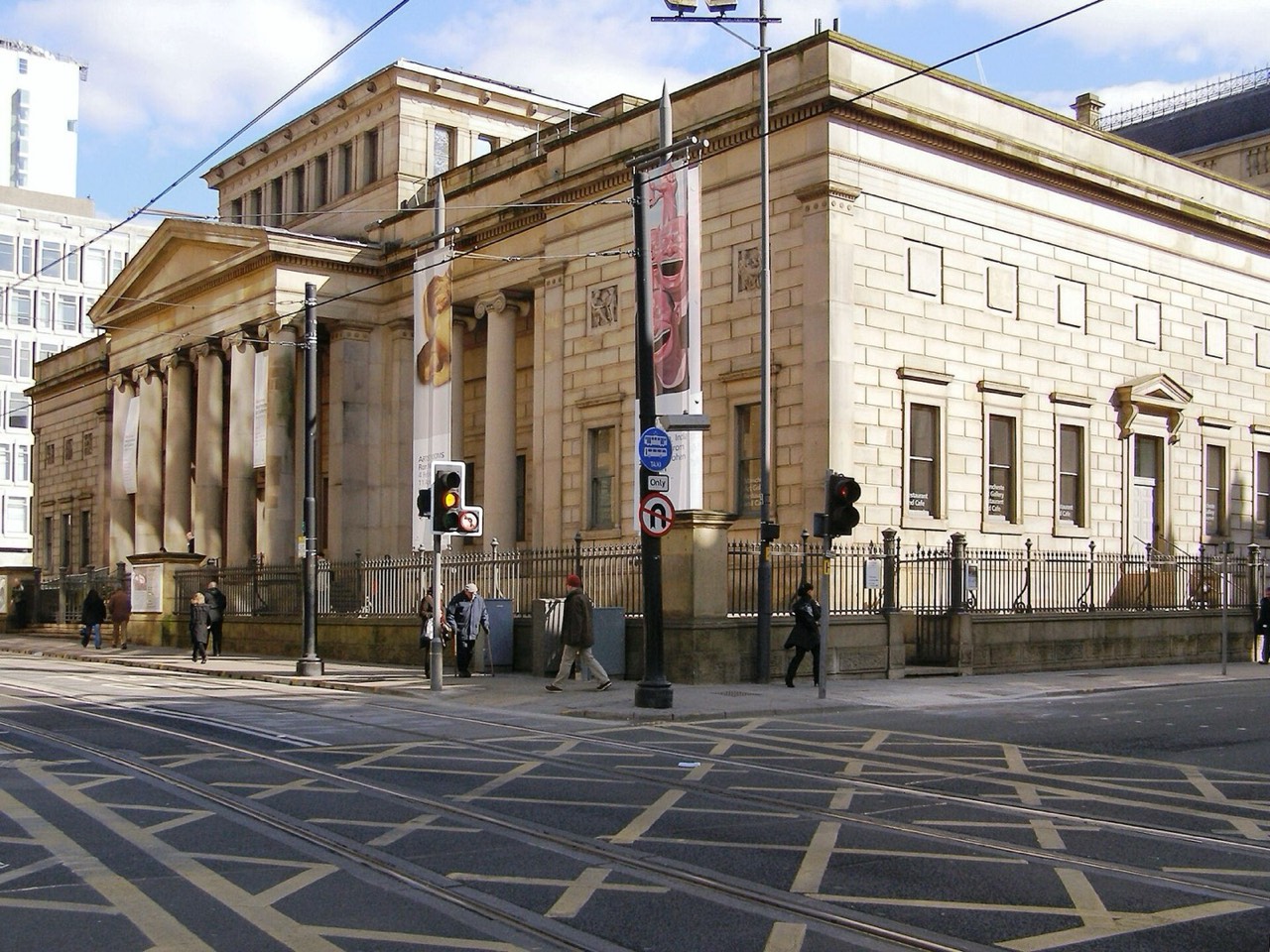
The city’s collection of art and design.
The civic art collection reflects industrial Manchester’s wealth, extending access beyond private collections.
Connect artistic culture with textile history and urban consumption.
Check open galleries and exhibitions; allow extra time for a full visit.
National Football Museum
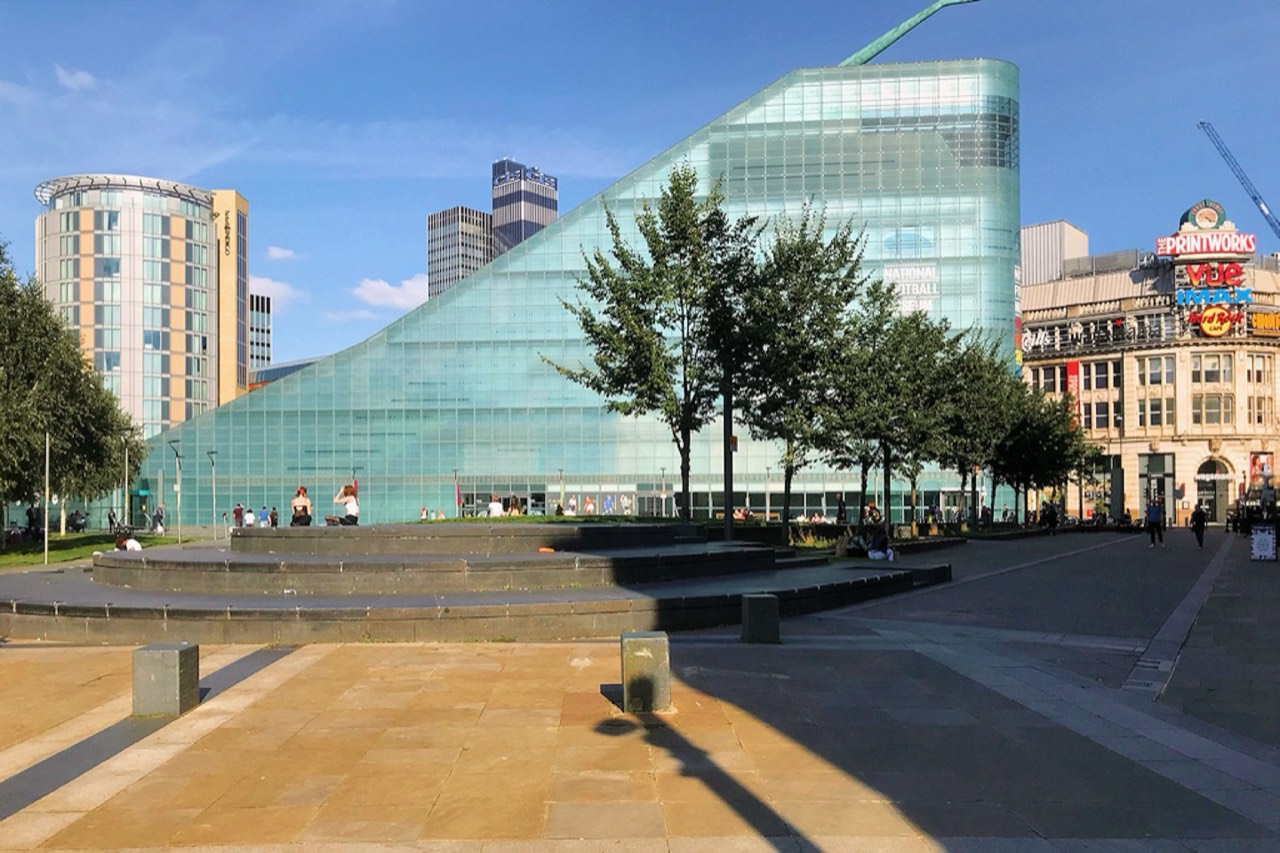
Football history in the modern Urbis building.
The museum traces the game through objects, supporters and social culture, not just a single club.
Explains football’s prominence in Manchester’s everyday life.
Museum admission and stadium tours are different tickets and locations. Check current entry and interactive-zone arrangements.
Walking routes
Canals and machines
Walk from Castlefield’s quays to the science museum and Deansgate library. Time covers exterior stops and walking; museum galleries require extra time.
1.6 km · 100 min
- Castlefield · 25 min at stop
- Science and Industry Museum · 20 min at stop
- John Rylands Library · 20 min at stop
The old city and football
From the library along Deansgate to the cathedral and Urbis. Paid museum visits are additional; check services and major events.
1.3 km · 90 min
- John Rylands Library · 20 min at stop
- Manchester Cathedral · 20 min at stop
- National Football Museum · 20 min at stop
Art and the city centre
From the Art Gallery through central streets to the library and cathedral. Time allows for exterior views and short stops.
1.6 km · 100 min
- Manchester Art Gallery · 20 min at stop
- John Rylands Library · 20 min at stop
- Manchester Cathedral · 20 min at stop
Food
Eccles cake
Flaky currant pastry associated with neighbouring Eccles.
Try with tea; usually contains gluten and butter.
Manchester tart
A shortcrust tart with jam, custard and coconut.
Ask bakeries; it is not on every menu.
Bury black pudding
A regional blood sausage with cereal.
Not vegetarian; check ingredients.
Rag pudding
An Oldham speciality of meat and onion in boiled or steamed pastry.
Check the filling and animal-fat content.
Vimto
A fruit drink first created in Manchester.
Concentrates and ready-to-drink versions differ; check sugar labels.
Practical information
Walk the centre; Bee Network buses and Metrolink connect districts. On trams, tap the same card or device before boarding and at your final stop.
Call 999 or 112 in an emergency. Keep phones and documents secure in crowds; take care on wet paving.
Money and payments
Currency: pound sterling, GBP. Cards are widely accepted; check payment options at small shops.
Tipping
Tips are optional. Check for an included service charge before adding more.
Transport
Walk the centre; Bee Network buses and Metrolink connect districts. On trams, tap the same card or device before boarding and at your final stop.
Emergency help
Call 999 or 112 for police, fire or ambulance. Give your location and required service. Official source: gov.uk/guidance/999-and-112-the-uks-national-emergency-numbers.
Electricity
Type G sockets with three rectangular pins; 230 V / 50 Hz. European plugs require an adapter.
Connectivity
Check roaming charges before travelling. A local SIM or eSIM needs an unlocked compatible phone; save maps offline.
Verified sources and photo licences
- UK national emergency numbers · www.gov.uk
- British travel essentials · www.visitbritain.com
- Local transport information · tfgm.com
- Manchester art and industrial heritage · www.visitmanchester.com
- Museum access and restoration · www.scienceandindustrymuseum.org.uk
- Greater Manchester local food · www.visitmanchester.com
- Enriqueta Rylands and the library · www.manchester.ac.uk
- Cathedral timeline · manchestercathedral.org
- John Rylands Library · www.visitmanchester.com
- Science and Industry Museum · www.scienceandindustrymuseum.org.uk
- Castlefield · www.manchester.gov.uk
- Manchester Cathedral · manchestercathedral.org
- Manchester Art Gallery · manchesterartgallery.org
- National Football Museum · nationalfootballmuseum.com