
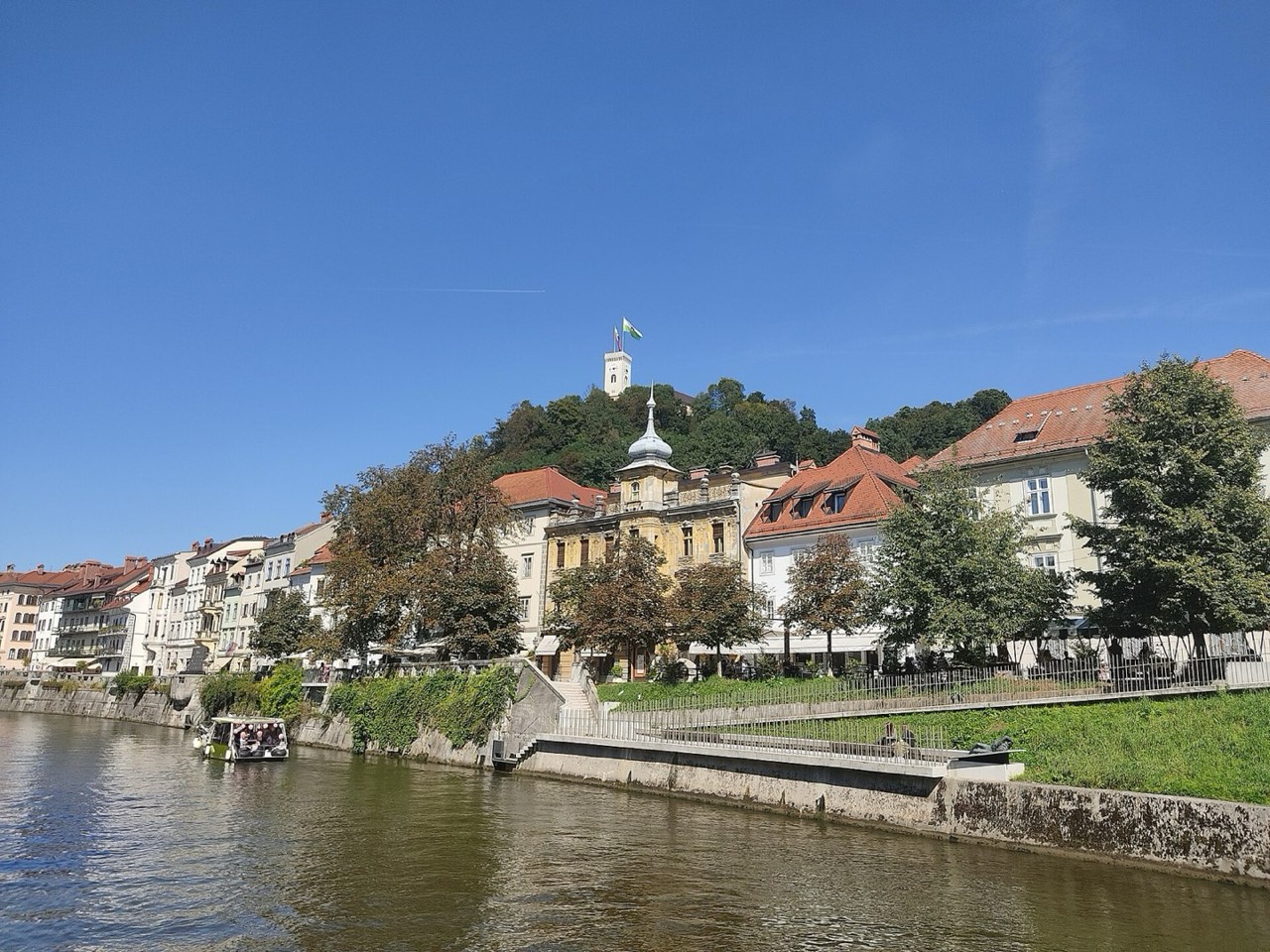
History and culture
The medieval settlement beneath Castle Hill developed into a city of Baroque churches and a town hall. New civic works followed the 1895 earthquake; the Dragon Bridge dates to 1900–1901. In the twentieth century Jože Plečnik reshaped the relationship between streets and river: the Triple Bridge’s side spans were added in 1929–1932, and the market colonnades in 1940–1944.
The embankments bring together the market, everyday city life and architectural heritage. The walks below focus on exteriors: museums, the castle tower, cathedral services and a market lunch need extra time. Bled is a separate destination, not an extension of a capital-city walking route.
Observe quiet, clothing and photography rules in active churches. Do not enter private courtyards or obstruct working entrances. At the lake and in parks use marked paths, take litter away and do not feed wildlife.
Places
Dragon Bridge
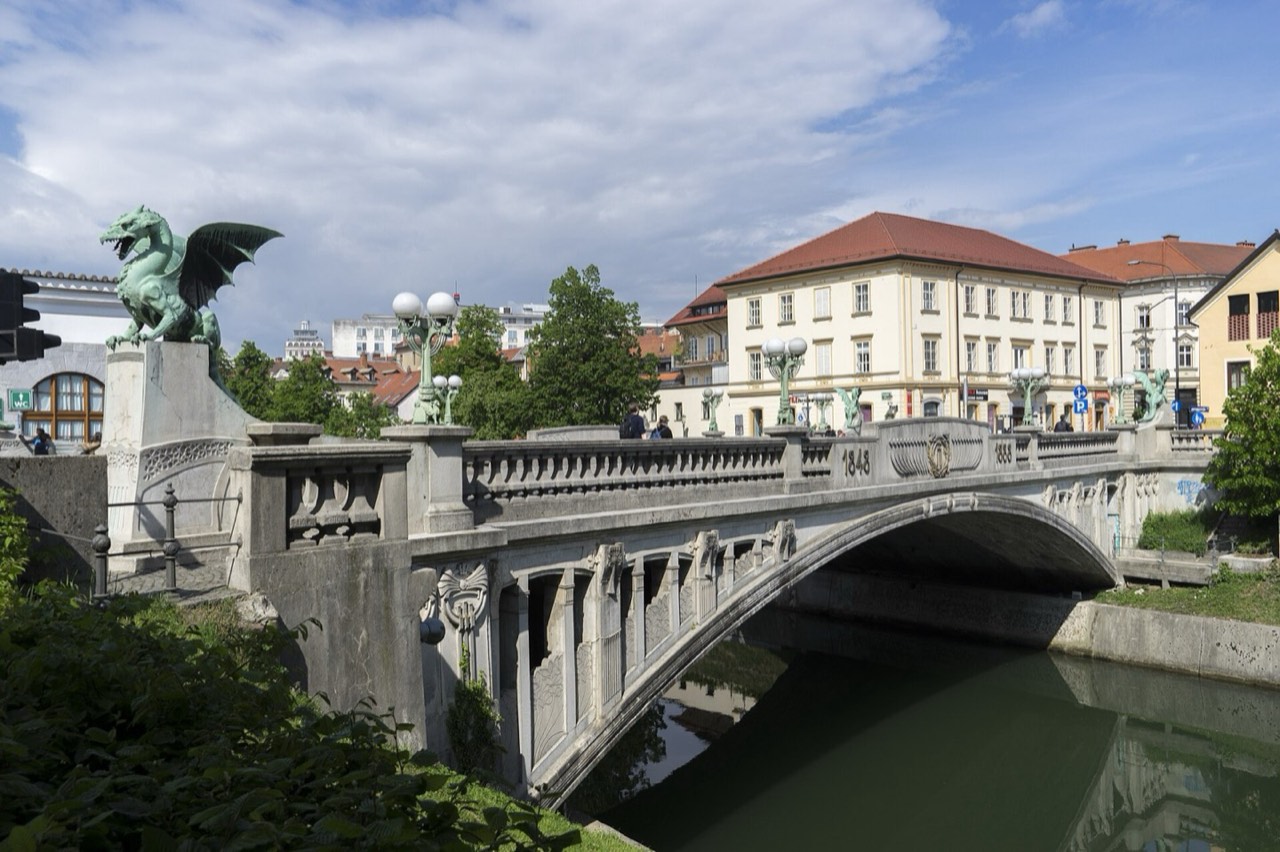
Bridge across the Ljubljanica with four dragon figures.
Built in 1900–1901 with Josef Melan’s reinforced-concrete structure, the bridge has decorative elements designed by Jurij Zaninović. Its jubilee inscription concerns Franz Joseph’s reign, not the construction date.
It connects early twentieth-century engineering with the city’s dragon symbol.
This is not a pedestrian-only bridge: stay on the pavement and use authorised street crossings.
Central Market
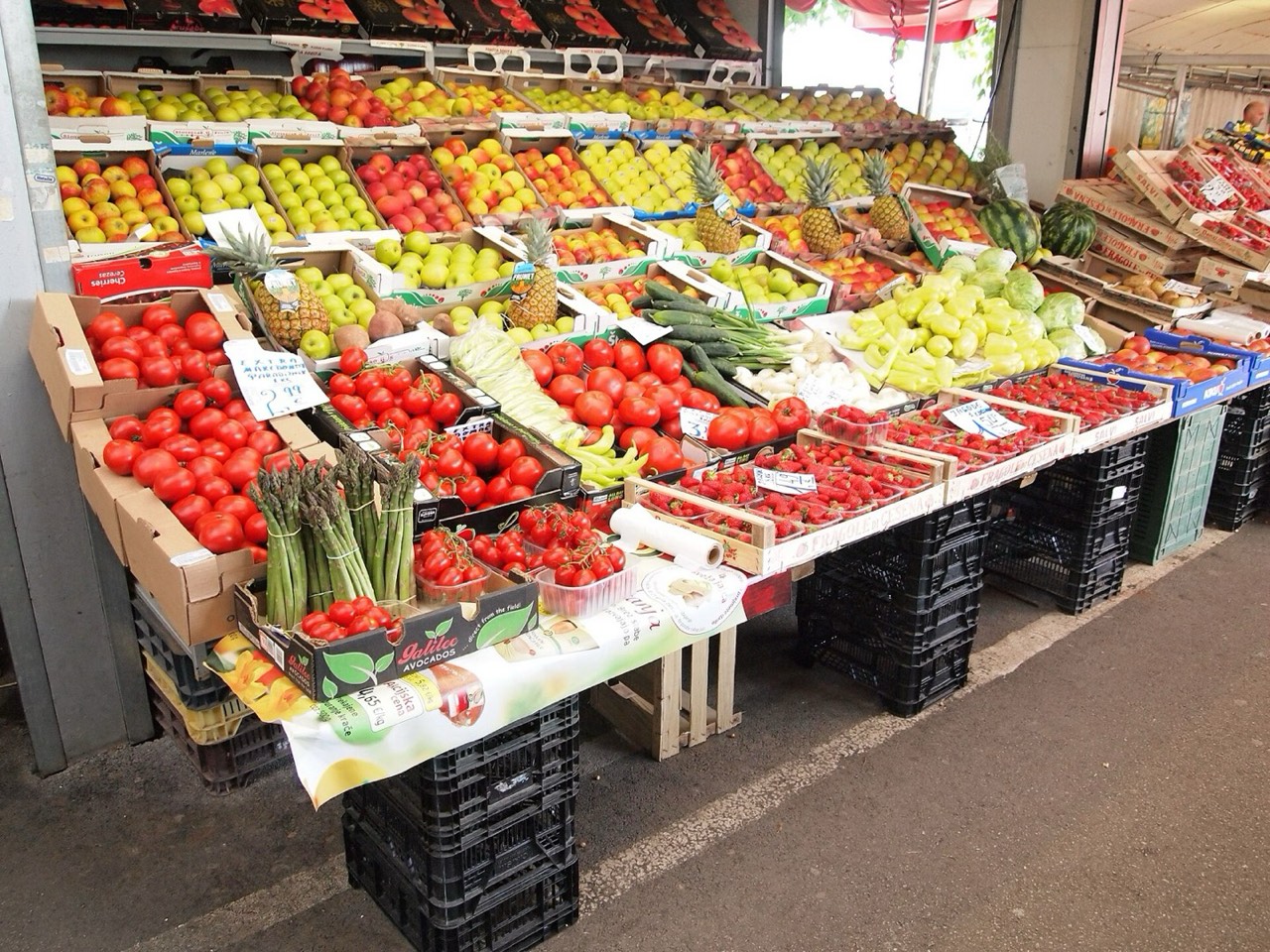
Market on Vodnik and Pogačar squares beside the river colonnades.
The complex combines outdoor market squares, indoor premises and Plečnik’s 1940–1944 colonnades. It has distinct sections, not one permanently open pavilion.
It shows the connection between city space, local produce and everyday trade.
Check your section’s hours; the outdoor market closes on Sundays and holidays. Open Kitchen is a separate seasonal, weather-dependent event and is not guaranteed.
St Nicholas’s Cathedral
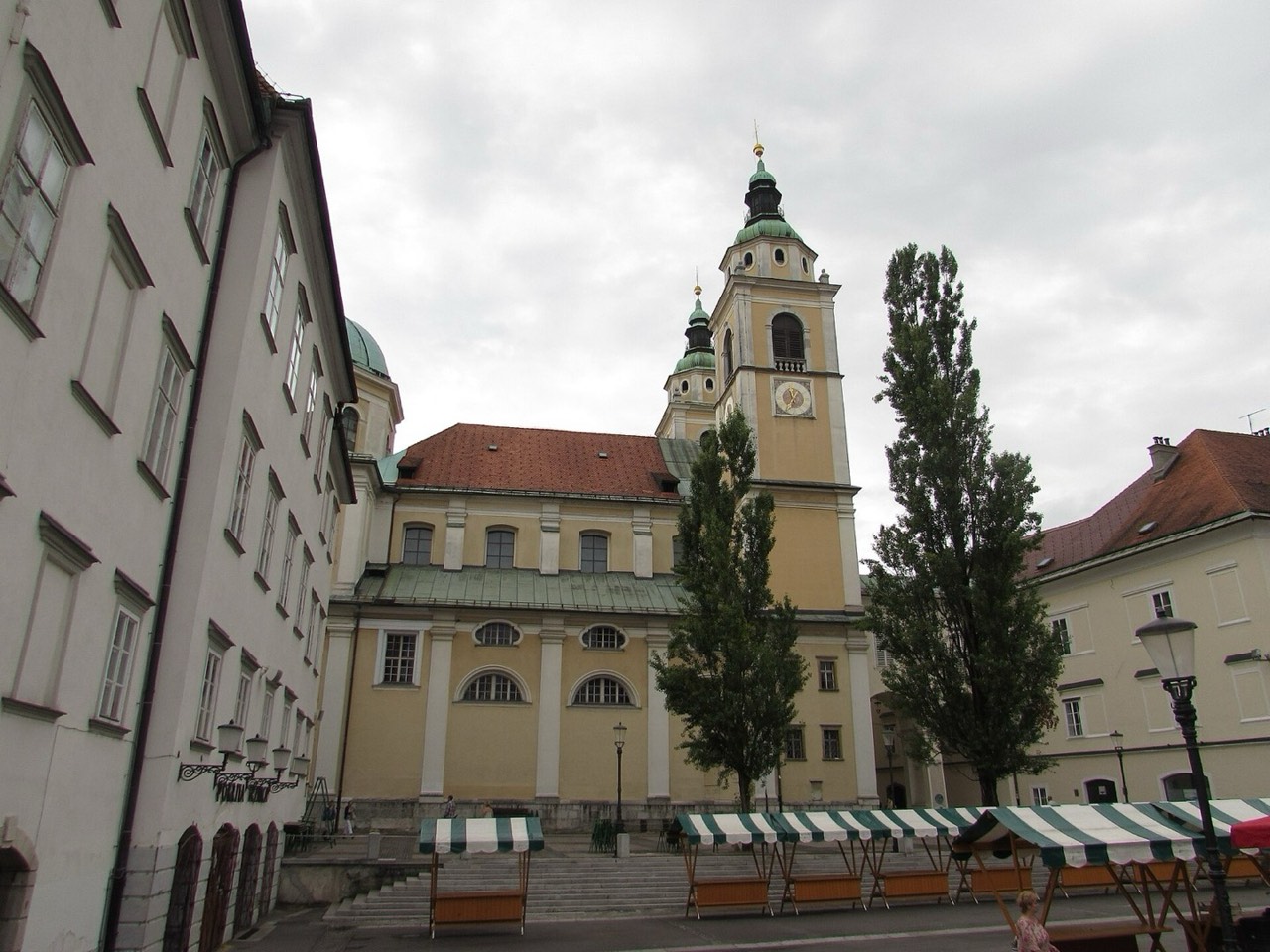
Baroque cathedral in the old centre near the market.
The present church, designed by Andrea Pozzo, was built in 1701–1706 on an earlier church site. The real dome followed in 1841; its interior and bronze doors belong to different periods.
It reveals the city’s Baroque layer and later additions to an active church.
The walk allows an exterior stop. Check services, admission and indoor photography separately; do not obstruct worshippers.
Town Hall
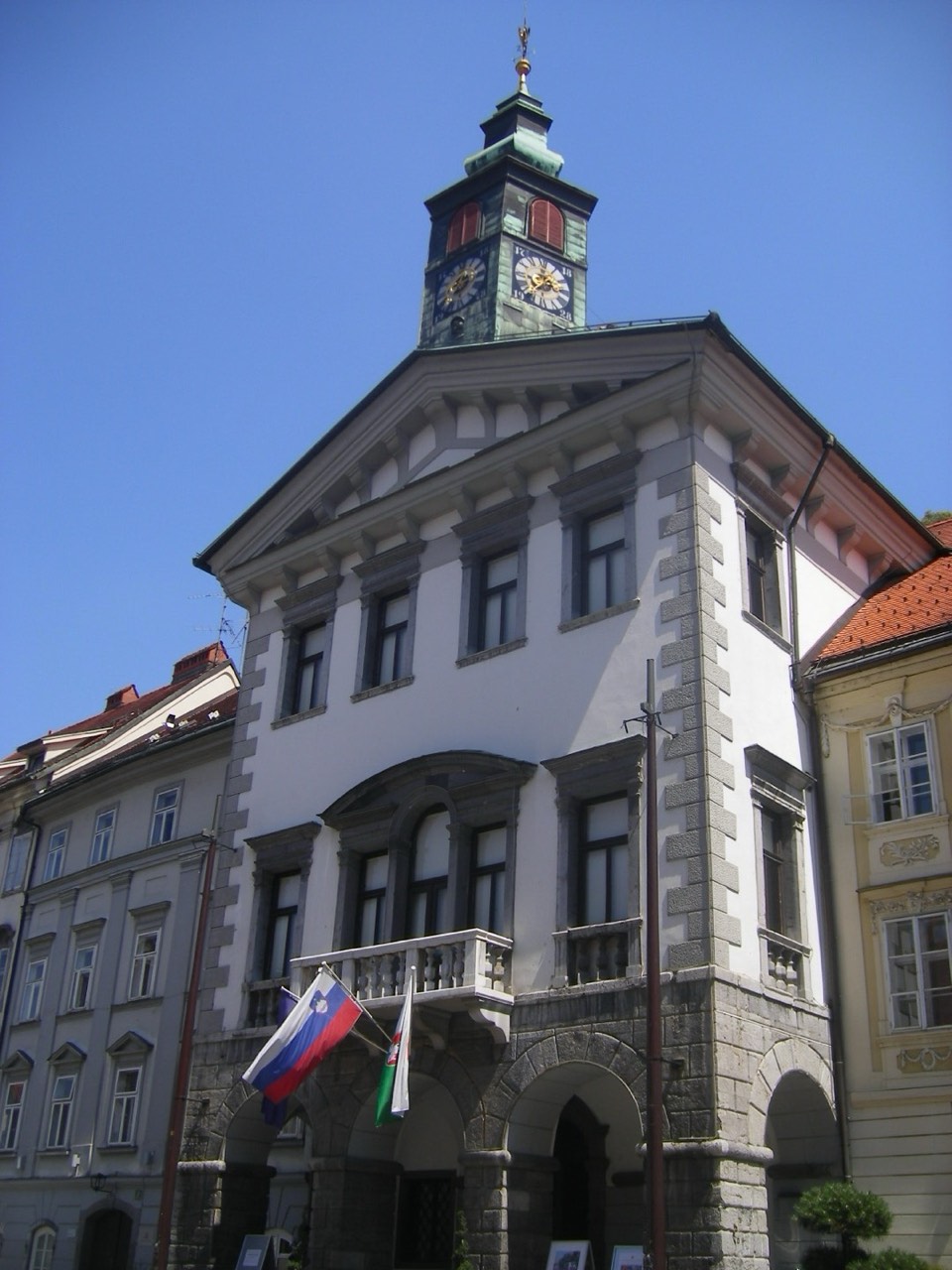
Historic municipal building on Mestni trg.
The first town hall was built in the late fifteenth century; its Baroque appearance developed in 1717–1719. Later changes include a 1963 renovation, and it remains a working municipal building.
It reveals the city’s civic history beside its religious monuments.
An exterior stop does not guarantee entry to all rooms. Organised groups have visit limits from 23 June 2026; plan exhibitions and an indoor tour separately.
Franciscan Church of the Annunciation
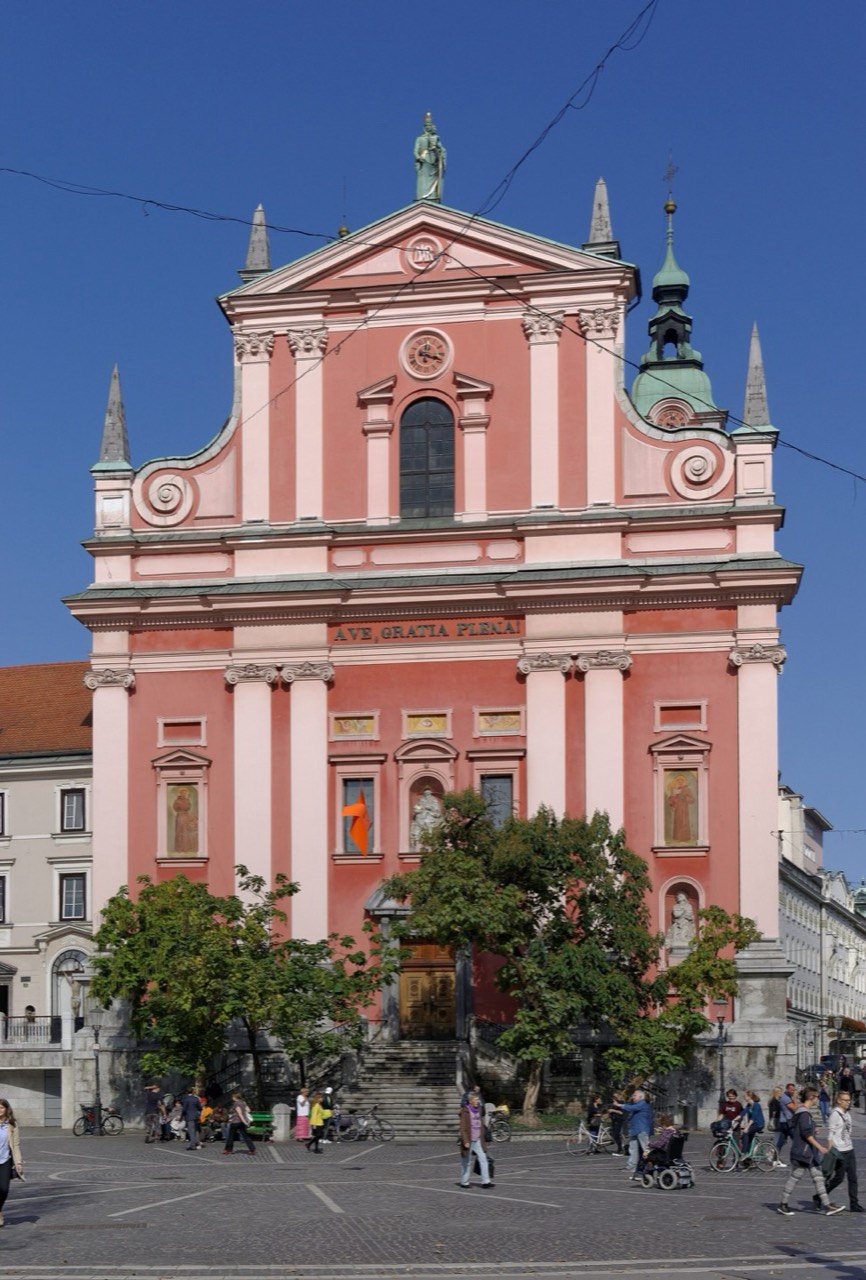
Pink church beside Prešeren Square and the Triple Bridge.
Built in 1646–1660, the church received its facade around 1700 and underwent later changes. Its interior includes eighteenth- to twentieth-century works, not solely original construction-period decoration.
It gives the central riverside square its recognisable outline.
Do not disrupt services; check indoor hours and photography with the parish. Expect crowds on the square and do not sit on bridge railings.
Ljubljana Castle
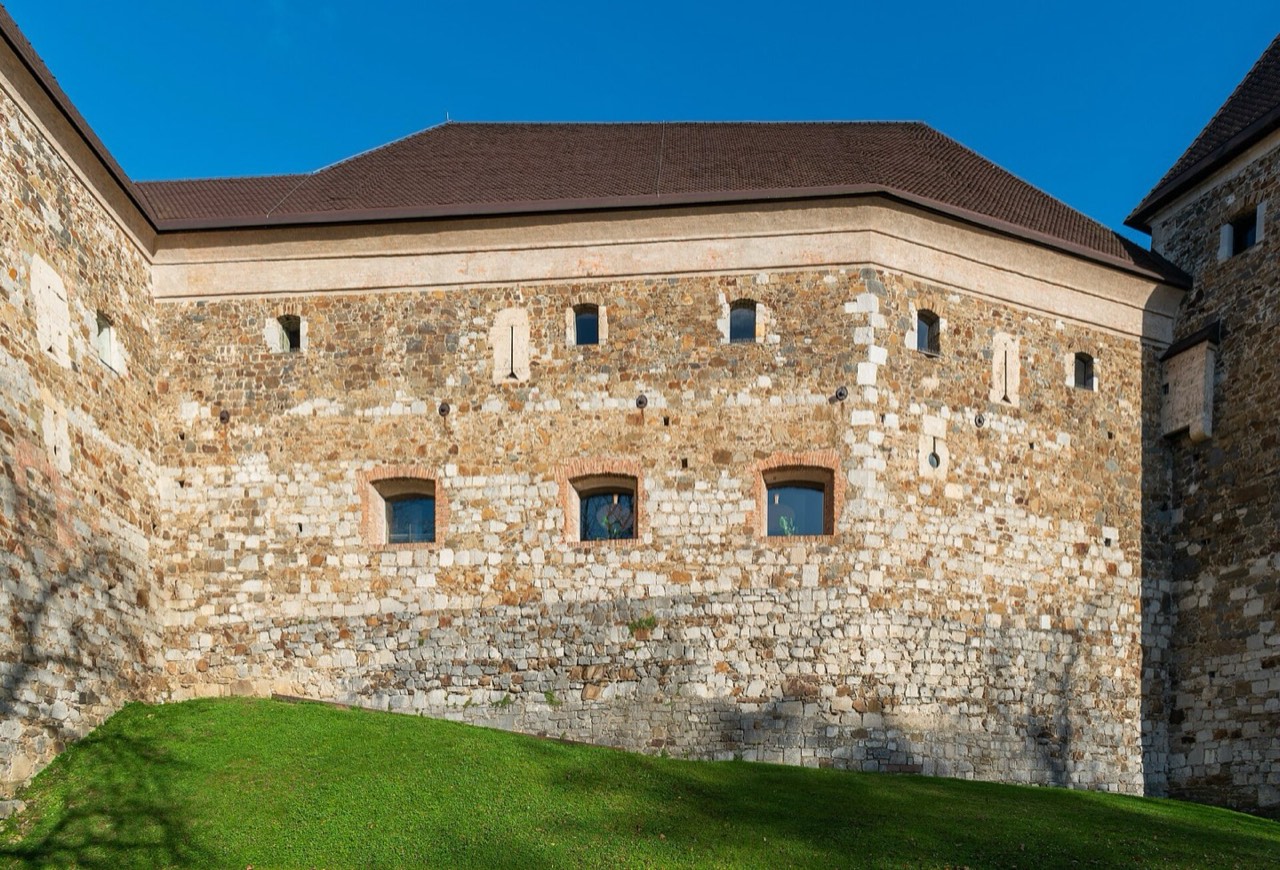
Castle complex on the hill above the old town.
The fortress’s principal form developed in the fifteenth century, with inner buildings added in the sixteenth–seventeenth. Later used as a prison and housing, the restored complex is now a cultural venue.
It offers city views and shows the shift from defensive to domestic and cultural functions.
The walk uphill is steep; use an open authorised path. The tower, exhibitions and funicular have separate conditions and are not automatically included in walking time.
Walking routes
Market and dragons
From the cathedral exterior through market squares to the Dragon Bridge. Includes short stops, not indoor church visits or lunch. Stay on the bridge pavement.
0.65 km · 80 min
- St Nicholas’s Cathedral · 15 min at stop
- Central Market · 20 min at stop
- Dragon Bridge · 15 min at stop
Baroque riverside centre
From the Annunciation church across the square and Triple Bridge to Town Hall and the cathedral. Use open pedestrian passages; the route does not require indoor tickets.
0.7 km · 80 min
- Franciscan Church of the Annunciation · 15 min at stop
- Town Hall · 15 min at stop
- St Nicholas’s Cathedral · 15 min at stop
Old town to Castle Hill
From Town Hall along old streets and a marked path to the castle complex. Allow for the climb and wear secure footwear; museum, tower and funicular are excluded. If the path is closed use an authorised alternative.
0.9 km · 100 min
- Town Hall · 15 min at stop
- Ljubljana Castle · 25 min at stop
Food
Ljubljana schnitzel
Breaded pork or veal cutlet, usually filled with ham and cheese.
Ask about meat and sides; cheese, egg and breading matter for dietary restrictions.
Ljubljana goulash
Hearty onion-and-potato meat stew; the city version uses beef and bacon.
Do not assume it is pork-free because the main meat is beef; ask about the recipe.
Flying žganci
The playful name leteči žganci means fried chicken wings and thighs, not porridge.
Ask about coating and portion size; the name does not indicate a vegetarian dish.
Tarragon potica
Festive rolled yeast pastry; tarragon filling is associated with the capital and its surroundings.
Check the filling: other versions may contain nuts. Ask about milk, egg and nuts.
Ričet
Thick barley-and-bean dish, served in meat-based and meat-free versions.
For a vegetarian order ask about stock and additions; barley contains gluten.
Practical information
LPP buses serve the city and fare zones. Under the tariff effective 1 October 2025, a ride using Urbana credit includes transfers within 90 minutes; Visa/Mastercard bank-card payment does not include them. Validate Urbana on boarding and check your zone and current fare. The castle funicular is a separate service, not an ordinary bus transfer.
For urgent rescue call 112, for police 113. The Dragon Bridge carries road traffic: photograph from the pavement. Stone steps and the castle path are slippery after rain; cross the river on bridges, not landing stages. Secure belongings in crowds and watch for cyclists in shared spaces.
Euro and payment
Slovenia uses the euro, EUR. Ask about card acceptance before buying and keep some cash for small expenses. Check currency, amount and fees at terminals and ATMs; do not assume every small kiosk is cashless.
Tipping
Tipping is a voluntary acknowledgement of service, not a compulsory fixed surcharge. Check the bill total and any service charge; you may round up or leave a tip of your choice. Ask separately about adding it through a terminal.
Getting around
LPP buses serve the city and fare zones. Under the tariff effective 1 October 2025, a ride using Urbana credit includes transfers within 90 minutes; Visa/Mastercard bank-card payment does not include them. Validate Urbana on boarding and check your zone and current fare. The castle funicular is a separate service, not an ordinary bus transfer.
Emergency numbers
112 is for emergency medical, fire and rescue assistance, including mountain rescue; 113 is for urgent police assistance. Give your precise location, incident and number of injured people. In the hills give your route or coordinates. An offline pack cannot create phone coverage. Source: gov.si/en/topics/emergency-call/.
Electricity
Supply is 230 V / 50 Hz, with C and F plugs. Check your device voltage and adapter compatibility; earthed appliances need a suitable adapter. A plug adapter does not convert voltage.
Connectivity and offline use
Check Slovenia in your SIM/eSIM plan and data limits before travelling. EU roaming applies to eligible plans with fair-use limits; not every foreign SIM becomes free. Save the pack, accommodation address and tickets beforehand; do not rely on continuous coverage on wooded slopes or water.
Verified sources and photo licences
- Slovenian Tourist Board: EUR, time, 230 V/50 Hz and C/F plugs · www.slovenia.info
- Slovenian Tourist Board: electricity and connectivity · www.slovenia.info
- Slovenian Government: rescue 112 and urgent police 113 · www.gov.si
- Slovenian Tourist Board filming guide: discretionary tipping; old voltage entry not reused · www.slovenia.info
- European Commission: eligible roaming and fair-use conditions · europa.eu
- Local authority/operator transport information · www.lpp.si
- Municipal tourism: 1842 central span and 1929–1932 side bridges · www.visitljubljana.com
- Municipal tourism: market sections and 1940–1944 colonnade · www.visitljubljana.com
- Municipal Taste Ljubljana: distinct local dishes, ingredients and variations · www.visitljubljana.com
- Municipal tourism: ričet and other traditional flavours · www.visitljubljana.com
- Dragon Bridge · www.visitljubljana.com
- Central Market · www.visitljubljana.com
- St Nicholas’s Cathedral · www.visitljubljana.com
- Town Hall · www.visitljubljana.com
- Franciscan Church of the Annunciation · www.visitljubljana.com
- Ljubljana Castle · ljubljanskigrad.si