
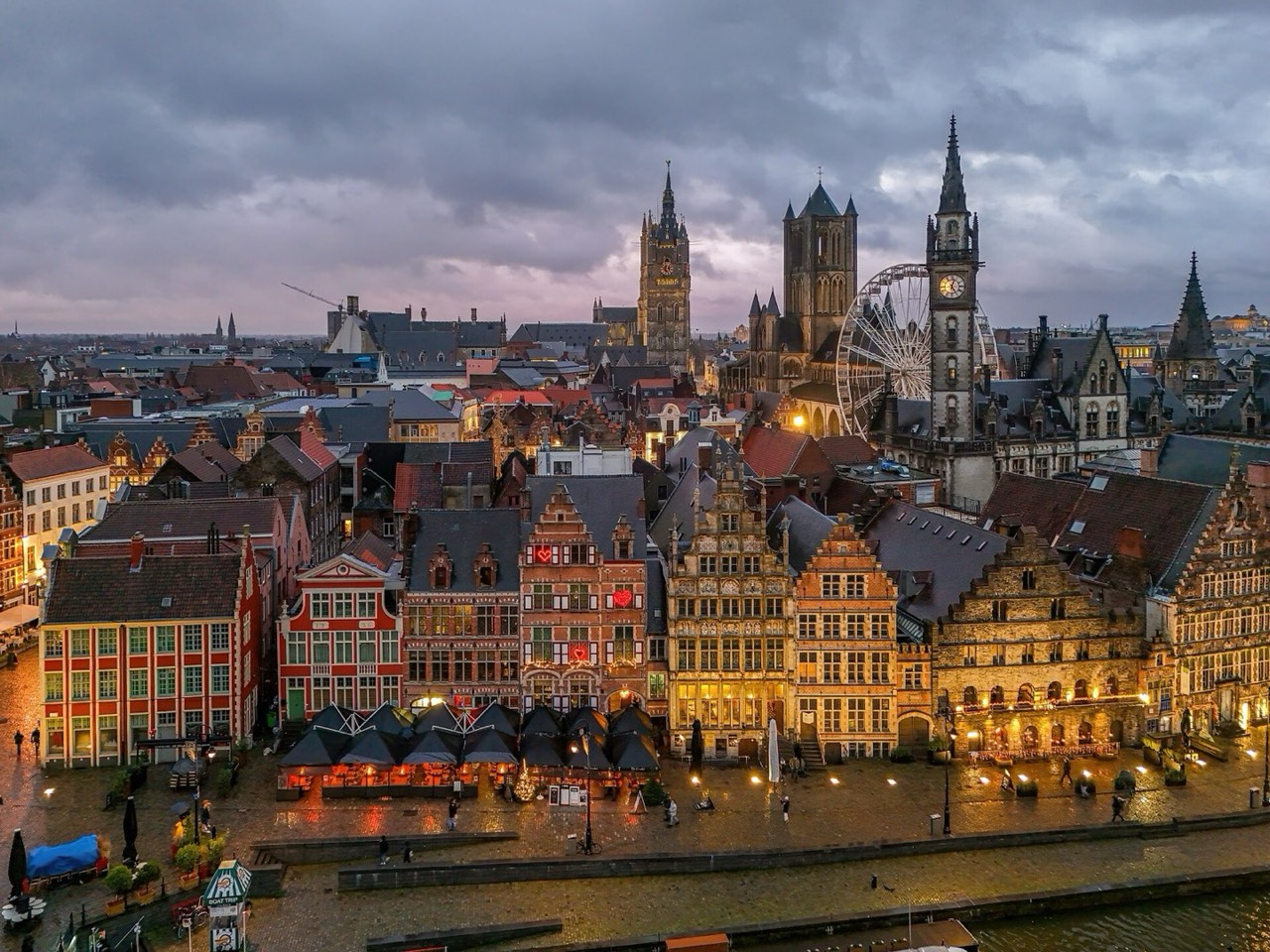
History and culture
Medieval commerce and cloth-making enriched the city. The count’s castle and civic belfry represented different centres of power; the old harbour later gave way to an industrial port to the north.
Religious art, guild façades and lived-in neighbourhoods share a compact centre. Patershol remains residents’ home, not merely a restaurant district.
Keep quiet in churches and residential courtyards. Keep narrow streets and entrances clear when photographing. Allow bicycles and trams through shared streets; check museum photography rules separately.
Places
Castle of the Counts
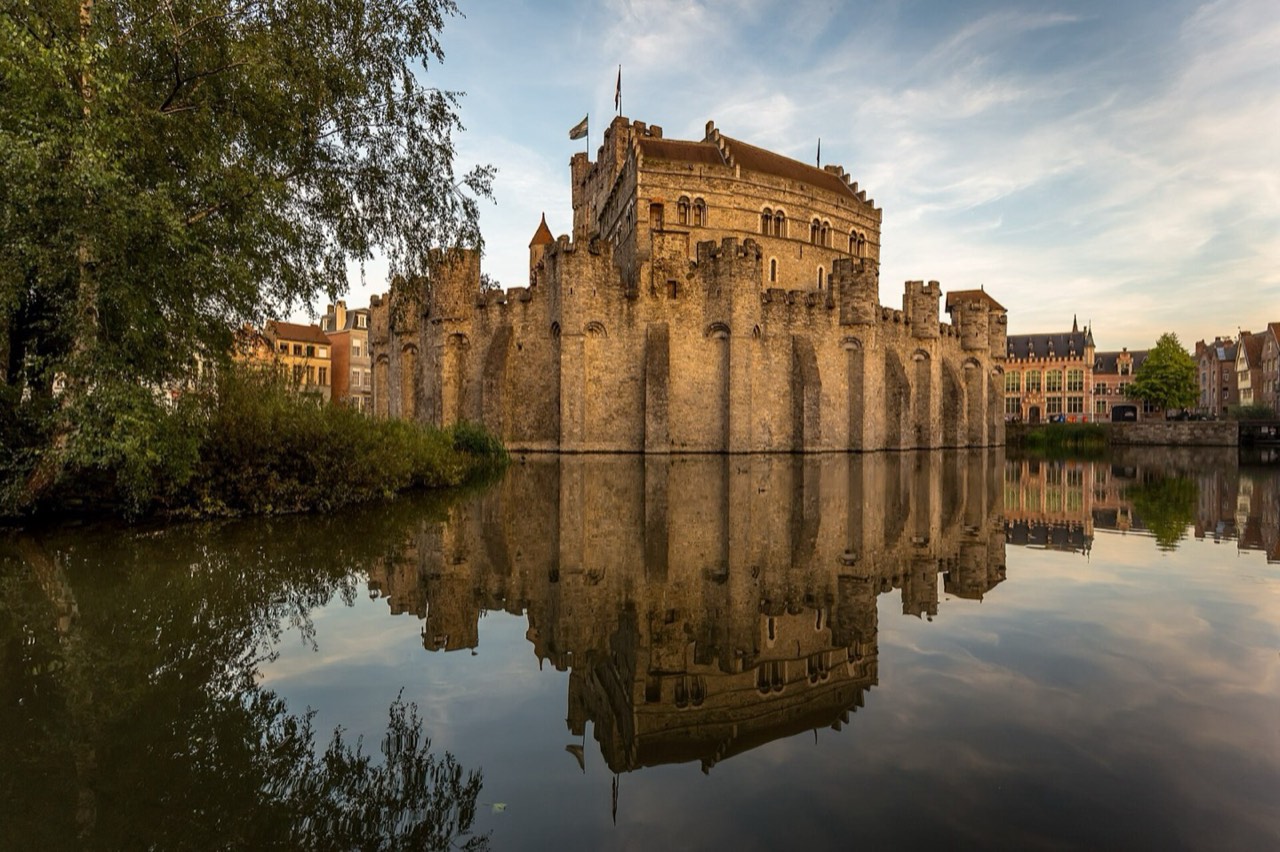
Stone count’s fortress with defensive towers in the centre.
An inscription dates Philip of Alsace’s present castle to 1180. It was later used as a factory complex before restoration as a monument.
A physical expression of comital power beside an independent trading city.
The ticketed interior visit needs separate time and stairs. Some displays concern torture; consider suitability for children. The walk views the exterior.
Ghent Belfry
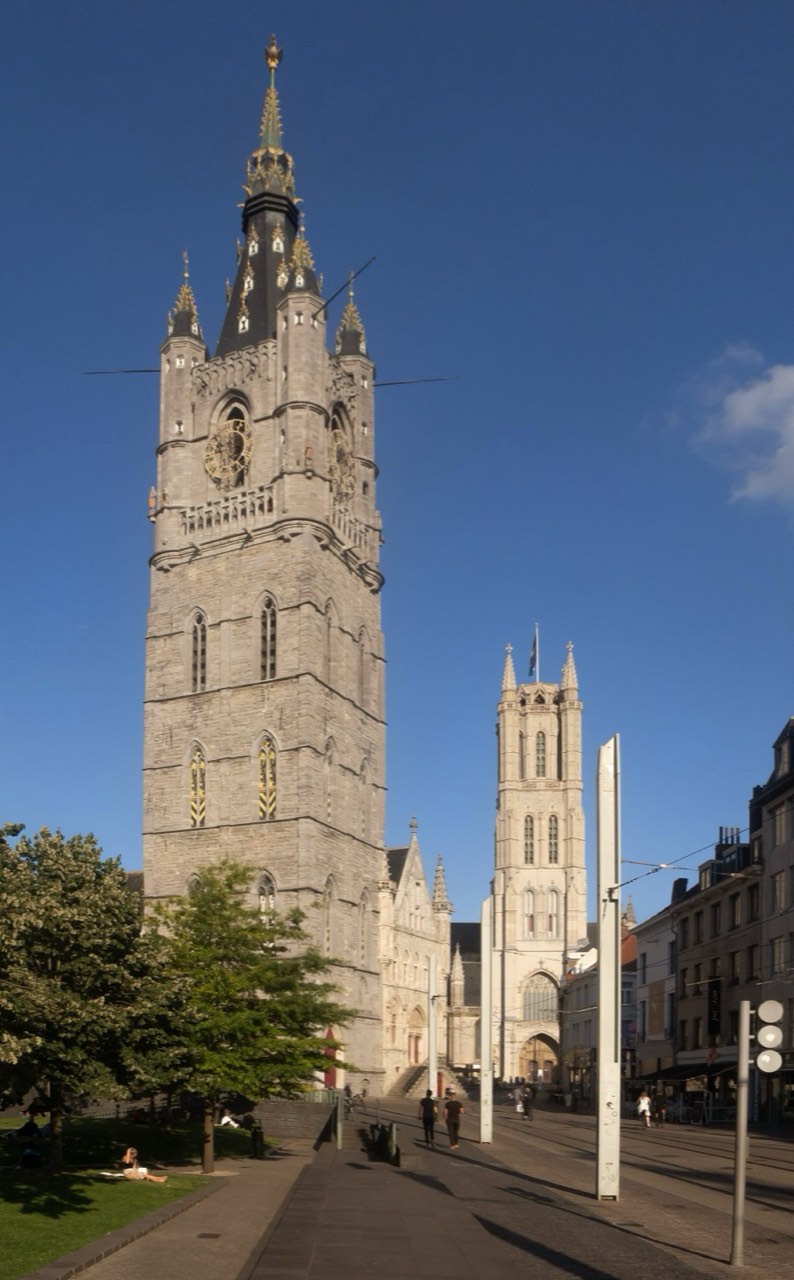
Civic tower topped by a dragon between two major churches.
The tower safeguarded civic privileges and served as a lookout. The adjacent Cloth Hall had a long building history and was completed only in 1907.
A symbol of civic independence and wealth, distinct from church towers.
The ticketed climb is additional to the walk. The lift does not start at street level; a lift does not imply fully step-free access.
St Bavo’s Cathedral
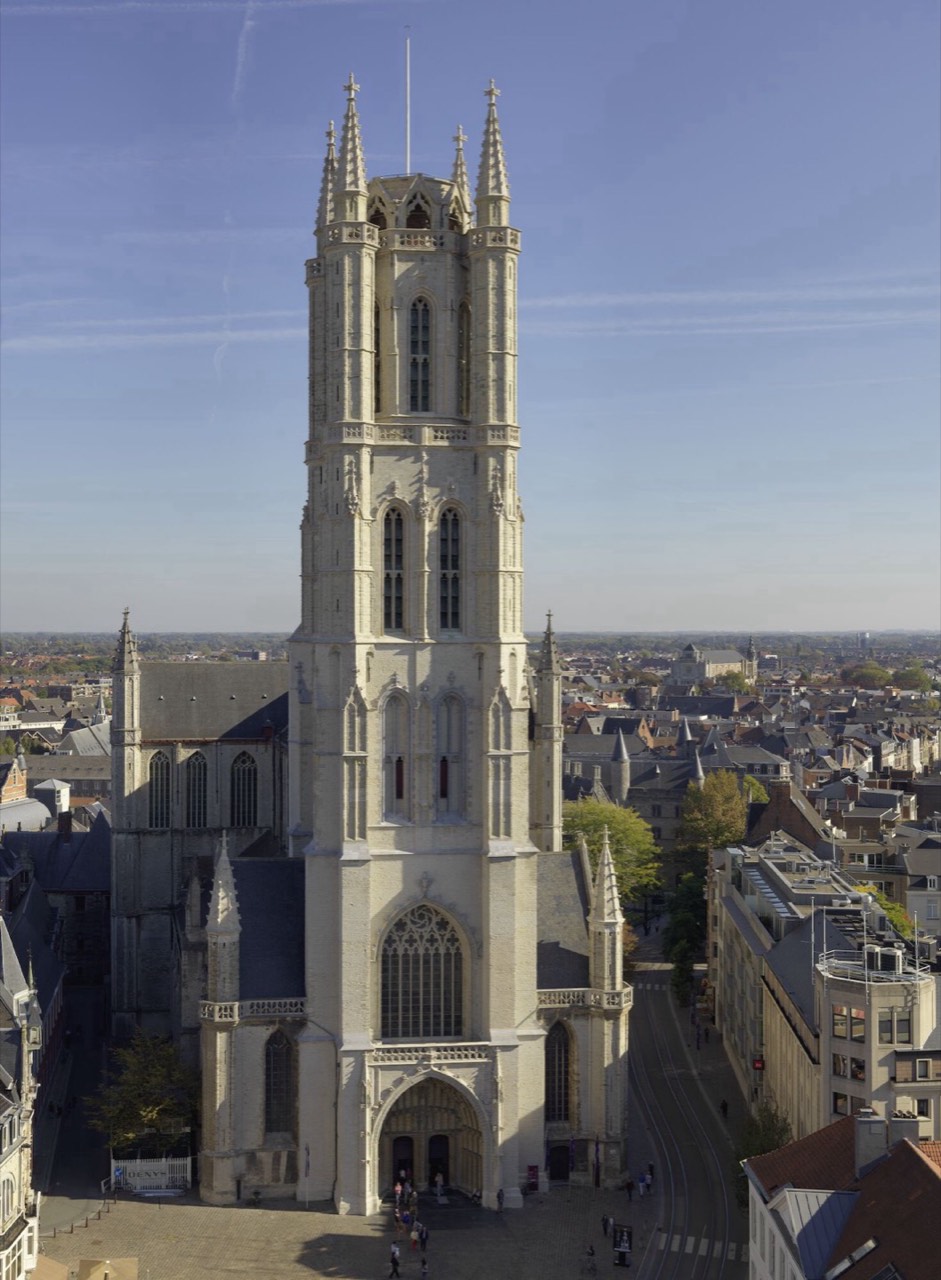
Gothic cathedral associated with the Van Eyck brothers’ Ghent Altarpiece.
A Gothic building replaced earlier churches and became a cathedral in 1559. It preserves religious art from several periods.
A key place for understanding Flemish art.
The altarpiece and visitor centre require tickets; book separately. The upper register of the inner panels is currently being restored at MSK; do not expect every original panel onsite. The tower is not open for routine daily climbs.
St Nicholas’ Church
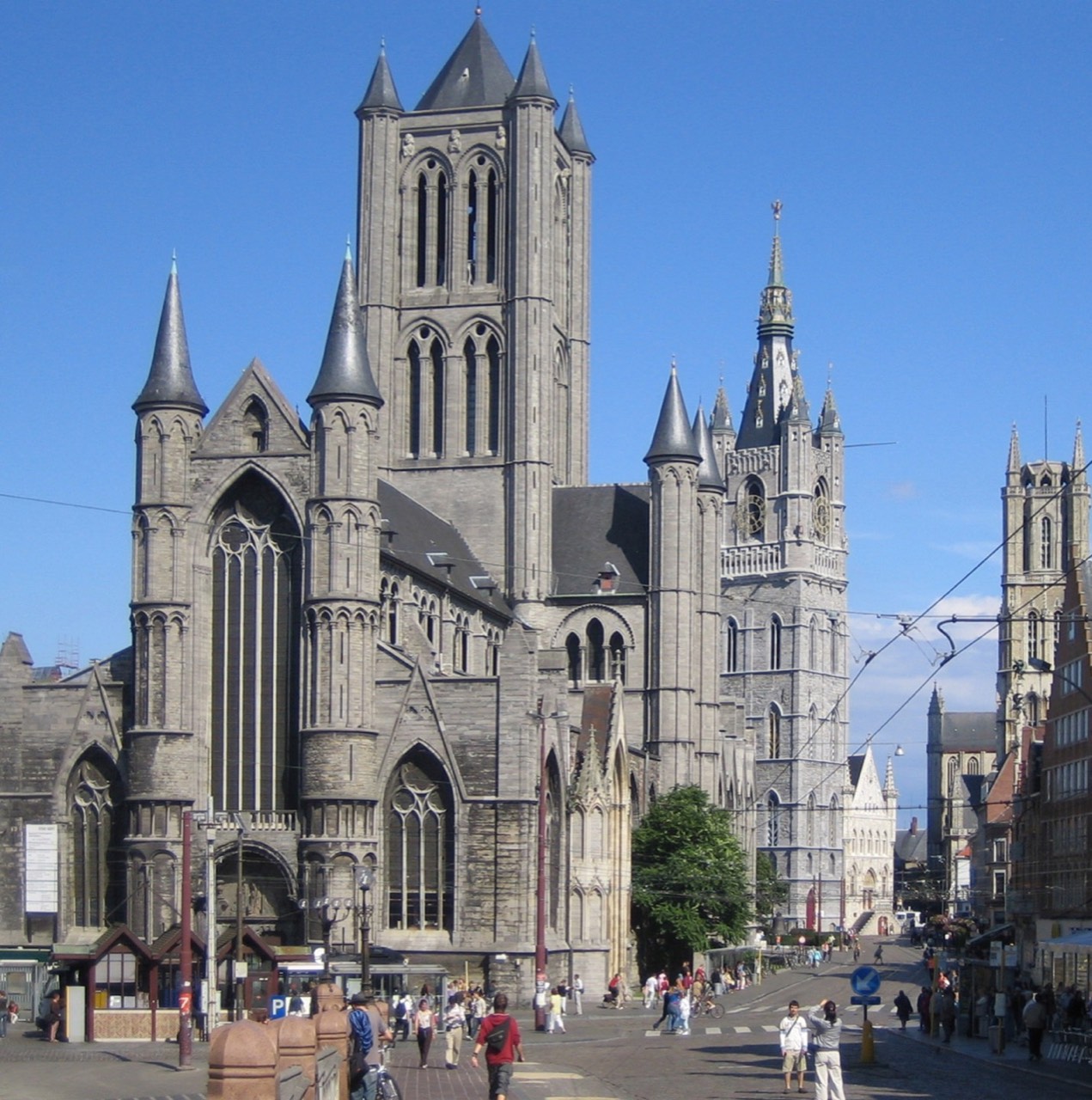
Scheldt Gothic church by Korenmarkt with a tower over the crossing.
The thirteenth-century church served merchants and artisans. Tournai bluestone and its lantern tower define the architecture.
It reveals the trading city’s religious life and guilds’ role.
Respect services and check interior access. Do not confuse this church with St Bavo’s Cathedral; they have different histories and schedules.
Graslei and Korenlei
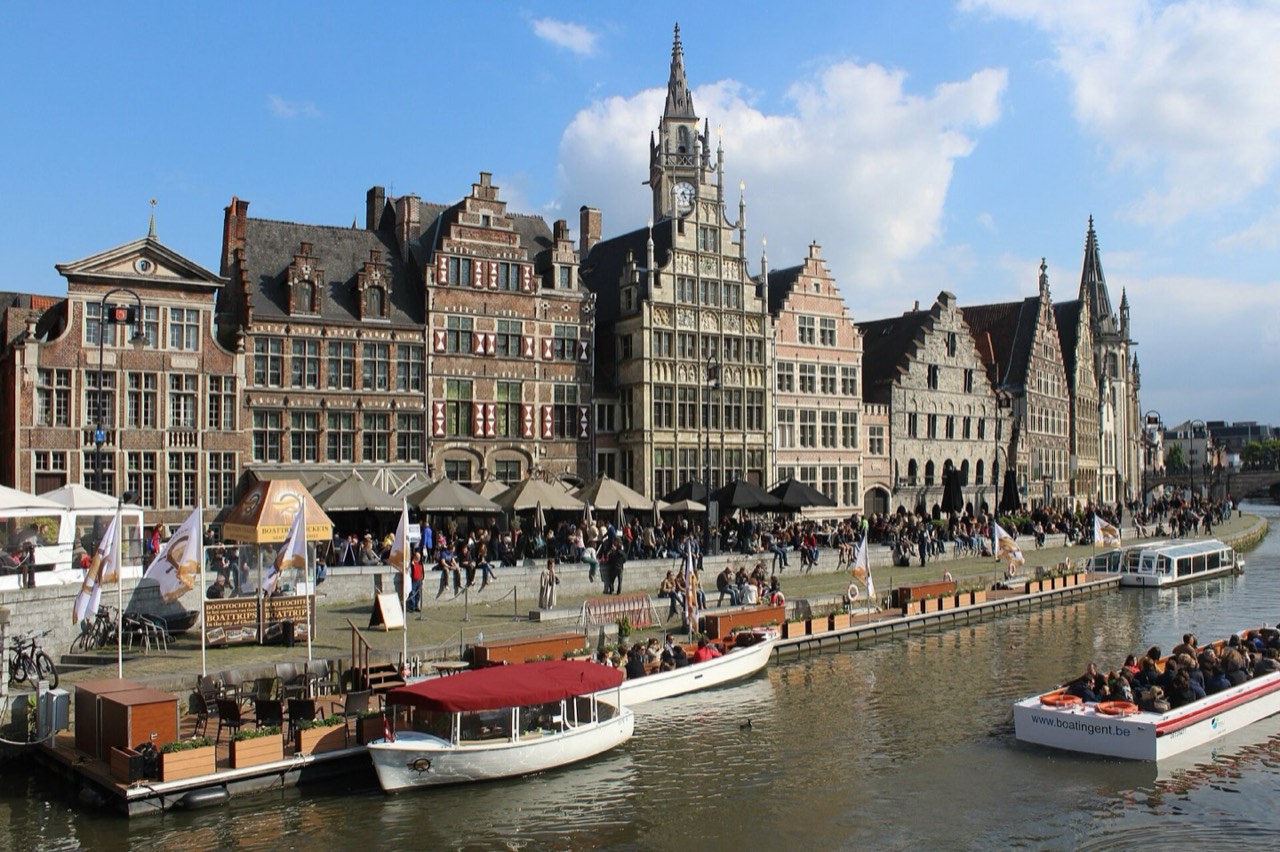
Two banks of the Lys lined with historic commercial façades.
Trading vessels docked here from the eleventh century. Warehouse and guild buildings recall river commerce and the grain market.
It shows the city as a port, not simply a collection of towers.
Cross between banks via Grasbrug or St Michael’s Bridge. Not every waterside edge is guarded; boat tours are excluded from the walk.
Patershol
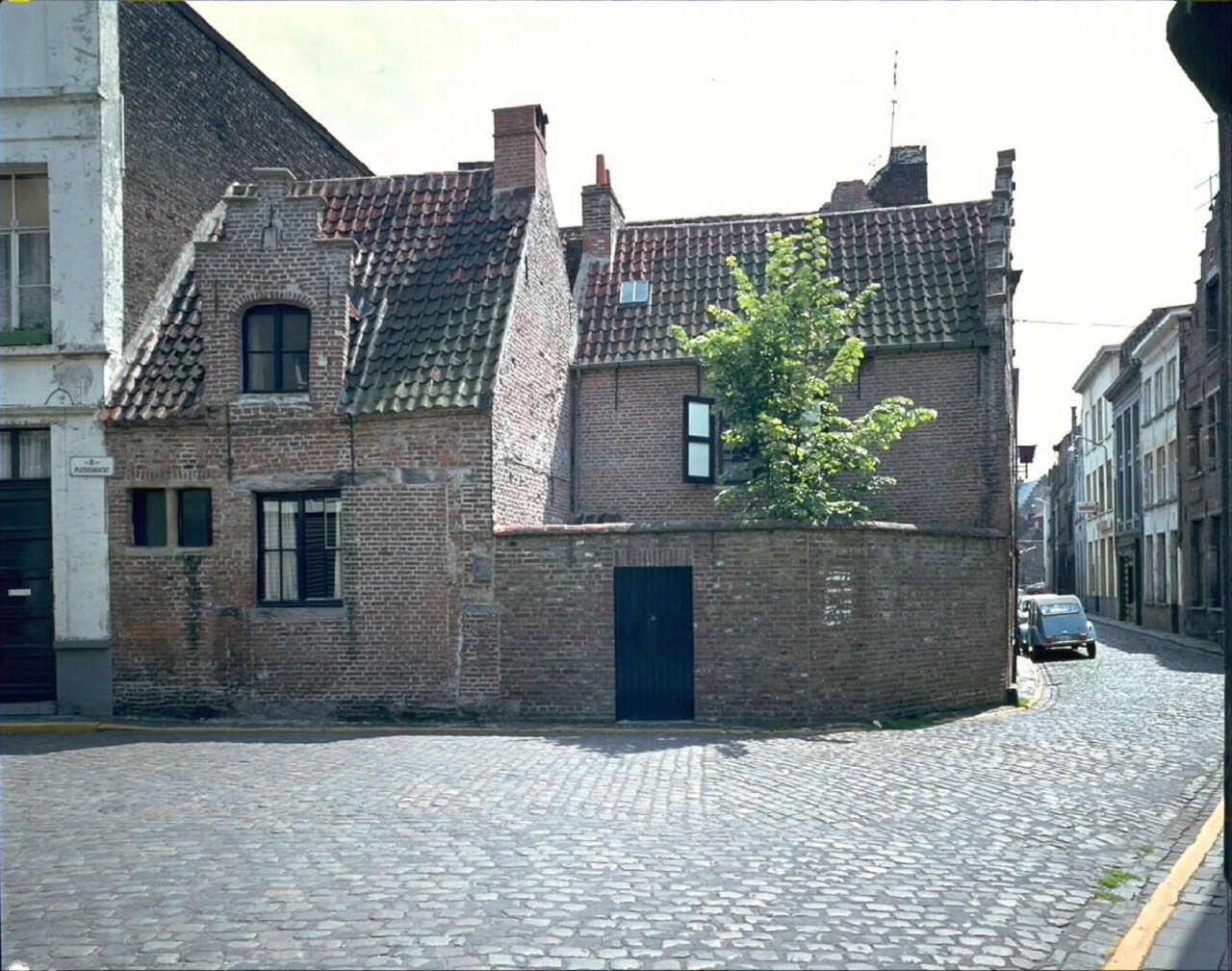
Network of narrow residential lanes north of the count’s castle.
The medieval street pattern survived changing residents and uses, from a religious setting to a working-class quarter and today’s restored houses.
A lived-in district with local traditions and restaurants.
From Haringsteeg follow Hertogstraat and return via Oudburg to Kraanlei. Respect windows; dinner needs separate time and sometimes a reservation.
Walking routes
Three towers and old harbour
From the cathedral pass the belfry and St Nicholas’ Church to the quays. Time covers exterior viewing; the altarpiece and belfry climb are separate.
1 km · 105 min
- St Bavo’s Cathedral · 20 min at stop
- Ghent Belfry · 20 min at stop
- St Nicholas’ Church · 20 min at stop
- Graslei and Korenlei · 20 min at stop
Castle and Patershol lanes
From Gravensteen via Haringsteeg and Hertogstraat follow Oudburg and Kraanlei down to the quays. Public streets only; castle interiors and restaurants are separate.
1.3 km · 95 min
- Castle of the Counts · 20 min at stop
- Patershol · 25 min at stop
- Graslei and Korenlei · 20 min at stop
Civic and comital power
From the belfry via St Nicholas’ Church and river façades to the count’s castle. Compare civic tower and fortress; paid interiors are excluded.
1.3 km · 105 min
- Ghent Belfry · 20 min at stop
- St Nicholas’ Church · 15 min at stop
- Graslei and Korenlei · 20 min at stop
- Castle of the Counts · 20 min at stop
Food
Ghent waterzooi
Creamy broth with vegetables and fish or chicken.
Check the variant and dairy ingredients before ordering.
Cuberdons
Cone-shaped raspberry-flavoured sweets with syrupy centres.
For souvenirs check shelf life: the filling gradually crystallises.
Ironed mastel
A cinnamon bun with butter and sugar, flattened and caramelised with heat.
Try it warm; it is a sweet treat, not plain bread.
Tierenteyn mustard
A local artisan mustard speciality, not a main course in itself.
Try a little with bread or meat; account for mustard allergies.
Ghent-style stoverij
Beef stewed in beer; local versions may include mustard.
Recipes vary; check alcohol and allergens in the sauce.
Practical information
De Lijn operates local buses and trams. Buy and activate ordinary tickets according to the operator’s rules. CityCard Gent covers De Lijn only within Ghent: write its start time/date, show it at inspections rather than scanning it onboard. Intercity trains are separate.
For ambulance and fire call 112; for urgent police help in Belgium call 101. Give the address and incident. Keep belongings secure in crowds; take care on wet cobbles and beside canals.
Money and payments
Currency: euro, EUR. Check accepted cards and the terminal currency; keep some cash for small purchases and check your bank’s fees.
Tipping
Tipping is optional: hotel and restaurant prices include service. You may round up or leave a discretionary amount for good service.
Transport
De Lijn operates local buses and trams. Buy and activate ordinary tickets according to the operator’s rules. CityCard Gent covers De Lijn only within Ghent: write its start time/date, show it at inspections rather than scanning it onboard. Intercity trains are separate.
Emergency help
112: ambulance and fire; 101: urgent police assistance in Belgium. Follow the 112 menu: 1 for ambulance/fire, 2 for police. Stay on the line until the operator permits you to hang up. Source: 112.be/en/how-call/how-call-112.
Electricity
Supply: 230 V / 50 Hz; type E sockets are common. Use a compatible adapter that preserves earthing when required. A plug adapter does not convert voltage.
Connectivity
Check roaming terms and data limits with your operator: European terms do not automatically apply to every SIM. Save maps, tickets and your accommodation address for offline use.
Verified sources and photo licences
- Belgian FPS Interior: 112 menu and urgent police number 101 · 112.be
- Visit Bruges: Belgian currency and optional tipping · www.visitbruges.be
- EITI Brussels conference 2026: type E, 230 V / 50 Hz and connectivity · api.eiti.org
- Local transport: ticket validation and actual coverage · visit.gent.be
- CityCard Gent activation, actual validity and benefits · visit.gent.be
- Ghent harbour moved from old quays in the nineteenth century · visit.gent.be
- Ghent regional cuisine · visit.gent.be
- Ghent raspberry sweets · visit.gent.be
- Cinnamon mastel and ironed caramelised version · visit.gent.be
- Local artisan mustard · visit.gent.be
- Local chef’s 2026 verification of Ghent dishes · visit.gent.be
- Castle of the Counts · visit.gent.be
- Ghent Belfry · visit.gent.be
- St Bavo’s Cathedral · visit.gent.be
- St Nicholas’ Church · visit.gent.be
- Graslei and Korenlei · visit.gent.be
- Patershol · visit.gent.be