
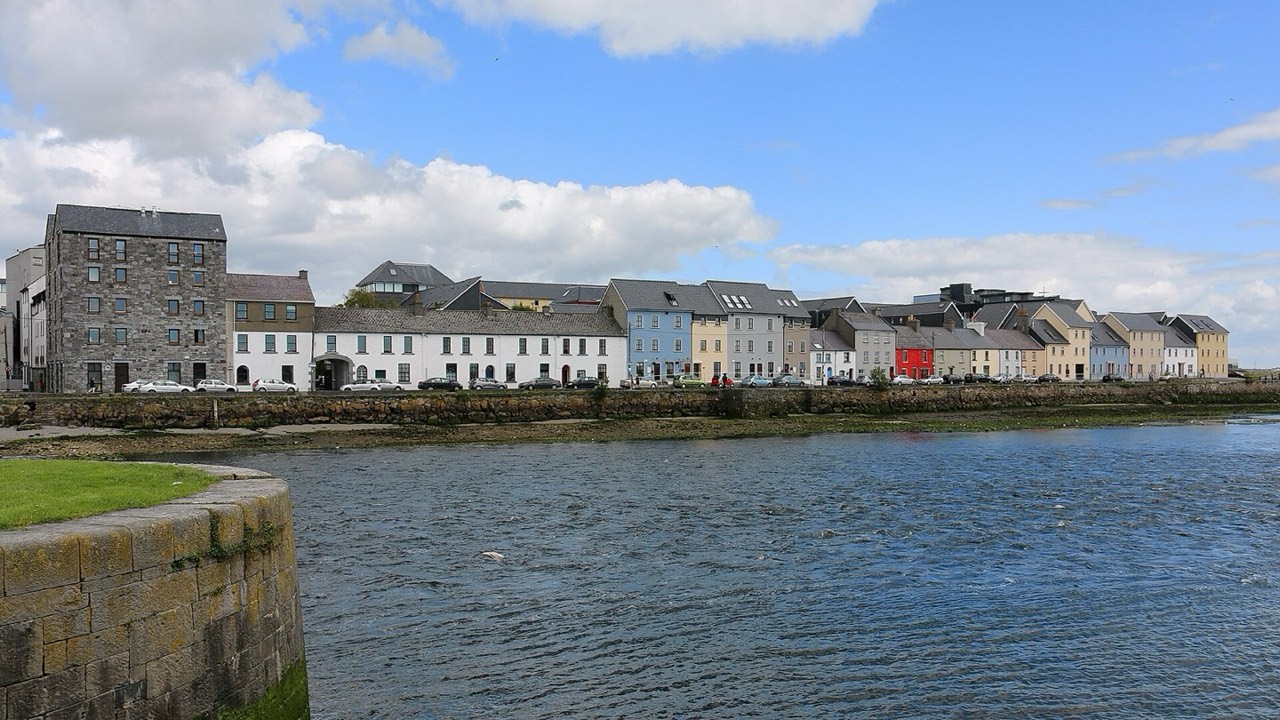
History and culture
The medieval core grew around a thirteenth-century castle and town walls. Saint Nicholas’ Church is recorded in 1320; the Spanish Arch dates to 1584. Buildings around Eyre Square show nineteenth-century growth beyond the walls.
Live music, the Irish language and seafood matter to this western city. The “Tribes of Galway” refers to historic merchant families, not all present residents; waterfront terraces remain local homes.
Be quiet during services and keep pavements and entrances clear. Listen considerately at pub music sessions and ask about photography. Private homes and student rooms are not public attractions.
Places
Spanish Arch
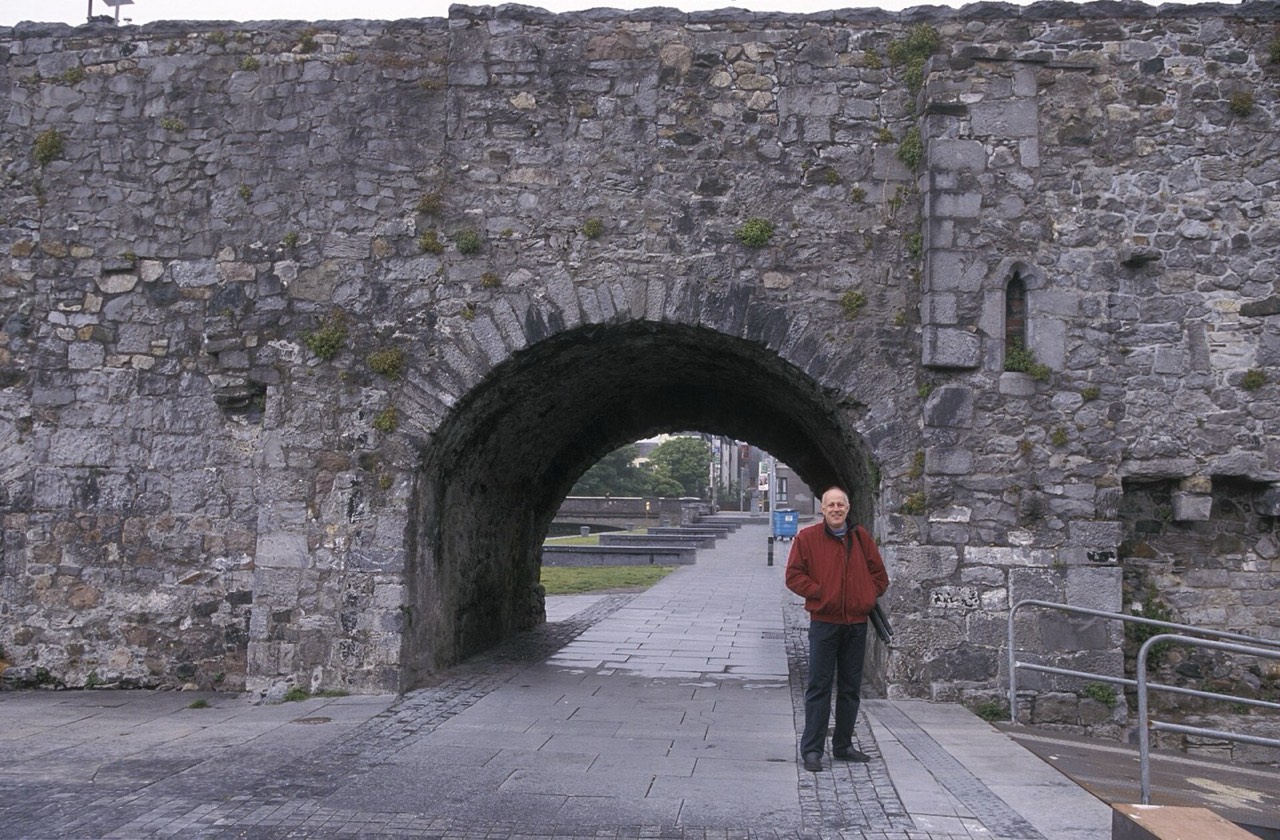
Remnant of the historic quays’ defences beside the Corrib.
Built in 1584 at Ceann na Bhalla, the “head of the wall”, the arch preserves part of the trading port’s defensive history.
Connects the medieval city and waterfront.
Museum redevelopment began nearby in September 2026, so access routes can change. Follow open public paths; do not assume museum admission or bypass construction barriers.
Galway Cathedral
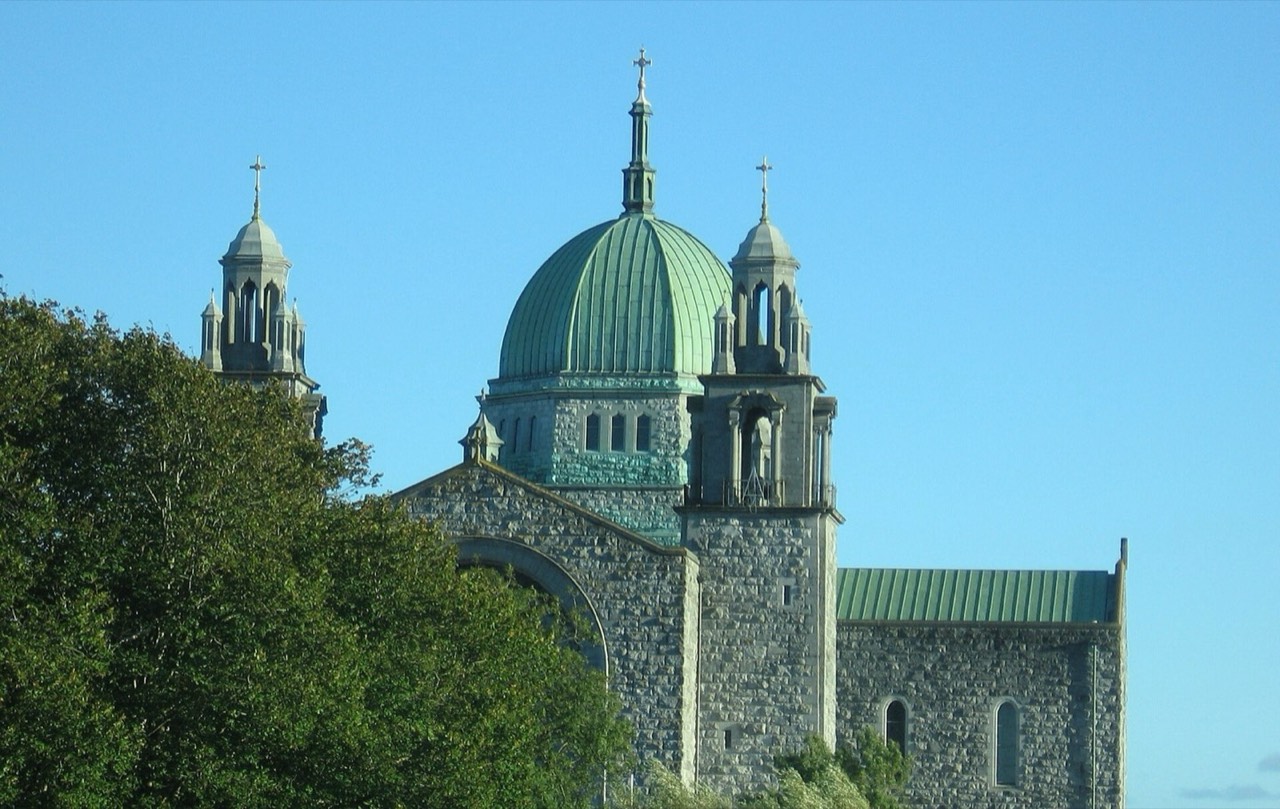
Domed stone cathedral on the Corrib’s west bank.
Dedicated on 15 August 1965 to Our Lady Assumed into Heaven and Saint Nicholas, this is a modern building despite its historically inspired stone architecture.
Shows the continuation of stone church-building in the twentieth century.
There is no admission charge; donations are voluntary. No sightseeing during Mass; opening times are approximate. A ramp serves the main entrance in the east transept.
Saint Nicholas’ Collegiate Church
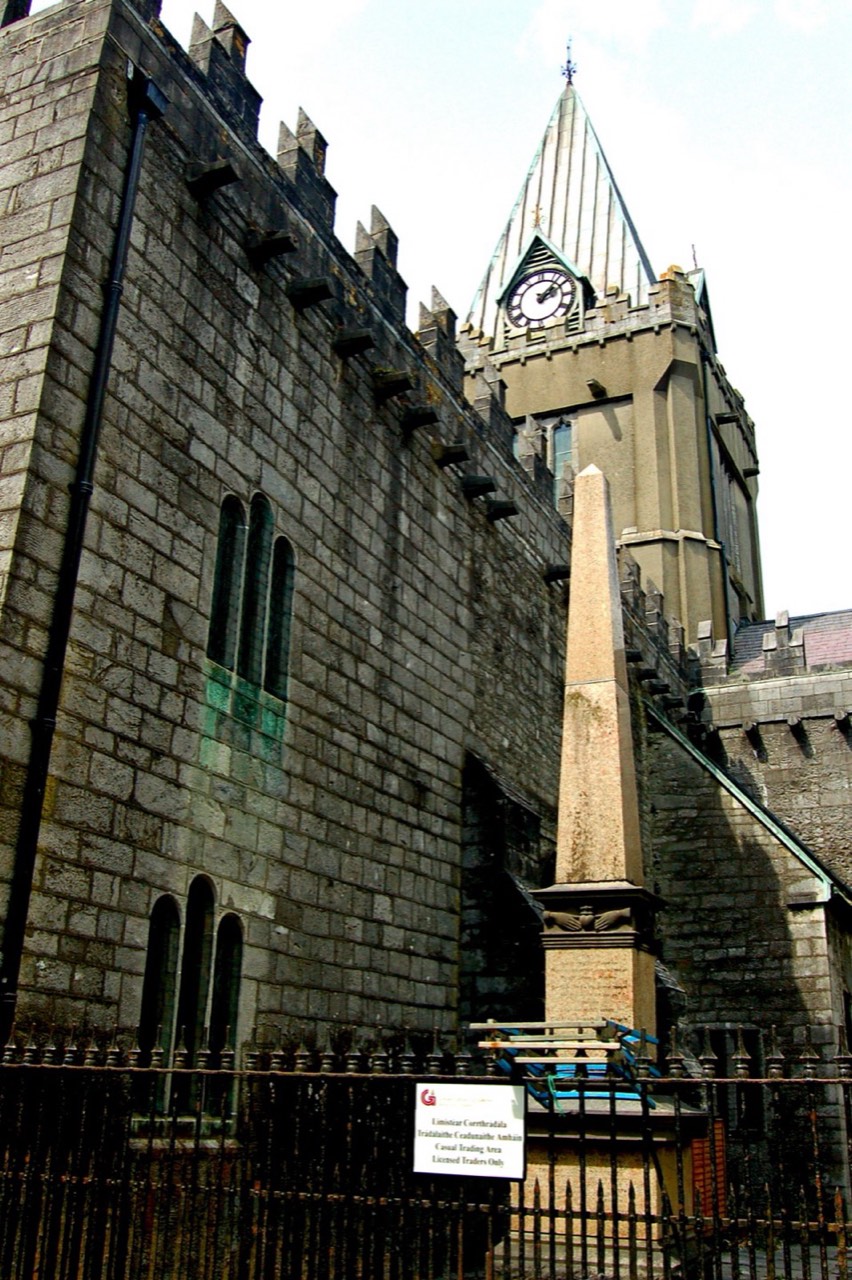
Active medieval church in the city’s trading centre.
First recorded in 1320, the church’s collegiate status was confirmed in 1485. Merchant families expanded it in the sixteenth century.
Preserves connections with maritime trade and community life.
Visiting hours follow services. Self-guided entry, guided tours and bell ringing are different offers; check the official ticket. Exterior viewing does not include a tower climb.
Eyre Square
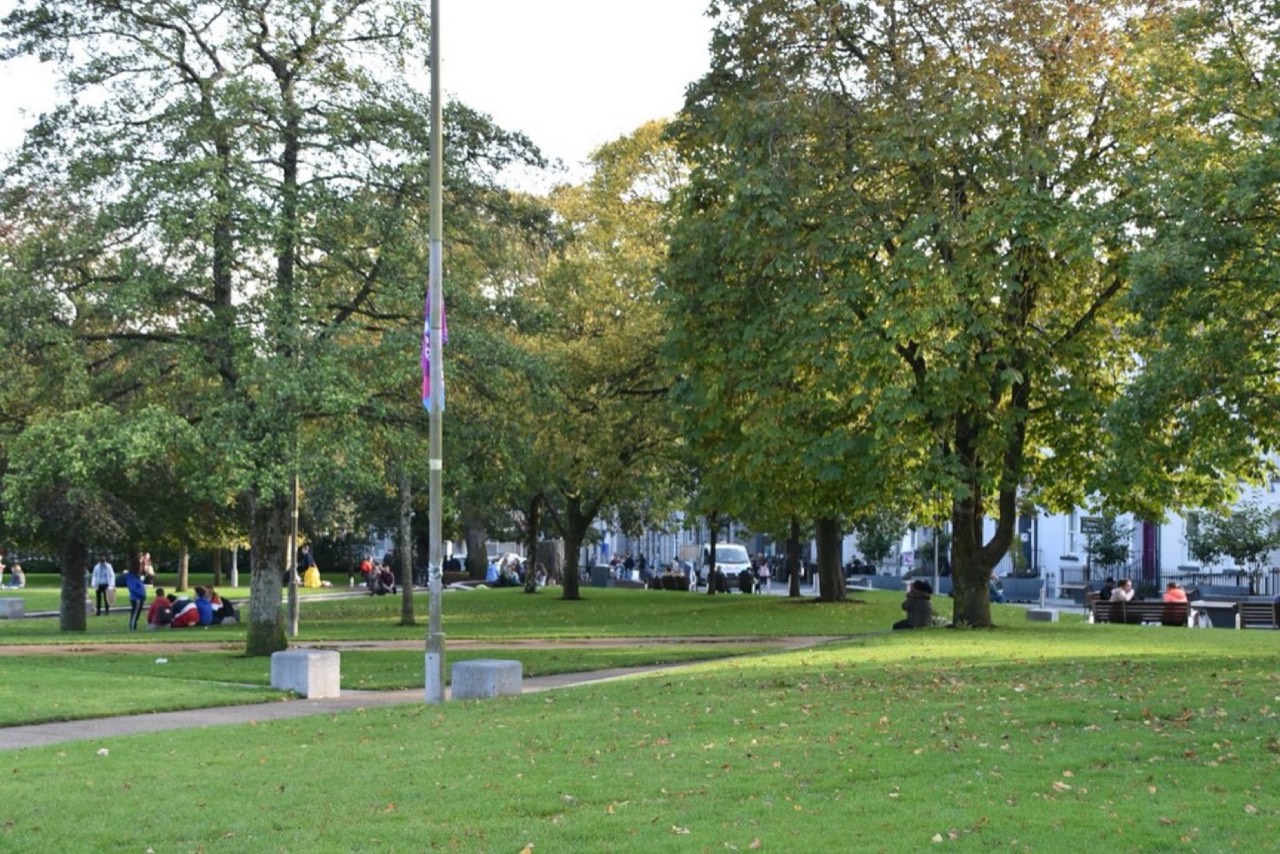
Public green square beside the transport and shopping centre.
Surrounding banks, the station, historic Railway Hotel and Georgian-style terraces reflect nineteenth-century growth beyond the medieval walls.
Helps explain the city’s later urban layer.
Keep to public paths; seasonal events can affect access. Do not block boarding at bus stops or cross the road between buses.
The Long Walk
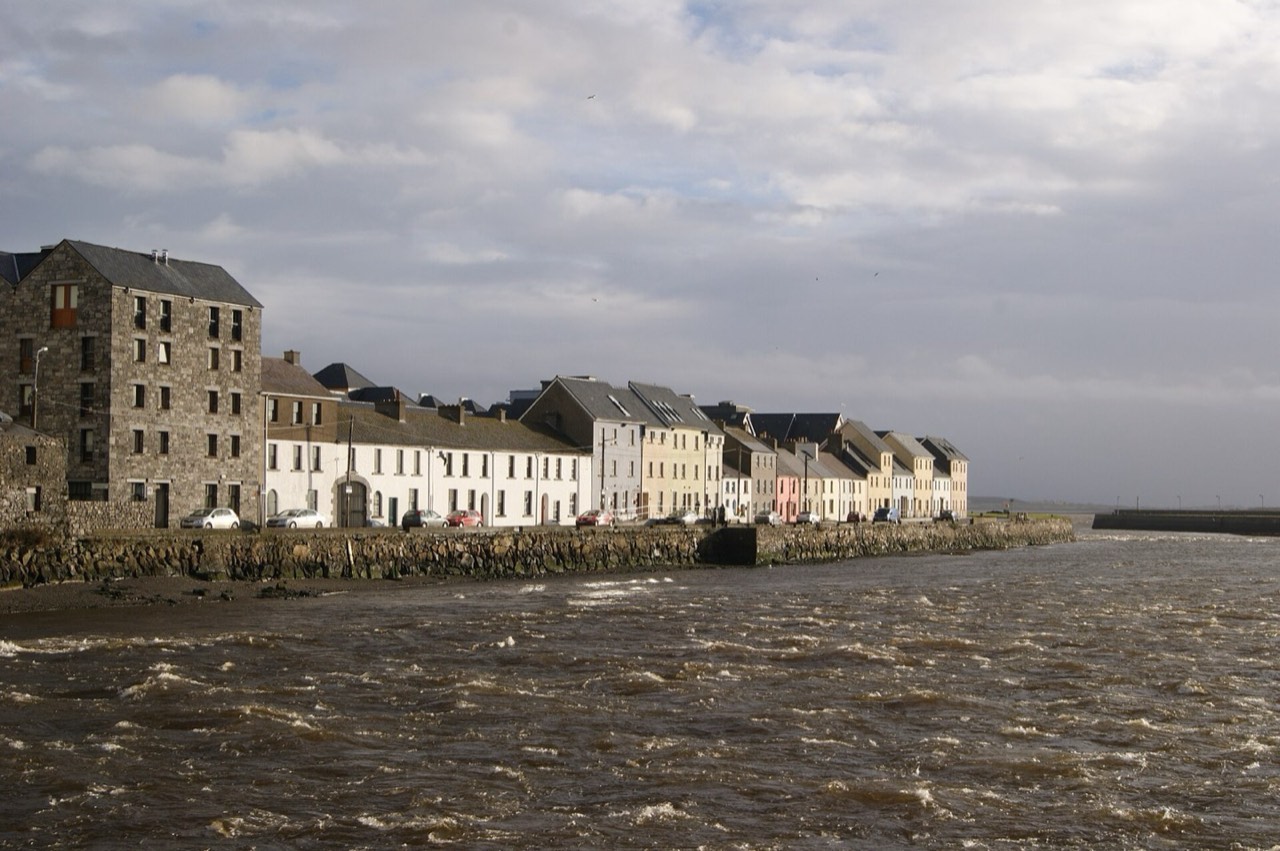
Colourful residential terraces where the Corrib meets the bay.
This edge of the centre developed on land reclaimed from the sea and changed uses alongside the port. The terraces form a recognisable residential frontage to the inner harbour.
Shows housing alongside working harbour spaces.
Homes are private: do not enter or photograph through windows. Skip the waterfront in high water or if fenced off; check nearby construction access on site.
Salthill Promenade
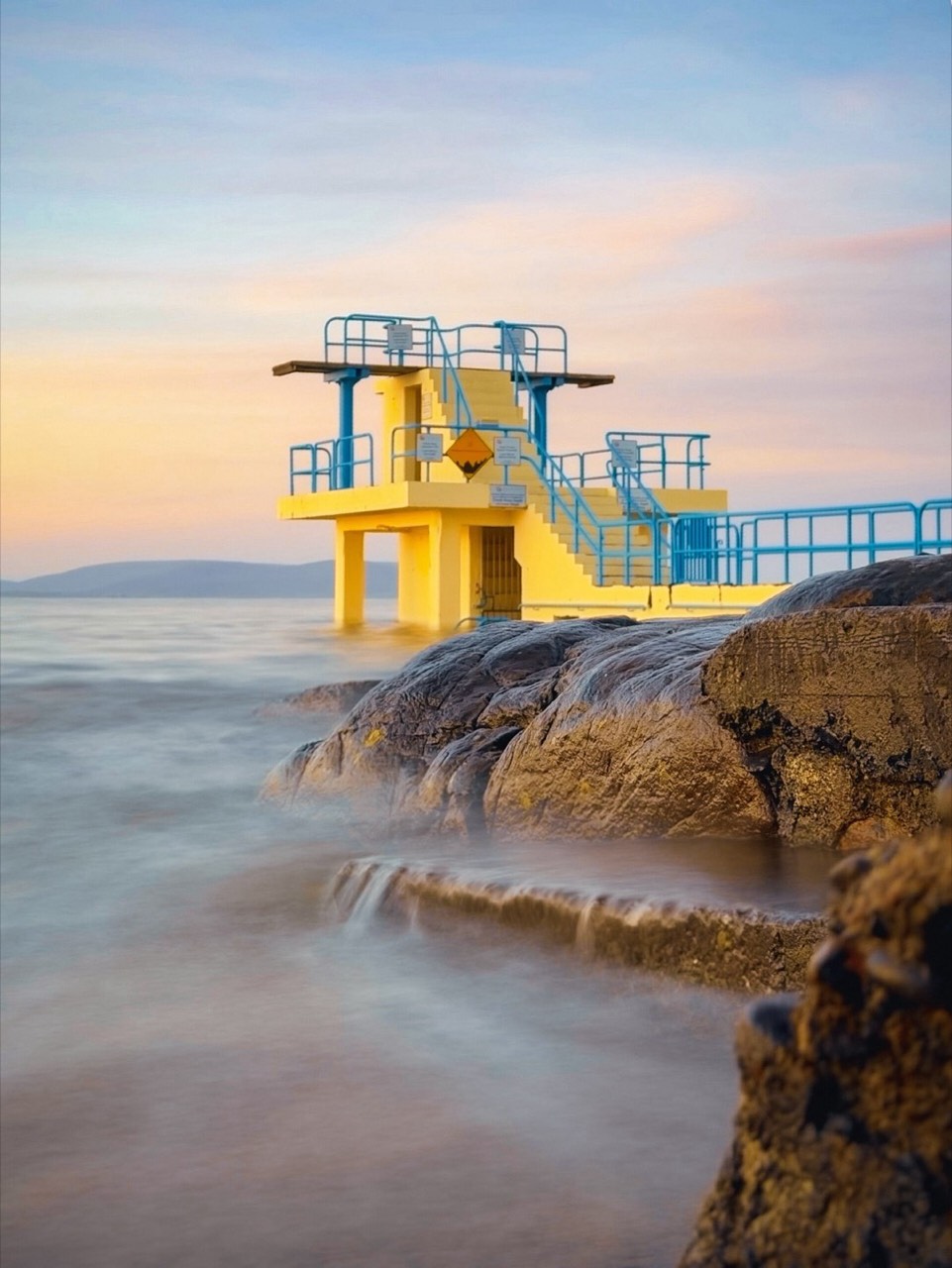
Seafront promenade along the bay towards Blackrock.
Coastal leisure developed here from Victorian times. The modern promenade maintains the city’s relationship with the bay and views towards the Burren.
Shows Galway beyond its compact historic centre.
This is a longer separate walk or bus outing. Add distance and time for the full promenade to Blackrock; the shore is exposed to wind. Swimming and jumping are not part of the route; heed weather warnings.
Walking routes
Square to quays
From Eyre Square take William Street and Shop Street to Saint Nicholas’, then Quay Street towards the Spanish Arch. If construction fences restrict the approach, view it from the permitted side and follow the diversion without entering the museum.
1.2 km · 85 min
- Eyre Square · 20 min at stop
- Saint Nicholas’ Collegiate Church · 20 min at stop
- Spanish Arch · 20 min at stop
Churches and river
From the cathedral cross the open Salmon Weir pedestrian bridge and use Newtownsmith, then Market Street towards Saint Nicholas’. Continue through central streets towards the Spanish Arch. Avoid closed river paths; interiors are separate.
1.8 km · 105 min
- Galway Cathedral · 25 min at stop
- Saint Nicholas’ Collegiate Church · 20 min at stop
- Spanish Arch · 20 min at stop
Harbour and bay shore
Start on the open part of the Long Walk, return by public streets towards the Spanish Arch and cross Wolfe Tone Bridge to Claddagh. Use Claddagh Basin, Nimmo’s Pier and South Park towards the beginning of Salthill. Follow signed street diversions where fenced. This is one-way; returning or continuing to Blackrock takes extra time.
3.5 km · 120 min
- The Long Walk · 15 min at stop
- Spanish Arch · 15 min at stop
- Salthill Promenade · 25 min at stop
Food
Galway Bay oysters
Local oysters appear in seafood restaurants and marine food festivals; ask about their origin.
Species, season and serving style vary. Check mollusc allergens; raw oysters are not suitable for everyone.
Seafood chowder
Thick fish and seafood soup, often creamy, with potatoes and vegetables.
Catch and recipes vary: check fish, molluscs, crustaceans, milk and thickeners.
Fish and chips
Battered fish with chips, popular in local seafood establishments.
Not an exclusively Irish dish. Ask about fish species, gluten and shared fryers when managing allergies.
Irish stew
Warming Irish meat, potato and onion stew in varied local versions.
An Irish-wide tradition, not a Galway invention; ask about the meat, stock and alcohol used.
Brown soda bread
Wholemeal soda-raised bread often served alongside soup or seafood.
Check wheat and dairy ingredients, and whether bread carries a separate charge.
Practical information
The centre is walkable; use the TFI bus planner for Salthill. Leap is accepted on city Bus Éireann and City Direct services, but check the specific operator’s ticket rules. Dublin’s 90-minute fare does not automatically apply in Galway. Rail and intercity coaches have separate terms.
112 or 999 is for emergencies. Keep clear of unfenced Corrib edges and strong currents. Wind and waves can make bay-side walking dangerous: do not enter the water or jump from Blackrock without assessing conditions and local warnings. Follow construction diversions near the Spanish Arch.
Money and payments
The Republic of Ireland uses euro, EUR; Northern Ireland uses sterling. Visa and Mastercard are widely accepted, but carry a backup card and a little cash. Know your PIN and check your bank’s charges and exchange terms.
Tipping
Tipping is optional and the amount is your choice. Check menu and bill service charges before paying to avoid tipping twice; an extra amount requested on a terminal is not compulsory.
Transport
The centre is walkable; use the TFI bus planner for Salthill. Leap is accepted on city Bus Éireann and City Direct services, but check the specific operator’s ticket rules. Dublin’s 90-minute fare does not automatically apply in Galway. Rail and intercity coaches have separate terms.
Emergency help
112 or 999: urgent police, fire, ambulance or coastguard assistance; calls are free. State the service required, location and incident, with the Eircode if known. For non-emergency medical advice contact a doctor or pharmacist. Sources: gov.ie and HSE.
Electricity
Supply: 230 V / 50 Hz with three-pronged plugs. Check plug compatibility and appliance voltage, preserving required earthing. A normal plug adapter does not transform voltage.
Connectivity
Check your operator’s roaming, especially before travelling to Northern Ireland, where terms can differ. Save your address, Eircode and route offline; electronic tickets need a charged phone.
Verified sources and photo licences
- Tourism Ireland: EUR versus sterling, cards, three-pin 230 V / 50 Hz · www.ireland.com
- Competition and Consumer Protection Commission: optional tips and service charges · www.ccpc.ie
- Government of Ireland: emergency services 112 and 999 · www.gov.ie
- Health Service Executive: free emergency calls, location and Eircode · www2.hse.ie
- Public transport operator: local tickets and coverage · about.leapcard.ie
- Galway City Council: medieval city core and nineteenth-century Eyre Square · www.galwaycity.ie
- Galway City Council: museum redevelopment started September 2026 · www.galwaycity.ie
- Galway City Council: public route via Claddagh, Nimmo’s Pier and Salthill · www.galwaycity.ie
- Galway City Council: Droichead an Dóchais, dedicated pedestrian bridge opened 2023 · www.galwaycity.ie
- Galway City Council: signal-controlled approach crossing completed Q1 2026 · www.galwaycity.ie
- Fáilte Ireland: Galway oysters, seafood and fish with chips · www.discoverireland.ie
- Tourism Ireland: national stew, brown soda bread and chowder · www.tourismireland.com
- Cathedral operator: free admission, voluntary donation, services and ramp · www.galwaycathedral.ie
- Spanish Arch · www.discoverireland.ie
- Galway Cathedral · www.galwaycathedral.ie
- Saint Nicholas’ Collegiate Church · stnicholas.ie
- Eyre Square · www.galwaycity.ie
- The Long Walk · consult.galwaycity.ie
- Salthill Promenade · www.discoverireland.ie