
History and culture
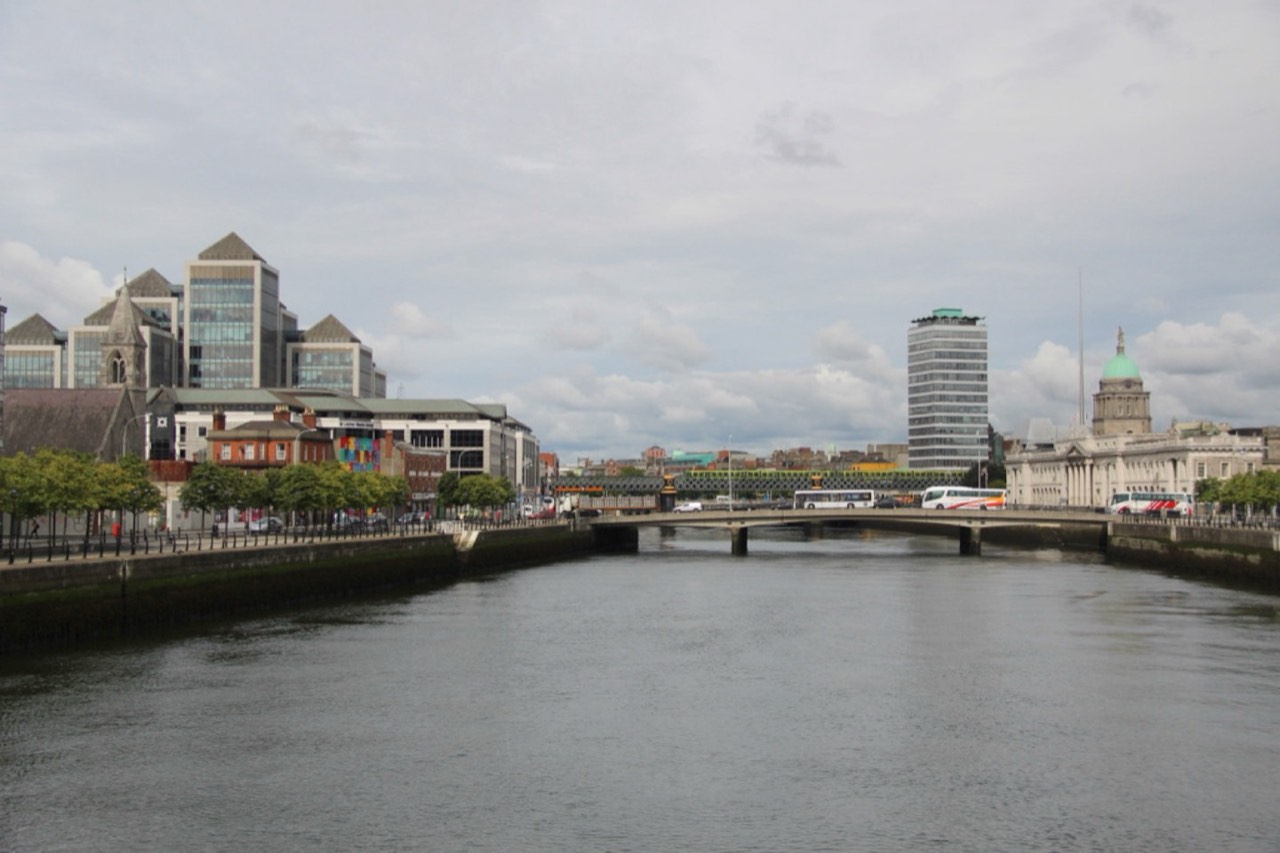
Christ Church links the city to an eleventh-century Hiberno-Norse settlement; Trinity was founded in 1592. Kilmainham explains imprisonment and the struggle for independence, while the 1816 Ha’penny Bridge shows the development of urban crossings.
Literature, university life and live music coexist with active churches and residential neighbourhoods. Pub sessions are not always scheduled concerts; national dishes are not necessarily Dublin inventions.
Be quiet during services and keep pavements and entrances clear. Listen considerately at pub music sessions and ask about photography. Private homes and student rooms are not public attractions.
Places
Trinity College and Book of Kells
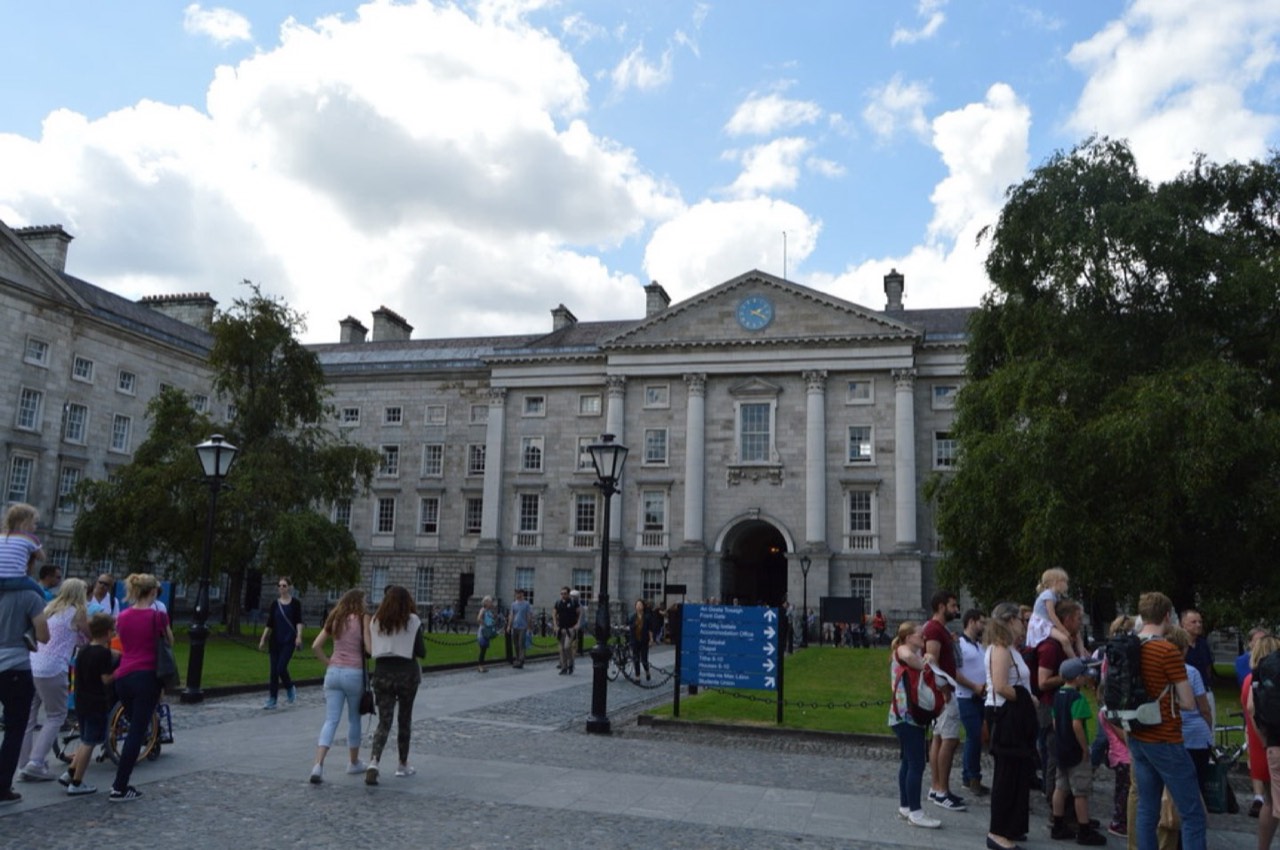
University campus and a separate medieval-manuscript visitor experience.
The university was established by royal charter in 1592 on a former priory site. The Book of Kells is an illuminated ninth-century manuscript displayed in the Old Library.
Connects educational history with Irish manuscript art.
Book of Kells Experience is a separately ticketed visit: book officially and allow about 90 minutes. Most Long Room books are removed for conservation, apart from the first four bays. Photography of the book in the Treasury is prohibited; the walk excludes the exhibition.
Christ Church Cathedral
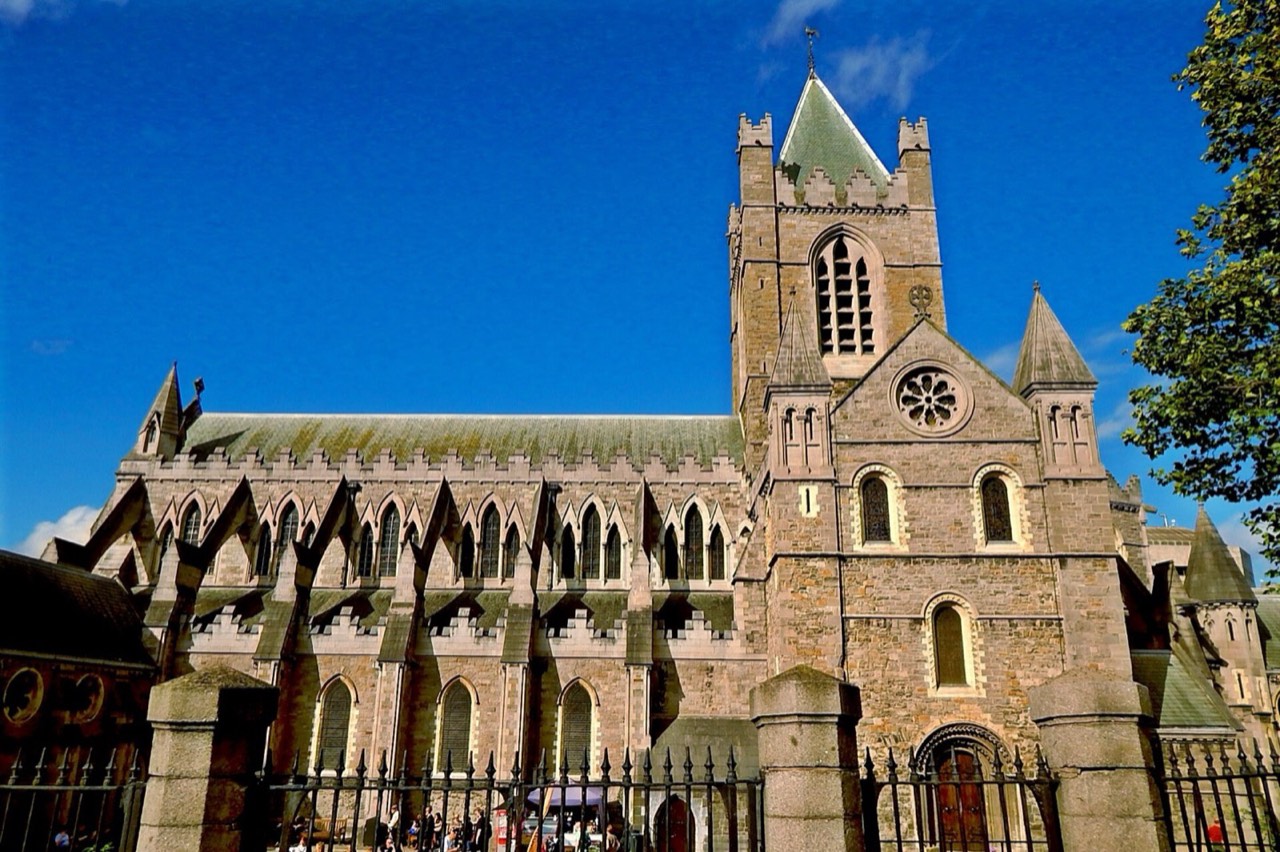
Medieval cathedral substantially reshaped in Victorian times.
The first church here is associated with Dúnán and King Sitriuc around 1030. George Edmund Street’s 1871–1878 works substantially changed its present appearance.
Shows Hiberno-Norse origins and later architectural layers.
Tourist entry is charged and services affect access. Check belfry and combined Dublinia tickets separately. The walk views the building from the street.
Saint Patrick’s Cathedral
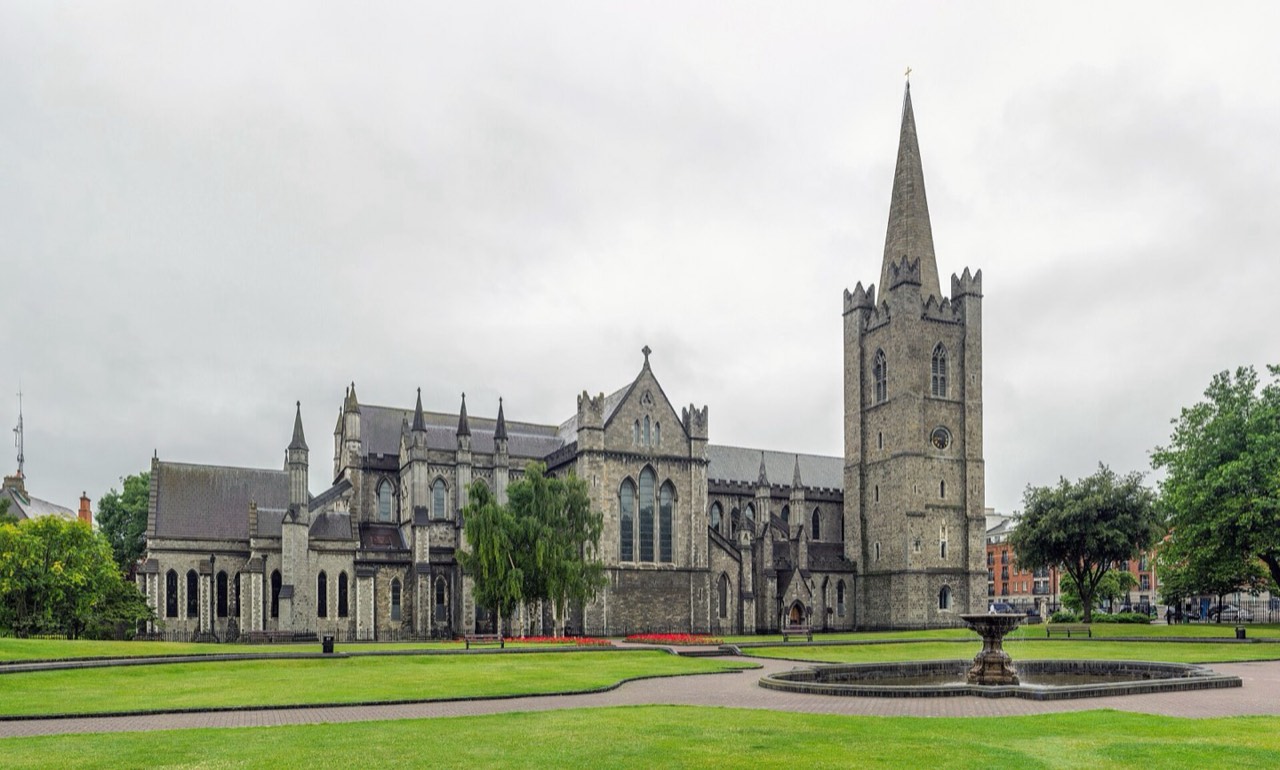
Gothic cathedral beside a public garden.
The present building’s form and scale date to construction in 1220–1259; later works preserved and changed the medieval ensemble. Jonathan Swift is buried here.
Connects the capital’s religious and literary history.
Interior sightseeing is ticketed and hours follow services, especially on Sundays. Garden access is not a cathedral ticket; allow separate time for the interior.
Saint Stephen’s Green
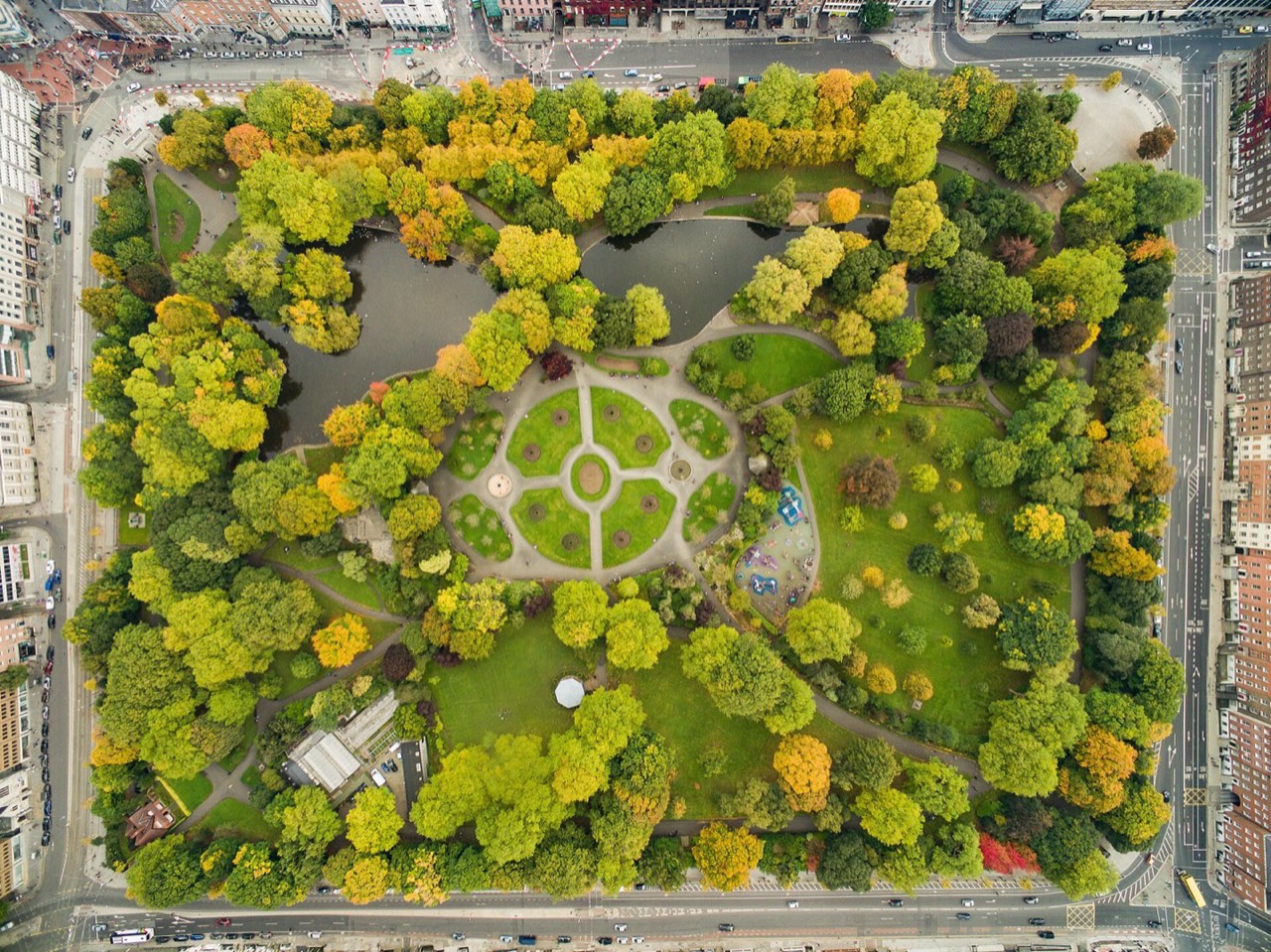
Victorian park with ponds and paths beside Grafton Street.
Lord Ardilaun opened the park for citizens in 1880. Its Victorian layout, ornamental lake and planted landscape survive.
Provides a calm public landscape in the city’s shopping district.
Entry is free, but gates close: check times and leave before closing. Keep dogs on leads; stricter restrictions apply near the lake, fountains and playground.
Kilmainham Gaol Museum
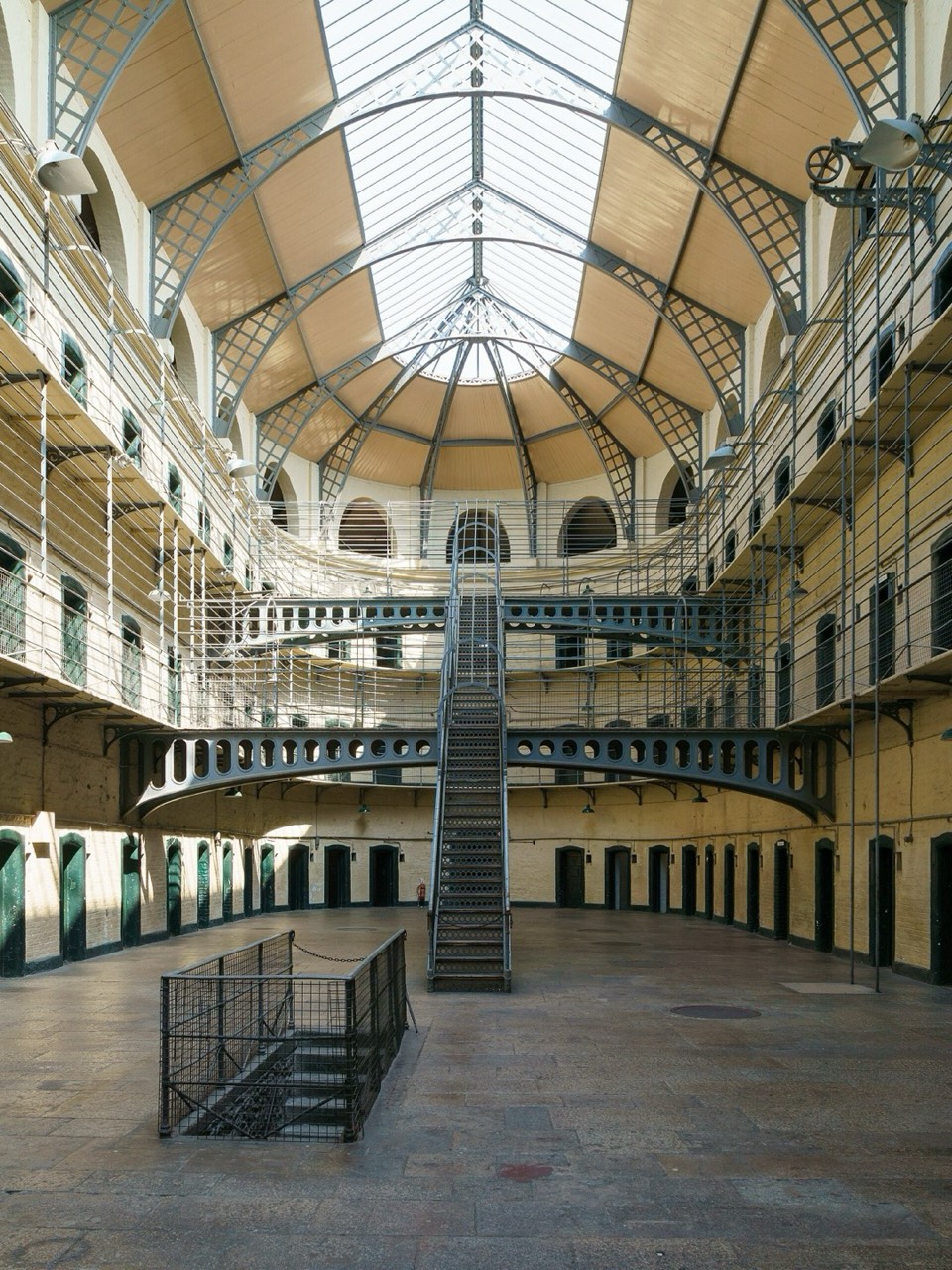
Former prison interpreting confinement and the struggle for independence.
Opened in 1796 and closed as a prison in 1924. It held ordinary and political prisoners; fourteen Rising leaders were executed here in 1916. The museum was handed to the State in 1986.
Explains the republic’s history through individual prisoners’ experiences.
Separate outing west of the centre: entry is by pre-booked guided tour from kilmainhamgaolmuseum.ie only. Resellers are not authorised to sell tickets. Allow about 90 minutes and arrange mobility assistance in advance.
Ha’penny Bridge
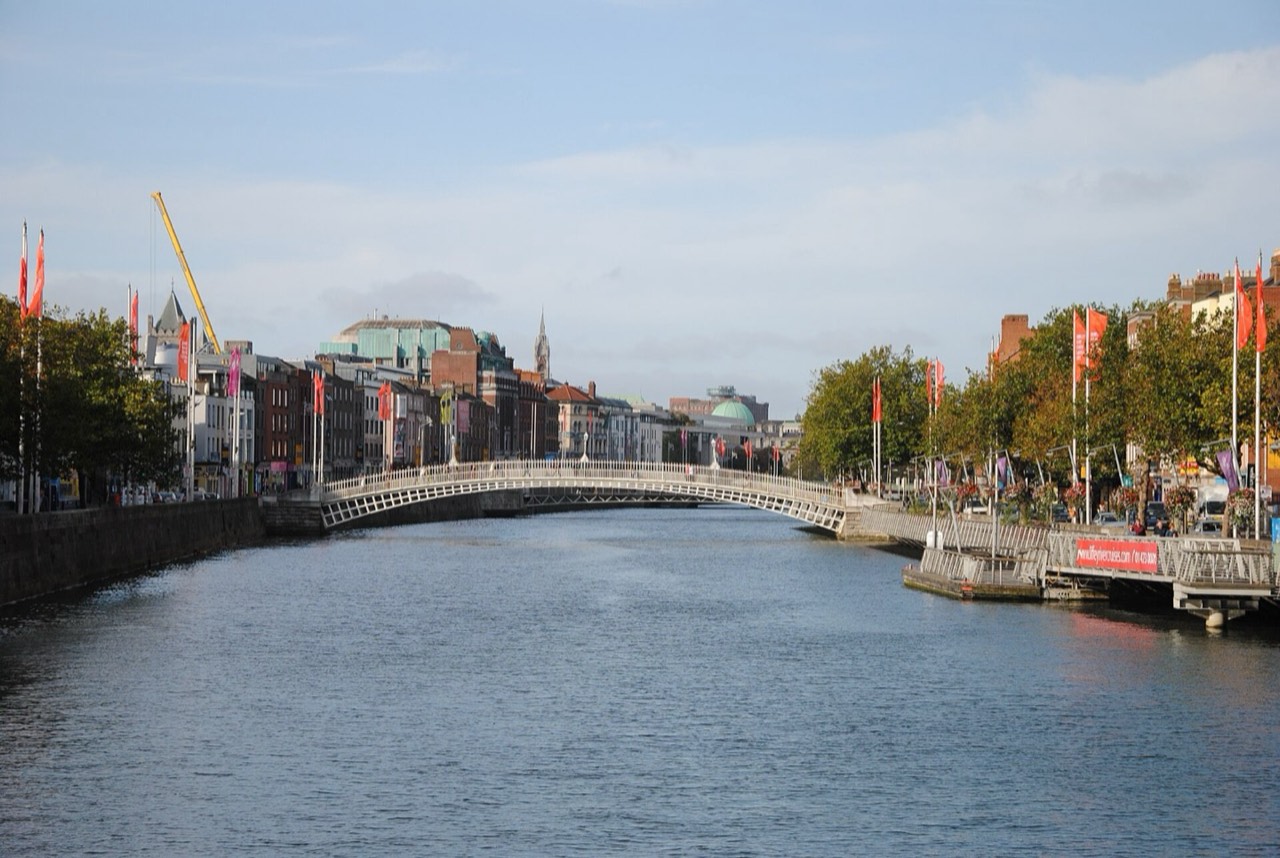
Cast-iron pedestrian arch across the Liffey.
The footbridge opened in May 1816. Its official name is Liffey Bridge; the familiar name recalls its former crossing toll.
Connects both banks and the history of urban mobility.
The bridge is narrow and busy: photograph without blocking pedestrian flow. Take care on wet steps and decking, and never climb riverside barriers.
Walking routes
Liffey and university
From Ha’penny follow the south quay to O’Connell Bridge, then Westmoreland Street and College Green to Trinity’s main entrance. Follow campus signs; the paid library experience is excluded.
1.2 km · 70 min
- Ha’penny Bridge · 20 min at stop
- Trinity College and Book of Kells · 25 min at stop
Two cathedrals and a city park
From Christ Church follow Nicholas Street and Patrick Street to Saint Patrick’s, then Kevin Street, Cuffe Street and Saint Stephen’s Green to an open park gate. Use crossings; interiors are separate. The closed castle campus is excluded.
2 km · 105 min
- Christ Church Cathedral · 20 min at stop
- Saint Patrick’s Cathedral · 20 min at stop
- Saint Stephen’s Green · 25 min at stop
From the green to the Liffey
From Saint Stephen’s Green’s north gates take Grafton Street to College Green and Trinity’s entrance. Continue via Dame Street, Anglesea Street and Temple Bar to Ha’penny’s south approach. Keep out of teaching and restricted staff spaces.
1.6 km · 95 min
- Saint Stephen’s Green · 20 min at stop
- Trinity College and Book of Kells · 20 min at stop
- Ha’penny Bridge · 20 min at stop
Food
Dublin coddle
Sausages, bacon, potatoes and onions simmered together, a dish particularly associated with Dublin.
Check pork and sausage ingredients, which may include gluten and other allergens.
Irish stew
Irish meat stew with potatoes and onions; meat and additional vegetables vary by recipe.
Recipes are not identical: ask about the meat, stock and any added alcohol.
Boxty
Potato pancake commonly combining grated raw potato and mash.
This is a regional Irish tradition, not exclusively Dublin’s; check flour, milk and fillings.
Soda bread
Irish soda-raised bread, often brown and made with wholemeal flour.
Normally contains gluten; ask whether buttermilk or another dairy ingredient is used.
Barmbrack
Fruit-studded loaf or cake especially associated with Halloween in autumn.
Seasonal availability varies. Festive versions can contain symbolic objects; ask about these and ingredients.
Practical information
Plan buses, Luas and DART with TFI. Leap offers 90-minute transfers on participating city buses, Luas, DART and commuter trains within Dublin City Zone 1. Tag on and off for Luas and rail; tag on when boarding Dublin Bus, without tag-off. Private airport express coaches have their own tickets.
112 or 999 is for emergencies. Traffic keeps left: look both ways and use controlled crossings. Keep phones and bags secure in crowds and stay clear of tram tracks. The castle campus is closed until January 2027; do not bypass barriers for photographs.
Money and payments
The Republic of Ireland uses euro, EUR; Northern Ireland uses sterling. Visa and Mastercard are widely accepted, but carry a backup card and a little cash. Know your PIN and check your bank’s charges and exchange terms.
Tipping
Tipping is optional and the amount is your choice. Check menu and bill service charges before paying to avoid tipping twice; an extra amount requested on a terminal is not compulsory.
Transport
Plan buses, Luas and DART with TFI. Leap offers 90-minute transfers on participating city buses, Luas, DART and commuter trains within Dublin City Zone 1. Tag on and off for Luas and rail; tag on when boarding Dublin Bus, without tag-off. Private airport express coaches have their own tickets.
Emergency help
112 or 999: urgent police, fire, ambulance or coastguard assistance; calls are free. State the service required, location and incident, with the Eircode if known. For non-emergency medical advice contact a doctor or pharmacist. Sources: gov.ie and HSE.
Electricity
Supply: 230 V / 50 Hz with three-pronged plugs. Check plug compatibility and appliance voltage, preserving required earthing. A normal plug adapter does not transform voltage.
Connectivity
Check your operator’s roaming, especially before travelling to Northern Ireland, where terms can differ. Save your address, Eircode and route offline; electronic tickets need a charged phone.
Verified sources and photo licences
- Tourism Ireland: EUR versus sterling, cards, three-pin 230 V / 50 Hz · www.ireland.com
- Competition and Consumer Protection Commission: optional tips and service charges · www.ccpc.ie
- Government of Ireland: emergency services 112 and 999 · www.gov.ie
- Health Service Executive: free emergency calls, location and Eircode · www2.hse.ie
- Public transport operator: local tickets and coverage · www.transportforireland.ie
- Trinity College: foundation in 1592 · www.tcd.ie
- OPW: entire castle campus closed until January 2027; excluded from walks · dublincastle.ie
- Irish Rail: Dublin City Zone 1 and mandatory Leap tag-off · www.irishrail.ie
- Leap operator: Luas validation at boarding and alighting stops · about.leapcard.ie
- Dublin Bus: on-board Leap use without tag-off · www.dublinbus.ie
- Fáilte Ireland: Dublin coddle, boxty, soda bread and seasonal barmbrack · www.visitdublin.com
- Tourism Ireland: Irish stew and national food traditions · www.tourismireland.com
- Cathedral operator: paid admission, separate belfry and Dublinia tickets · christchurchcathedral.ie
- Saint Patrick’s operator: ticketed visit and service-dependent hours · www.stpatrickscathedral.ie
- Trinity College and Book of Kells · www.visittrinity.ie
- Christ Church Cathedral · christchurchcathedral.ie
- Saint Patrick’s Cathedral · www.stpatrickscathedral.ie
- Saint Stephen’s Green · heritageireland.ie
- Kilmainham Gaol Museum · www.kilmainhamgaolmuseum.ie
- Ha’penny Bridge · dublincityfilmoffice.ie